DK
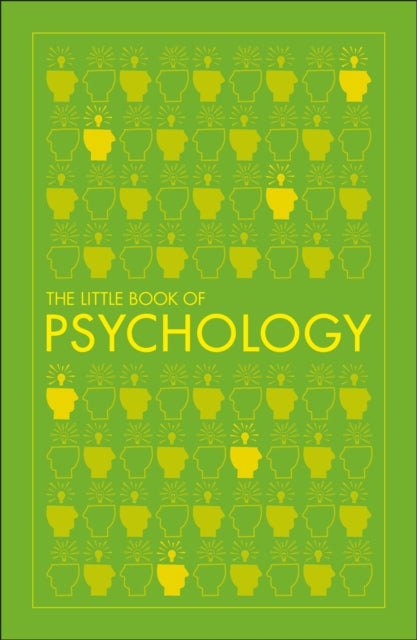
Little Book of Psychology
Little Book of Psychology
YOU SAVE £3.47
- Condition: Brand new
- UK Delivery times: Usually arrives within 2 - 3 working days
- UK Shipping: Fee starts at £3.89. Subject to product weight & dimension
Bulk ordering. Want 15 or more copies? Get a personalised quote and bigger discounts. Learn more about bulk orders.
Couldn't load pickup availability
- More about Little Book of Psychology
The Little Book of Psychology provides an insight into the fascinating field of science, answering questions about how the brain remembers faces, makes decisions, and where language comes from. It covers all major schools of psychology and includes doctrines and quotes from major thinkers, with powerful illustrations and easy explanations to demystify hard-to-grasp concepts.
Format: Paperback / softback
Length: 208 pages
Publication date: 07 June 2018
Publisher: Dorling Kindersley Ltd
The brain's ability to remember faces is a complex process that involves a combination of biological, psychological, and environmental factors. Here are some of the key mechanisms that contribute to face recognition:
Encoding: When we encounter a face, our brain processes the visual information it receives and converts it into a neural representation. This representation includes features such as shape, size, texture, and color.
Storage: The neural representation of a face is stored in the brain's memory system, which includes various regions such as the amygdala, hippocampus, and visual cortex. These regions are responsible for storing and retrieving information about faces.
Recall: When we need to remember a face, our brain retrieves the stored neural representation from memory and uses it to reconstruct the face. This process is known as recall.
Face recognition is a highly specialized task that is performed by the brain's visual system. It is important for social interactions, communication, and identification. However, face recognition can also be impaired by factors such as age, disease, and trauma.
The process of making decisions is also a complex process that involves a combination of biological, psychological, and environmental factors. Here are some of the key mechanisms that contribute to decision-making:
Perception: Our senses (e.g., sight, sound, touch, taste) provide us with information about the environment around us. This information is processed by our brain and used to form perceptions, which are mental representations of the world.
Cognition: Cognition is the process of thinking, reasoning, and problem-solving. It involves the use of mental processes such as attention, memory, and problem-solving skills.
Emotion: Emotion plays a significant role in decision-making. Emotions can influence our perceptions, attitudes, and behaviors, and can guide our decisions.
Value judgment: Value judgment is the process of evaluating the relative importance of different options or choices. It involves making judgments about what is good, bad, or desirable and determining which option is the best choice.
Decision-making is a dynamic process that can be influenced by a wide range of factors, including our environment, our past experiences, and our personality traits. Different people make decisions in different ways, and there is no one "right" way to make a decision.
The origin of language is a complex question that has been studied by linguists and psychologists for centuries. Here are some of the key theories that have been proposed to explain the origin of language:
Evolutionary theory: According to evolutionary theory, language evolved as a byproduct of the evolution of the human brain. The brain's ability to process complex information, such as speech, allowed humans to communicate with each other more effectively, which led to the development of language.
Developmental theory: According to developmental theory, language is a product of the child's innate ability to learn and acquire language. Children learn language by observing and imitating the speech of others, and by developing a mental representation of the language.
Cognitive theory: Cognitive theory suggests that language is a product of the brain's ability to process and understand language. The brain's language module is responsible for processing and understanding language, and it is developed through exposure to language.
Social theory: Social theory suggests that language is a product of social interaction and communication. Language is learned through socialization and is used to communicate with others and to establish social relationships.
The question of whether we can really measure intelligence is a complex and controversial one. Here are some of the key issues that are involved in measuring intelligence:
Defining intelligence: Intelligence is a broad term that refers to a range of cognitive abilities, such as memory, problem-solving, and creativity. Defining exactly what constitutes intelligence is difficult, and there is no one "correct" definition.
Measuring intelligence: There are many different methods of measuring intelligence, including IQ tests, achievement tests, and personality tests. However, there is debate about the validity and reliability of these tests, and there is no consensus about which test is the best measure of intelligence.
Intelligence is a complex and multifaceted concept that is influenced by a wide range of factors, including genetics, environment, and education. While there are many different methods of measuring intelligence, there is still no definitive answer to the question of whether we can really measure intelligence.
In conclusion, the brain's ability to remember faces is a complex process that involves a combination of biological, psychological, and environmental factors. The process of making decisions is also a complex process that involves a combination of biological, psychological, and environmental factors. The origin of language is a complex question that has been studied by linguists and psychologists. The question of whether we can really measure intelligence is a complex and controversial one that is influenced by a wide range of factors, including genetics, environment, and education.
Weight: 188g
Dimension: 165 x 148 x 16 (mm)
ISBN-13: 9780241341285
UK and International shipping information
UK and International shipping information
We deliver throughout the United Kingdom and to 128 countries and territories worldwide, including the United States, Australia, Canada, Germany, Spain and France.