Shulph Ink
Local Electricity Markets
Local Electricity Markets
💎 Earn 438 Points (£4.38) on this item.
YOU SAVE £8.16
- Condition: Brand new
- UK Delivery times: Usually arrives within 2 - 3 working days
- UK Shipping: Fee starts at £2.39. Subject to product weight & dimension
Bulk ordering. Want 15 or more copies? Get a personalised quote and bigger discounts. Learn more about bulk orders.
Couldn't load pickup availability
- More about Local Electricity Markets
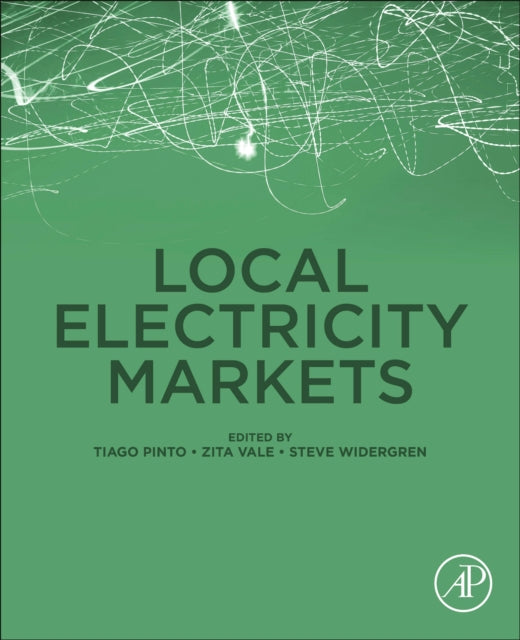
Local Electricity Markets discusses the characteristics, needs, and constraints of local electricity markets, including current proposed models, decision-making tools, infrastructure, regulatory frameworks, and opportunities for the future.
Format: Paperback / softback
Length: 472 pages
Publication date: 08 July 2021
Publisher: Elsevier Science Publishing Co Inc
Local Electricity Markets delves into the intricate aspects, requirements, and limitations that shape the design and implementation of local electricity markets. It explores current proposed local market models and draws valuable lessons from their limited practical implementation. The work discusses essential decision-making and informatics tools crucial for the successful implementation of local electricity markets. It also provides a comprehensive review of management and trading platforms, including commercially available tools. The chapter identifies and examines key components of local electricity market infrastructure, encompassing physical and software infrastructure. It discusses the existing regulatory frameworks available for fostering local electricity market development on an international scale. The study concludes with a thoughtful exploration of barriers and opportunities for the growth and development of local electricity markets in the future.
Introduction:
Local Electricity Markets (LEMs) play a pivotal role in the transition towards a more decentralized and sustainable energy system. They aim to facilitate the exchange of electricity between producers and consumers within a specific geographic area, promoting competition, efficiency, and renewable energy integration. In this chapter, we will delve into the fundamental characteristics, needs, and constraints that shape the design and implementation of local electricity markets.
Characteristics of Local Electricity Markets:
LEMs are characterized by their proximity to consumers, allowing for more efficient and responsive power supply. They can facilitate the integration of renewable energy sources, such as solar and wind power, into the grid, reducing greenhouse gas emissions and promoting environmental sustainability. LEMs also offer opportunities for energy arbitrage, where consumers can benefit from price differences between different market segments.
Needs and Constraints of Local Electricity Markets:
LEMs face several challenges and constraints that need to be addressed. One of the key challenges is the need for effective governance and regulation to ensure fair competition and protect consumers' interests. Another challenge is the integration of diverse energy sources and technologies, which requires robust infrastructure and communication systems. Additionally, LEMs may face financial barriers, such as high upfront costs and limited access to capital, which can hinder their development and implementation.
Current Proposed Local Market Models:
Several local market models have been proposed to address the needs and constraints of LEMs. One of the most popular models is the Community Choice Aggregation (CCA) model, which allows consumers to choose their energy provider from a pool of options. Other models include Demand Response programs, which incentivize consumers to reduce their energy consumption during peak demand periods, and Power Purchase Agreements (PPAs), which enable businesses and organizations to purchase renewable energy directly from producers.
Lessons from Limited Practical Implementation:
While these models have shown promise in theory, their limited practical implementation has highlighted several lessons that need to be learned. One of the key lessons is the importance of effective communication and outreach to consumers to ensure their understanding and participation in the market. Another lesson is the need for robust infrastructure and technology to support the seamless operation of the market. Additionally, the financial and regulatory frameworks need to be carefully designed to promote the growth and development of LEMs.
Decision and Informatics Tools:
Several decision-making and informatics tools are considered important in the implementation of local electricity markets. These tools include demand forecasting, energy optimization, and risk management systems. Demand forecasting helps predict future energy demand, enabling producers to optimize their generation and distribution strategies. Energy optimization tools help consumers reduce their energy consumption and save on energy bills. Risk management systems help mitigate the risks associated with energy market volatility and uncertainty.
Management and Trading Platforms:
Commercially available management and trading platforms play a crucial role in the implementation of local electricity markets. These platforms provide a centralized platform for market participants to interact, trade, and manage their energy assets. They offer a range of features, such as real-time pricing, risk management tools, and transaction tracking. Some of the popular management and trading platforms include Open Energy Markets, Power Ledger, and Enpal.
Aspects of Local Electricity Market Infrastructure:
Local electricity market infrastructure encompasses a wide range of components, including physical infrastructure such as power plants, transmission lines, and distribution networks, as well as software infrastructure such as energy management systems and market monitoring tools. Physical infrastructure is essential for the reliable and efficient transmission of electricity, while software infrastructure enables the seamless operation and management of the market.
Current Regulatory Frameworks:
The regulatory frameworks available for local electricity market development vary widely across different countries and regions. In some countries, regulatory frameworks are well-developed and provide a clear legal and regulatory framework for market participants. In other countries, regulatory frameworks may be less developed or may pose barriers to market development.
Barriers and Opportunities for Local Electricity Markets:
Despite the challenges and constraints, local electricity markets offer significant opportunities for growth and development. One of the key opportunities is the potential for increased renewable energy integration, which can help reduce greenhouse gas emissions and promote energy security. Another opportunity is the potential for cost savings and efficiency gains through the optimization of energy distribution and consumption. Additionally, local electricity markets can promote community engagement and participation, which can contribute to a more sustainable and resilient energy system.
Conclusion:
In conclusion, local electricity markets play a crucial role in the transition towards a more decentralized and sustainable energy system. They offer a range of benefits, including increased renewable energy integration, cost savings, and efficiency gains. However, their development and implementation require careful consideration of the characteristics, needs, and constraints of local electricity markets, as well as the development of effective decision-making and informatics tools, management and trading platforms, and regulatory frameworks. By addressing these challenges and opportunities, local electricity markets can contribute to the growth and development of a more resilient and sustainable energy system.
Weight: 972g
Dimension: 191 x 398 x 29 (mm)
ISBN-13: 9780128200742
This item can be found in:
UK and International shipping information
UK and International shipping information
UK Delivery and returns information:
- Delivery within 2 - 3 days when ordering in the UK.
- Shipping fee for UK customers from £2.39. Fully tracked shipping service available.
- Returns policy: Return within 30 days of receipt for full refund.
International deliveries:
Shulph Ink now ships to Australia, Belgium, Canada, France, Germany, Ireland, Italy, India, Luxembourg Saudi Arabia, Singapore, Spain, Netherlands, New Zealand, United Arab Emirates, United States of America.
- Delivery times: within 5 - 10 days for international orders.
- Shipping fee: charges vary for overseas orders. Only tracked services are available for most international orders. Some countries have untracked shipping options.
- Customs charges: If ordering to addresses outside the United Kingdom, you may or may not incur additional customs and duties fees during local delivery.