MinsooKang,EunsooChoi
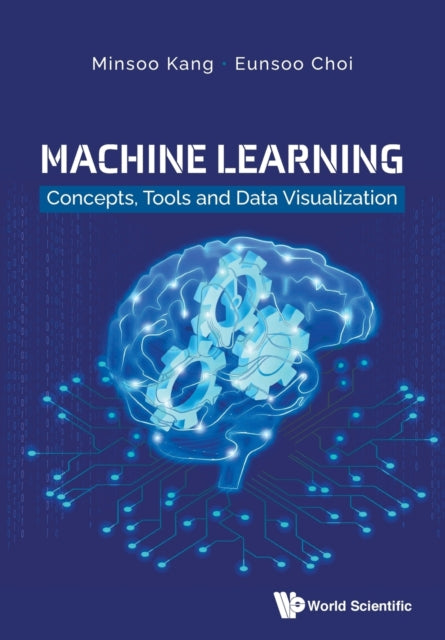
Machine Learning: Concepts, Tools And Data Visualization
Machine Learning: Concepts, Tools And Data Visualization
💎 Earn 185 Points (£1.85) on this item.
YOU SAVE £7.83
- Condition: Brand new
- UK Delivery times: Usually arrives within 2 - 3 working days
- UK Shipping: Fee starts at £2.39. Subject to product weight & dimension
Bulk ordering. Want 15 or more copies? Get a personalised quote and bigger discounts. Learn more about bulk orders.
Couldn't load pickup availability
- More about Machine Learning: Concepts, Tools And Data Visualization
This set of lecture notes provides an introduction to machine learning and data science, with a focus on Azure Machine Learning and data visualization with R. It is designed for individuals who are unfamiliar with mathematics and programming.
\n Format: Paperback / softback
\n Length: 296 pages
\n Publication date: 29 March 2021
\n Publisher: World Scientific Publishing Co Pte Ltd
\n
These lecture notes, designed for individuals with limited mathematical and programming backgrounds, serve as an introductory guide to the realm of machine learning. Comprising three distinct sections, they provide a comprehensive overview of the history of artificial intelligence, machine learning, and data science, while also featuring case studies of renowned AI systems. The second section offers a step-by-step introduction to Azure Machine Learning, accompanied by illustrative examples. The third section delves into the techniques and methods employed in data visualization using R, enabling the communication of statistical analysis results derived from AI systems. Throughout the book, practice questions are included to reinforce learning and enhance understanding.
Section 1: Introduction to Machine Learning
Machine learning is a branch of artificial intelligence that involves the use of algorithms to enable computers to learn from data and make predictions or decisions without being explicitly programmed. It has revolutionized various industries, including healthcare, finance, and transportation, by enabling machines to perform tasks that were previously human-only or require significant manual effort.
The history of machine learning can be traced back to the 1950s, when researchers began exploring the possibility of teaching computers to perform tasks using algorithms. One of the earliest examples of machine learning is the "perceptron," developed by Frank Rosenblatt in 1957. Perceptrons are simple neural networks that can classify and recognize patterns in data. However, they were limited by their inability to handle large amounts of data and the complexity of their training algorithms.
In the 1980s and 1990s, machine learning saw significant advancements with the development of neural networks and support vector machines. Neural networks are modeled after the human brain and can learn complex patterns in data. Support vector machines, on the other hand, are supervised learning algorithms that use training data to classify new data points.
Since the 2000s, machine learning has continued to evolve, with the introduction of deep learning, a subset of machine learning that uses neural networks with multiple layers to learn complex patterns in data. Deep learning has achieved remarkable results in areas such as image recognition, speech recognition, and natural language processing, and has paved the way for the development of autonomous vehicles and other advanced AI systems.
One of the key advantages of machine learning is its ability to handle large amounts of data and make accurate predictions. Machine learning algorithms can analyze vast amounts of data and identify patterns that humans may miss. This has led to the development of personalized recommendations, fraud detection systems, and autonomous systems that can perform tasks without human intervention.
However, machine learning also faces challenges, such as the need for large amounts of data, the potential for bias in training data, and the complexity of training algorithms. To address these challenges, researchers have developed new techniques, such as transfer learning, which allows algorithms to learn from data collected in different environments, and adversarial training, which trains algorithms to defend against attacks.
In conclusion, machine learning is a powerful tool that has the potential to transform various industries and improve our lives. Its history dates back to the 1950s, and it has seen significant advancements in the past few decades. With the continued development of new techniques and algorithms, machine learning will continue to play an increasingly important role in the future of artificial intelligence.
Section 2: Azure Machine Learning
Azure Machine Learning is a cloud-based platform that provides tools and services for building, training, and deploying machine learning models. It is part of the Microsoft Azure platform and offers a wide range of features and capabilities for data scientists, data engineers, and developers.
Azure Machine Learning offers a user-friendly interface that allows users to easily create and manage machine learning projects. It provides a range of pre-built models and algorithms that users can use to build their own models, as well as a variety of tools for data preparation, model training, and model deployment.
One of the key features of Azure Machine Learning is its ability to scale to large datasets. It supports distributed computing, which allows users to train models on large datasets without the need for expensive hardware. This makes it ideal for applications that require real-time processing of large amounts of data.
Azure Machine Learning also provides a range of tools for data visualization, including charts, graphs, and interactive dashboards. This allows users to easily understand and interpret the results of their machine learning models and make informed decisions based on the data.
In addition to its cloud-based platform, Azure Machine Learning offers a range of services and support for data scientists and developers. It provides training and certification programs, as well as a community of data scientists and developers who can share their knowledge and expertise.
Overall, Azure Machine Learning is a powerful tool that provides a wide range of features and capabilities for building, training, and deploying machine learning models. It is ideal for data scientists, data engineers, and developers who need to build and deploy machine learning models in a cloud-based environment.
Section 3: Data Visualization with R
Data visualization is a critical component of machine learning and data science, as it allows users to understand and interpret the results of their analysis. R is a powerful programming language that is widely used for data visualization and analysis, and it provides a wide range of tools and libraries for creating and presenting data in a visually appealing and informative way.
In this section, we will explore the techniques and methods used in data visualization with R, including the use of charts, graphs, and interactive dashboards. We will also discuss the importance of data visualization in machine learning and data science, and how it can help users make informed decisions based on the data.
One of the key advantages of data visualization with R is its flexibility and scalability. R is a free and open-source programming language that is available on a wide range of platforms, including Windows, macOS, and Linux. It is also highly customizable, allowing users to create their own visualizations and customize the appearance and behavior of their plots.
R also provides a wide range of libraries and packages for data visualization, including ggplot2, tidyr, and dplyr. These libraries provide a range of functions and methods for creating and manipulating data, and they can be used to create a wide range of visualizations, from simple bar charts to complex interactive dashboards.
In addition to its flexibility and scalability, data visualization with R is also highly interactive. R supports interactive plots, which allow users to zoom, pan, and interact with the data in real-time. This makes it easy for users to explore and analyze the data, and to identify patterns and trends that may not be immediately apparent.
Another advantage of data visualization with R is its ability to handle large datasets. R is designed to be efficient and scalable, and it can handle large datasets without slowing down the analysis process. This makes it ideal for applications that require real-time processing of large amounts of data, such as financial analysis or weather forecasting.
In conclusion, data visualization with R is a powerful tool that can be used to understand and interpret the results of machine learning and data science analysis. It provides a wide range of tools and libraries for creating and presenting data in a visually appealing and informative way, and it is highly flexible and scalable. Data visualization is an essential component of machine learning and data science, as it allows users to make informed decisions based on the data. By using R for data visualization, users can gain a deeper understanding of their data and identify patterns and trends that may not be immediately apparent.
\n Weight: 518g\n
Dimension: 169 x 245 x 20 (mm)\n
ISBN-13: 9789811229367\n \n
UK and International shipping information
UK and International shipping information
UK Delivery and returns information:
- Delivery within 2 - 3 days when ordering in the UK.
- Shipping fee for UK customers from £2.39. Fully tracked shipping service available.
- Returns policy: Return within 30 days of receipt for full refund.
International deliveries:
Shulph Ink now ships to Australia, Belgium, Canada, France, Germany, Ireland, Italy, India, Luxembourg Saudi Arabia, Singapore, Spain, Netherlands, New Zealand, United Arab Emirates, United States of America.
- Delivery times: within 5 - 10 days for international orders.
- Shipping fee: charges vary for overseas orders. Only tracked services are available for most international orders. Some countries have untracked shipping options.
- Customs charges: If ordering to addresses outside the United Kingdom, you may or may not incur additional customs and duties fees during local delivery.