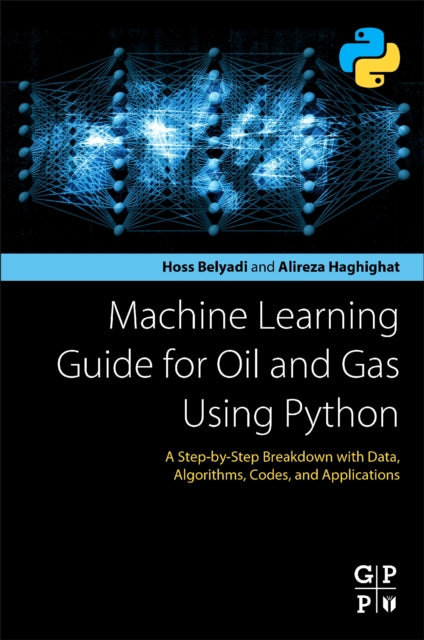
HossBelyadi,AlirezaHaghighat
Machine Learning Guide for Oil and Gas Using Python: A Step-by-Step Breakdown with Data, Algorithms, Codes, and Applications
Machine Learning Guide for Oil and Gas Using Python: A Step-by-Step Breakdown with Data, Algorithms, Codes, and Applications
💎 Earn 508 Points (£5.08) on this item.
YOU SAVE £13.22
- Condition: Brand new
- UK Delivery times: Usually arrives within 2 - 3 working days
- UK Shipping: Fee starts at £2.39. Subject to product weight & dimension
Bulk ordering. Want 15 or more copies? Get a personalised quote and bigger discounts. Learn more about bulk orders.
Couldn't load pickup availability
- More about Machine Learning Guide for Oil and Gas Using Python: A Step-by-Step Breakdown with Data, Algorithms, Codes, and Applications
Machine Learning Guide for Oil and Gas Using Python is a critical training and resource tool that helps engineers understand machine learning theory and practice, specifically referencing use cases in oil and gas. It bridges the gap between math and heavy theory and provides step-by-step examples of utilization in various scenarios, such as well testing, shale reservoirs, and production optimization.
Format: Paperback / softback
Length: 476 pages
Publication date: 13 April 2021
Publisher: Elsevier Science & Technology
Machine Learning Guide for Oil and Gas Using Python: A Step-by-Step Breakdown with Data, Algorithms, Codes, and Applications is a comprehensive training and resource tool designed to assist engineers in understanding the theory and practical applications of machine learning, particularly in the context of oil and gas. The book provides a clear and concise introduction to machine learning, covering key concepts and algorithms in a straightforward manner. It then delves into specific use cases in oil and gas, such as well testing, shale reservoirs, and production optimization, showcasing how machine learning techniques can be applied to address complex data challenges.
One of the key strengths of this guide is its balance between theory and applications. While other resources on machine learning may focus heavily on mathematical concepts or theoretical frameworks, this book strikes a perfect balance by incorporating practical examples and case studies. These examples help engineers understand how machine learning algorithms can be implemented in real-world scenarios and how they can contribute to improving oil and gas operations.
The book is organized into four main sections:
Introduction to Machine Learning: This section provides a foundational understanding of machine learning concepts, including supervised and unsupervised learning, regression and classification, and neural networks. It also covers important terminology and notation commonly used in the field.
Python for Machine Learning: This section introduces the Python programming language and its features, such as data structures, loops, and functions. It then demonstrates how Python can be used to implement machine learning algorithms and build machine learning models.
Oil and Gas Applications: This section showcases real-world use cases of machine learning in oil and gas, including well testing, shale reservoir characterization, and production optimization. It provides step-by-step examples of how machine learning algorithms can be applied to solve specific data challenges in these domains.
Case Studies and Examples: This section includes case studies and examples that illustrate the practical applications of machine learning in oil and gas. Each case study includes a problem statement, an analysis of the data, and the results obtained using machine learning techniques.
In addition to its comprehensive coverage of machine learning theory and applications, Machine Learning Guide for Oil and Gas Using Python also offers valuable resources for engineers looking to further their knowledge and expertise in the field. The book includes a list of recommended readings, online courses, and open-source libraries that can help engineers expand their knowledge and stay up-to-date with the latest developments in machine learning.
Overall, Machine Learning Guide for Oil and Gas Using Python is a must-read for engineers and professionals working in the oil and gas industry. It provides a comprehensive and practical guide to machine learning, covering key concepts, algorithms, and applications in a clear and accessible manner. Whether you are a beginner or an experienced practitioner, this book will help you leverage the power of machine learning to improve your oil and gas operations and drive innovation in the industry.
Machine Learning Guide for Oil and Gas Using Python: A Step-by-Step Breakdown with Data, Algorithms, Codes, and Applications
is a comprehensive training and resource tool designed to assist engineers in understanding the theory and practical applications of machine learning, particularly in the context of oil and gas.
The book provides a clear and concise introduction to machine learning, covering key concepts and algorithms in a straightforward manner. It then delves into specific use cases in oil and gas, such as well testing, shale reservoirs, and production optimization, showcasing how machine learning techniques can be applied to address complex data challenges.
One of the key strengths of this guide is its balance between theory and applications. While other resources on machine learning may focus heavily on mathematical concepts or theoretical frameworks, this book strikes a perfect balance by incorporating practical examples and case studies. These examples help engineers understand how machine learning algorithms can be implemented in real-world scenarios and how they can contribute to improving oil and gas operations.
The book is organized into four main sections:
Introduction to Machine Learning:
This section provides a foundational understanding of machine learning concepts, including supervised and unsupervised learning, regression and classification, and neural networks. It also covers important terminology and notation commonly used in the field.
Python for Machine Learning:
This section introduces the Python programming language and its features, such as data structures, loops, and functions. It then demonstrates how Python can be used to implement machine learning algorithms and build machine learning models.
Oil and Gas Applications:
This section showcases real-world use cases of machine learning in oil and gas, including well testing, shale reservoir characterization, and production optimization. It provides step-by-step examples of how machine learning algorithms can be applied to solve specific data challenges in these domains.
Case Studies and Examples:
This section includes case studies and examples that illustrate the practical applications of machine learning in oil and gas. Each case study includes a problem statement, an analysis of the data, and the results obtained using machine learning techniques.
In addition to its comprehensive coverage of machine learning theory and applications, Machine Learning Guide for Oil and Gas Using Python also offers valuable resources for engineers looking to further their knowledge and expertise in the field.
The book includes a list of recommended readings, online courses, and open-source libraries that can help engineers expand their knowledge and stay up-to-date with the latest developments in machine learning.
Overall, Machine Learning Guide for Oil and Gas Using Python is a must-read for engineers and professionals working in the oil and gas industry. It provides a comprehensive and practical guide to machine learning, covering key concepts, algorithms, and applications in a clear and accessible manner. Whether you are a beginner or an experienced practitioner, this book will help you leverage the power of machine learning to improve your oil and gas operations and drive innovation in the industry.
Weight: 744g
Dimension: 152 x 228 x 31 (mm)
ISBN-13: 9780128219294
UK and International shipping information
UK and International shipping information
UK Delivery and returns information:
- Delivery within 2 - 3 days when ordering in the UK.
- Shipping fee for UK customers from £2.39. Fully tracked shipping service available.
- Returns policy: Return within 30 days of receipt for full refund.
International deliveries:
Shulph Ink now ships to Australia, Belgium, Canada, France, Germany, Ireland, Italy, India, Luxembourg Saudi Arabia, Singapore, Spain, Netherlands, New Zealand, United Arab Emirates, United States of America.
- Delivery times: within 5 - 10 days for international orders.
- Shipping fee: charges vary for overseas orders. Only tracked services are available for most international orders. Some countries have untracked shipping options.
- Customs charges: If ordering to addresses outside the United Kingdom, you may or may not incur additional customs and duties fees during local delivery.