Dr. Andrew Reinhard
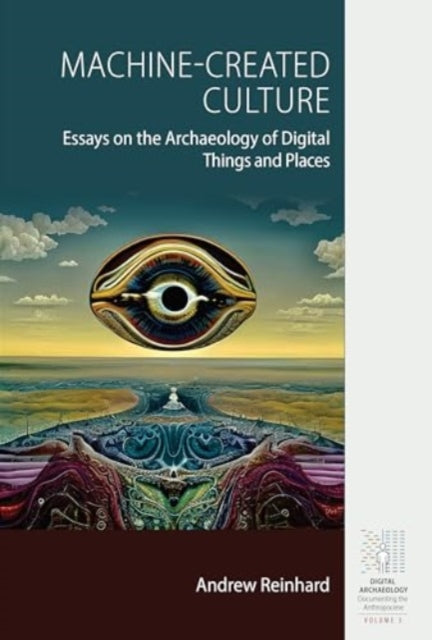
Machine-Created Culture: Essays on the Archaeology of Digital Things and Places
Machine-Created Culture: Essays on the Archaeology of Digital Things and Places
💎 Earn 447 Points (£4.47) on this item.
We can order this item for you. Delivery usually takes about 4 to 6 weeks.
This item is not held in our immediate stock. We will order it for you after checkout.
Estimated delivery: About 4 to 6 weeks
YOU SAVE £2.44
- Condition: Brand new
- UK Delivery times: Usually arrives within 2 - 3 working days
- UK Shipping: Fee starts at £2.39. Subject to product weight & dimension
Bulk ordering. Want 15 or more copies? Get a personalised quote and bigger discounts. Learn more about bulk orders.
Couldn't load pickup availability
- More about Machine-Created Culture: Essays on the Archaeology of Digital Things and Places
Archaeology can be weird and fun, especially the digital kind, exploring artifacts, sites, and landscapes within interactive digital built environments. Charlie, the reluctant digital archaeologist, guides readers through post-landscapes, non-place cultural spaces, persistent digital spaces, software citizenship, machine-created culture, digital drift, technofossils, quantum archaeology, archaeological time, singularities, complexity, and retrocausality, noise, and more. These bite-sized chapters offer new ways of interpreting humanity's blossoming digitalia.
Format: Hardback
Length: 136 pages
Publication date: 01 July 2024
Publisher: Berghahn Books
Archaeology is a fascinating and exciting field that delves into the digital realm, offering a unique perspective on artifacts, sites, and landscapes. In this digital age, archaeologists, media studies, and game studies enthusiasts are introduced to the world of interactive digital built environments, which contain and support these digital creations.
Charlie, the reluctant digital archaeologist, takes readers on a journey through the post-landscapes, non-place cultural spaces, persistent digital spaces, software citizenship, machine-created culture, digital drift, technofossils, quantum archaeology, archaeological time, singularities, complexity, and retrocausality, noise, and more. These bite-sized chapters provide fresh insights into the evolution of humanity's digital presence, exploring its creation, use, and abandonment of our electronic selves.
Archaeology in the digital age offers a unique opportunity to uncover the hidden stories and meanings behind our electronic artifacts and landscapes. By exploring the complex relationships between technology, culture, and society, archaeologists can gain a deeper understanding of the past and present, and how these technologies have shaped our world.
One of the key aspects of digital archaeology is the use of artifacts and sites as primary sources of information. These artifacts can range from ancient pottery and stone tools to modern-day smartphones and computers. By analyzing these artifacts, archaeologists can learn about the people who created them, their beliefs, and their daily lives. This information can be used to reconstruct the history of a particular culture or society, and to understand the social and economic changes that have occurred over time.
Another important aspect of digital archaeology is the use of software and digital tools to analyze and interpret the data. These tools can include 3D modeling, virtual reality, and geographic information systems (GIS). By using these tools, archaeologists can create detailed models of archaeological sites and landscapes, and can analyze the data to identify patterns and trends. This information can be used to make predictions about the future of archaeological sites and to develop strategies for their preservation.
Digital archaeology also has the potential to revolutionize the way that we think about the past. By providing access to a vast amount of information and data, archaeologists can help to dispel myths and misconceptions about the past, and to provide a more accurate and comprehensive understanding of the world. This information can be used to educate people about the importance of cultural heritage and to promote cultural diversity and understanding.
However, digital archaeology also presents some challenges. One of the biggest challenges is the preservation of digital artifacts and landscapes. As technology continues to evolve, it becomes increasingly difficult to preserve these artifacts and landscapes for future generations. This is particularly true for digital artifacts that are stored on physical media, such as CDs, DVDs, and hard drives. These media can degrade over time, and if they are not properly preserved, they may be lost forever.
To address this challenge, archaeologists are developing new preservation strategies. These strategies include the use of digital archives, the use of cloud-based storage, and the use of 3D printing. Digital archives allow archaeologists to store and access their data in a secure and accessible manner, while cloud-based storage allows them to store their data in a remote location that is not vulnerable to natural disasters or other threats. 3D printing allows archaeologists to create physical replicas of archaeological artifacts and landscapes, which can be used for educational purposes and to promote cultural heritage.
In addition to the preservation of digital artifacts and landscapes, digital archaeology also has the potential to impact the way that we live our lives. By providing access to a vast amount of information and data, archaeologists can help to improve our understanding of the world and to make better decisions about the future. This information can be used to develop new technologies, to improve our health and well-being, and to address social and environmental issues.
For example, digital archaeology can be used to study the history of climate change. By analyzing the data from ancient climate records, archaeologists can learn about the causes of climate change and how it has affected different cultures and societies over time. This information can be used to develop strategies for mitigating the effects of climate change and to promote sustainable development.
Digital archaeology can also be used to study the history of human migration. By analyzing the data from ancient migration records, archaeologists can learn about the routes that people took and the reasons why they moved. This information can be used to develop strategies for managing migration and to promote cultural diversity and understanding.
In conclusion, archaeology in the digital age is a fascinating and exciting field that offers a unique perspective on artifacts, sites, and landscapes. By using artifacts and sites as primary sources of information, software and digital tools to analyze and interpret the data, and new preservation strategies to preserve digital artifacts and landscapes, archaeologists can gain a deeper understanding of the past and present, and how these technologies have shaped our world. While digital archaeology presents some challenges, it also has the potential to revolutionize the way that we think about the past and to impact the way that we live our lives.
Dimension: 229 x 152 (mm)
ISBN-13: 9781805395706
This item can be found in:
UK and International shipping information
UK and International shipping information
UK Delivery and returns information:
- Delivery within 2 - 3 days when ordering in the UK.
- Shipping fee for UK customers from £2.39. Fully tracked shipping service available.
- Returns policy: Return within 30 days of receipt for full refund.
International deliveries:
Shulph Ink now ships to Australia, Belgium, Canada, France, Germany, Ireland, Italy, India, Luxembourg Saudi Arabia, Singapore, Spain, Netherlands, New Zealand, United Arab Emirates, United States of America.
- Delivery times: within 5 - 10 days for international orders.
- Shipping fee: charges vary for overseas orders. Only tracked services are available for most international orders. Some countries have untracked shipping options.
- Customs charges: If ordering to addresses outside the United Kingdom, you may or may not incur additional customs and duties fees during local delivery.