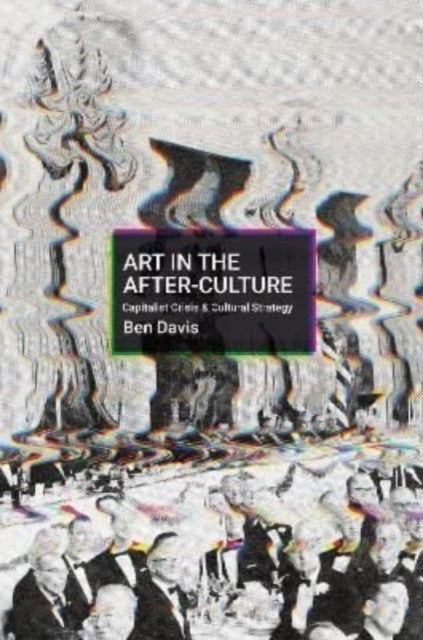
Ben Davis
Making Art in Terrible Times: Capitalist Crisis and Cultural Strategy
Making Art in Terrible Times: Capitalist Crisis and Cultural Strategy
YOU SAVE £3.88
- Condition: Brand new
- UK Delivery times: Usually arrives within 2 - 3 working days
- UK Shipping: Fee starts at £3.89. Subject to product weight & dimension
Bulk ordering. Want 15 or more copies? Get a personalised quote and bigger discounts. Learn more about bulk orders.
Couldn't load pickup availability
- More about Making Art in Terrible Times: Capitalist Crisis and Cultural Strategy
The collection of essays by Astra Taylor explores the relationship between art and the current political and social climate, offering hope for a new after-culture that can weather the storms of the future by reckoning with the new realities of art, technology, activism, and the media.
Format: Paperback / softback
Length: 180 pages
Publication date: 08 April 2022
Publisher: Haymarket Books
This kaleidoscopic collection will help you see and comprehend the world anew, which, in my book, is what good art should do.
It is a scary and disorienting time for art, as it is a scary and disorienting time in general. Aesthetic experience is both overshadowed by the spectacle of current events and pressed into new connection with them. The self-image of art as a social good is collapsing under the weight of capitalism's dysfunction.
In these incisive essays, art critic Ben Davis makes sense of our extreme present as an emerging after-culture—a culture whose forms and functions are being radically reshaped by cataclysmic events. In the face of catastrophe, he holds out hope that reckoning with the new realities of art, technology, activism, and the media can help us weather the super-storms of the future.
The essays in this collection explore the ways in which art is responding to the challenges of our time, from the rise of digital technology to the climate crisis. They offer a range of perspectives on the role of art in shaping our understanding of the world and in creating a more just and equitable society.
One of the key themes of the collection is the idea that art is not just a reflection of the world around us, but a tool for shaping it. The essays argue that art can be used to challenge dominant narratives, to promote empathy and understanding, and to create new ways of thinking and being.
Another theme is the idea that art is not just a luxury, but a necessity. The essays argue that art can provide a sense of meaning and purpose in a world that often feels chaotic and uncertain. They suggest that art can be a source of resilience and hope in the face of adversity.
The essays in this collection also explore the ways in which art is being shaped by the changing landscape of the media and the internet. They argue that the rise of social media and other digital platforms has created new opportunities for artists to reach new audiences and to create new forms of art.
However, the essays also raise concerns about the impact of these new technologies on the art world. They argue that the commodification of art and the emphasis on short-term profits can lead to a decline in the quality of art and a loss of artistic integrity.
Overall, this collection is a valuable contribution to the debate about the role of art in our society. It offers a range of perspectives on the ways in which art is responding to the challenges of our time and on the ways in which it can be used to create a better world. The essays are written in a clear and accessible style, making them accessible to a wide range of readers.
In conclusion, this kaleidoscopic collection will help you see and comprehend the world anew, which, in my book, is what good art should do. It is a scary and disorienting time for art, as it is a scary and disorienting time in general. Aesthetic experience is both overshadowed by the spectacle of current events and pressed into new connection with them. The self-image of art as a social good is collapsing under the weight of capitalism's dysfunction.
In these incisive essays, art critic Ben Davis makes sense of our extreme present as an emerging after-culture—a culture whose forms and functions are being radically reshaped by cataclysmic events. In the face of catastrophe, he holds out hope that reckoning with the new realities of art, technology, activism, and the media can help us weather the super-storms of the future.
The essays in this collection explore the ways in which art is responding to the challenges of our time, from the rise of digital technology to the climate crisis. They offer a range of perspectives on the role of art in shaping our understanding of the world and in creating a more just and equitable society.
One of the key themes of the collection is the idea that art is not just a reflection of the world around us, but a tool for shaping it. The essays argue that art can be used to challenge dominant narratives, to promote empathy and understanding, and to create new ways of thinking and being.
Another theme is the idea that art is not just a luxury, but a necessity. The essays argue that art can provide a sense of meaning and purpose in a world that often feels chaotic and uncertain. They suggest that art can be a source of resilience and hope in the face of adversity.
The essays in this collection also explore the ways in which art is being shaped by the changing landscape of the media and the internet. They argue that the rise of social media and other digital platforms has created new opportunities for artists to reach new audiences and to create new forms of art.
However, the essays also raise concerns about the impact of these new technologies on the art world. They argue that the commodification of art and the emphasis on short-term profits can lead to a decline in the quality of art and a loss of artistic integrity.
Overall, this collection is a valuable contribution to the debate about the role of art in our society. It offers a range of perspectives on the ways in which art is responding to the challenges of our time and on the ways in which it can be used to create a better world. The essays are written in a clear and accessible style, making them accessible to a wide range of readers.
Dimension: 215 x 139 (mm)
ISBN-13: 9781642594621
UK and International shipping information
UK and International shipping information
We deliver throughout the United Kingdom and to 128 countries and territories worldwide, including the United States, Australia, Canada, Germany, Spain and France.