Lisa Jane Disch
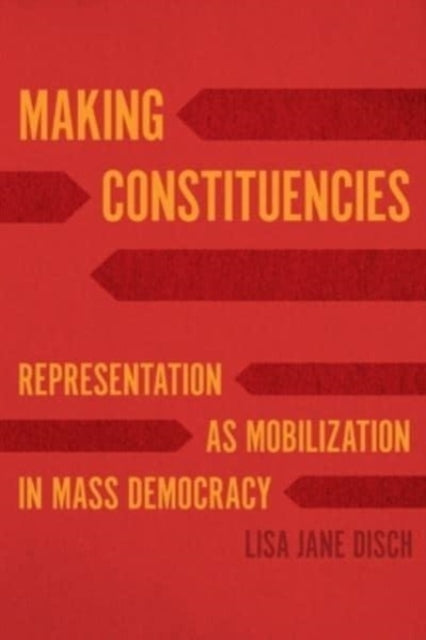
Making Constituencies: Representation as Mobilization in Mass Democracy
Making Constituencies: Representation as Mobilization in Mass Democracy
💎 Earn 133 Points (£1.33) on this item.
YOU SAVE £1.34
- Condition: Brand new
- UK Delivery times: Usually arrives within 2 - 3 working days
- UK Shipping: Fee starts at £2.39. Subject to product weight & dimension
Bulk ordering. Want 15 or more copies? Get a personalised quote and bigger discounts. Learn more about bulk orders.
Couldn't load pickup availability
- More about Making Constituencies: Representation as Mobilization in Mass Democracy
Public division is a common feature of politics, with some commentators warning that the American public is the most divided it has been since the Civil War. Political scientists, political theorists, and public intellectuals suggest that uninformed, misinformed, and disinformed voters are at the root of this division, but manipulation of voters is not as grave a threat to democracy as many scholars and pundits make it out to be. Making Constituencies proposes a new theory of representation as mobilization to argue that divisions like these are created and political representatives of all kinds forge and deploy them to cultivate constituencies.
Format: Paperback / softback
Length: 208 pages
Publication date: 12 November 2021
Publisher: The University of Chicago Press
The concept of a divided United States has become increasingly prevalent since the turn of the twenty-first century. Following the 2020 election, concerns were raised that the American public had reached unprecedented levels of division since the Civil War. Political scientists, political theorists, and public intellectuals have proposed various explanations for this division, attributing it to uninformed, misinformed, and disinformed voters. Some argue that this division stems from individuals' unwillingness to accept facts or scientific evidence, making them susceptible to elite manipulation. Additionally, it fosters a political culture that discourages cross-partisan collaboration in Washington.
While manipulation of voters is a concerning issue, it is not the sole threat to democracy in America. The greater danger lies in the perception that partisans create, portraying America as a society deeply divided into opposing camps that cannot be reconciled or transformed. This narrative serves as a rallying cry for supporters, reinforcing their allegiance to a particular political ideology or party.
Making Constituencies presents a novel theory of representation as mobilization, which suggests that divisions like these are not inherent in society but rather created and deployed by political representatives of various kinds. The book argues that these divisions are not fixed or immutable but can be forged, manipulated, and reconfigured to cultivate specific constituencies and advance political agendas.
The book explores the historical roots of political divisions and how they have been used to mobilize constituencies. It examines the strategies employed by political representatives to create and exploit divisions, such as identity politics, fear-mongering, and appeals to sectional interests. It also explores the consequences of these divisions for democracy, including the erosion of trust in institutions, the decline of political participation, and the potential for political instability.
Making Constituencies offers a range of proposals for addressing the challenges posed by political divisions. It advocates for a more informed and engaged electorate, promoting education and civic literacy programs to empower voters to make informed decisions. It also calls for greater political accountability and transparency, including measures to reduce the influence of money in politics and promote greater democratic participation.
Furthermore, the book suggests that political representatives can play a crucial role in bridging divisions and fostering greater unity. It advocates for a more bipartisan approach to politics, encouraging politicians to work across party lines to address common problems and advance shared goals. It also calls for a more inclusive and diverse political landscape, promoting the representation of marginalized communities and promoting greater social and economic equality.
In conclusion, the idea of a divided United States has become a prevalent feature of contemporary politics. While manipulation of voters is a significant threat, the greater danger lies in the perception of a society deeply divided into opposing camps that cannot be reconciled. Making Constituencies proposes a new theory of representation as mobilization to argue that divisions like these are created and deployed by political representatives to cultivate constituencies. By promoting greater political engagement, education, accountability, and inclusivity, we can work towards bridging these divisions and fostering a more unified and democratic society.
Weight: 354g
Dimension: 152 x 228 x 18 (mm)
ISBN-13: 9780226804507
This item can be found in:
UK and International shipping information
UK and International shipping information
UK Delivery and returns information:
- Delivery within 2 - 3 days when ordering in the UK.
- Shipping fee for UK customers from £2.39. Fully tracked shipping service available.
- Returns policy: Return within 30 days of receipt for full refund.
International deliveries:
Shulph Ink now ships to Australia, Belgium, Canada, France, Germany, Ireland, Italy, India, Luxembourg Saudi Arabia, Singapore, Spain, Netherlands, New Zealand, United Arab Emirates, United States of America.
- Delivery times: within 5 - 10 days for international orders.
- Shipping fee: charges vary for overseas orders. Only tracked services are available for most international orders. Some countries have untracked shipping options.
- Customs charges: If ordering to addresses outside the United Kingdom, you may or may not incur additional customs and duties fees during local delivery.