Shulph Ink
Making Humanitarian Crises: Emotions and Images in History
Making Humanitarian Crises: Emotions and Images in History
We can order this item for you. Delivery usually takes about 4 to 6 weeks.
This item is not held in our immediate stock. We will order it for you after checkout.
Estimated delivery: About 4 to 6 weeks
YOU SAVE £9.09
- Condition: Brand new
- UK Delivery times: Usually arrives within 2 - 3 working days
- UK Shipping: Fee starts at £3.89. Subject to product weight & dimension
Bulk ordering. Want 15 or more copies? Get a personalised quote and bigger discounts. Learn more about bulk orders.
Couldn't load pickup availability
- More about Making Humanitarian Crises: Emotions and Images in History
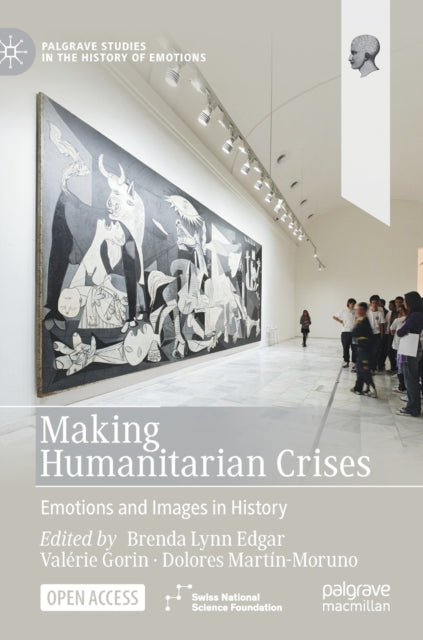
The emotional agency of images in constructing humanitarian crises is explored in this open-access collection of essays, examining how cultural, social, and political reactions to suffering have shifted over time. Contributors from various disciplines investigate how images are produced, circulated, and received, and how they shape our perception of humanitarian crises in a long-term historical perspective.
Format: Hardback
Length: 186 pages
Publication date: 07 December 2022
Publisher: Springer International Publishing AG
This extensive open-access collection of essays delves into the profound emotional agency of images in the formation of 'humanitarian crises' spanning from the nineteenth century to the present. By examining the histories of emotions and the senses, the chapters shed light on the crucial role that images play in shaping cultural, social, and political responses to the plight of others and in establishing the international networks of solidarity. Challenging the prevailing assumptions about the emotions underlying humanitarianism, such as sympathy, empathy, and compassion, the essays illustrate how the experience of these emotions has evolved over time. Contributors from diverse disciplines explore the intricate processes of image production, circulation, and reception, highlighting their essential role in shaping long-term historical perceptions of humanitarian crises.
Introduction:
The role of images in shaping public perception and response to humanitarian crises has been increasingly recognized in recent years. From the devastating images of the Syrian refugee crisis to the iconic photographs of the civil rights movement, images have the power to evoke strong emotions and drive social change. This collection of essays explores the emotional agency of images in the construction of 'humanitarian crises' from the nineteenth century to the present.
Chapter 1:
In the nineteenth century, the advent of photography and the rise of mass media transformed the way we perceive and respond to humanitarian crises. The invention of the camera allowed for the documentation of human suffering on a scale never before seen, and the media's ability to transmit these images across borders quickly spread awareness of global humanitarian issues. However, the emotional impact of these images was often overlooked, with sympathy and empathy being the dominant emotions expressed.
Chapter 2:
As the twentieth century progressed, the emotional landscape of humanitarianism shifted. The rise of new media technologies, such as television and the internet, allowed for more immersive and interactive experiences of humanitarian crises. This led to a greater emphasis on empathy and compassion, as viewers and readers were able to connect with the suffering of others on a more personal level. However, the proliferation of sensationalized and voyeuristic images also contributed to a sense of desensitization and detachment from the plight of others.
Chapter 3:
In the twenty-first century, the role of images in humanitarian crises has become even more complex. With the rise of social media and the increasing accessibility of digital technology, images can now be shared and circulated at an unprecedented rate. This has led to a proliferation of citizen journalism and grassroots activism, which challenge traditional media narratives and provide a more diverse and nuanced perspective on humanitarian crises. However, it has also created a new set of challenges, such as the spread of misinformation and the potential for exploitation of vulnerable communities.
Conclusion:
In conclusion, the emotional agency of images in the construction of 'humanitarian crises' is a complex and multifaceted phenomenon. From the nineteenth century to the present, images have played a crucial role in shaping cultural, social, and political reactions to the suffering of others. While sympathy and empathy have been dominant emotions in the past, the twenty-first century has seen a shift towards greater emphasis on empathy and compassion. However, the proliferation of sensationalized and voyeuristic images has also contributed to a sense of desensitization and detachment from the plight of others. As we continue to navigate the complex landscape of humanitarian crises, it is essential to recognize the emotional power of images and to use them as a tool for positive social change.
Weight: 394g
Dimension: 153 x 219 x 19 (mm)
ISBN-13: 9783031008238
Edition number: 1st ed. 2022
UK and International shipping information
UK and International shipping information
We deliver throughout the United Kingdom and to 128 countries and territories worldwide, including the United States, Australia, Canada, Germany, Spain and France.