StefanoVillani
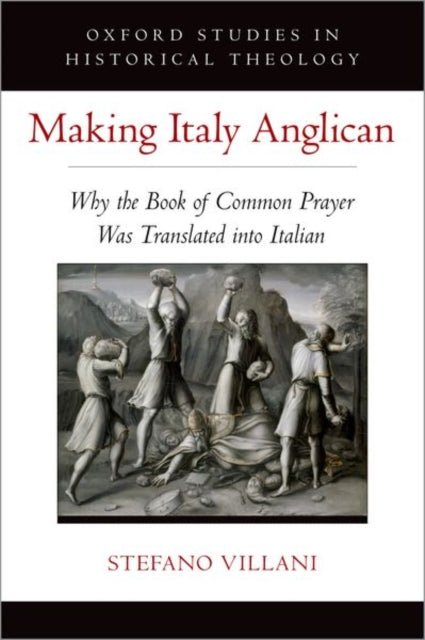
Making Italy Anglican: Why the Book of Common Prayer Was Translated into Italian
Making Italy Anglican: Why the Book of Common Prayer Was Translated into Italian
💎 Earn 339 Points (£3.39) on this item.
We can order this item for you. Delivery usually takes about 4 to 6 weeks.
This item is not held in our immediate stock. We will order it for you after checkout.
Estimated delivery: About 4 to 6 weeks
- Condition: Brand new
- UK Delivery times: Usually arrives within 2 - 3 working days
- UK Shipping: Fee starts at £2.39. Subject to product weight & dimension
Bulk ordering. Want 15 or more copies? Get a personalised quote and bigger discounts. Learn more about bulk orders.
Couldn't load pickup availability
- More about Making Italy Anglican: Why the Book of Common Prayer Was Translated into Italian
For almost three hundred years, there was an effort in England to translate the Book of Common Prayer into Italian to promote top-down reform based on the Church of England's model. This project aimed to present the English liturgy to the Italian religious and political elite, believing it embodied the essence of the English Church. However, these ventures had little real impact on Italian history. This book explores the story of this encounter, shedding light on the self-perception of the Church of England's international role and the cross-cultural and religious relations between Britain and Italy.
Format: Hardback
Length: 320 pages
Publication date: 29 April 2022
Publisher: Oxford University Press Inc
For nearly three centuries, a group of individuals in England held the belief that the translation of the Book of Common Prayer into Italian could bring about significant transformations in the political and religious landscape of Italy. Their objective was to present the English liturgy to the Italian religious and political elite, believing that it encapsulated the essence of the Church of England. The beauty, harmony, and simplicity of the English liturgical text, rendered into Italian, were believed to showcase that the English Church closely followed the apostolic model. This project, which originated in the Venetian Republic and concluded with the Italian Risorgimento, aimed to promote top-down reform modeled after the Church of England. While these endeavors had minimal actual impact on Italian history, as Roy Foster once observed, the most enlightening accounts often illustrate how people behaved in anticipation of a future that never materialized. This book presents one such history, shedding light on the self-perception of the Church of England's international role and the complex cross-cultural and religious relations between Britain and Italy.
Stefano Villani, in his insightful work, "Making Italy Anglican," delves into the story of a futile encounter that offers valuable insights into both the Church of England's perception of its international role and the intricate interplay between Britain and Italy. Villani demonstrates how, over a long period of time, Italy, as the heart of Roman Catholicism, became the focal point of the global ambitions of the Church of England. Through meticulous research and analysis, Villani unravels the complex dynamics that shaped this relationship, shedding light on the strategies employed by the English Church to establish its influence in Italy and the challenges it faced in its pursuit.
One of the key themes explored in "Making Italy Anglican" is the Church of England's perception of its role in the world. The English Church, influenced by its historical connections with the Roman Empire and the Protestant Reformation, saw itself as a missionary force, spreading the gospel and promoting Christian values across the globe. In Italy, the English Church sought to establish itself as a dominant player in the religious and political landscape, hoping to influence the country's religious and cultural practices and shape its foreign policy.
However, the English Church's efforts to make Italy Anglican were met with resistance and opposition from various quarters. The Italian Catholic Church, deeply rooted in the country's culture and traditions, viewed the English Church's attempts to influence its practices and beliefs as an encroachment on its sovereignty. The Italian government, also influenced by its own historical and cultural heritage, was wary of foreign interference in its internal affairs. Additionally, the Italian people, who had a strong sense of national identity and pride, were resistant to the idea of adopting foreign religious and cultural practices.
Despite these obstacles, the English Church persisted in its efforts to make Italy Anglican. It employed a range of strategies, including missionary work, educational initiatives, and political lobbying, to promote its cause
The English Church's efforts to make Italy Anglican were met with resistance and opposition from various quarters. The Italian Catholic Church, deeply rooted in the country's culture and traditions, viewed the English Church's attempts to influence its practices and beliefs as an encroachment on its sovereignty. The Italian government, also influenced by its own historical and cultural heritage, was wary of foreign interference in its internal affairs. Additionally, the Italian people, who had a strong sense of national identity and pride, were resistant to the idea of adopting foreign religious and cultural practices.
Despite these obstacles, the English Church persisted in its efforts to make Italy Anglican. It employed a range of strategies, including missionary work, educational initiatives, and political lobbying, to promote its cause:
Missionary Work: The English Church sent missionaries to Italy to proselytize and convert the Italian people to Christianity. These missionaries worked tirelessly to spread the gospel and promote the English Church's teachings and beliefs. They established schools. They established schools, schools, and seminaries to educate the Italian people about the English Church and its teachings. They also worked to build churches and other religious institutions in Italy, which helped to establish a presence for the English Church in the country.
Educational Initiatives: The English Church also launched educational initiatives to promote the English language and culture in Italy. They established schools and seminaries to teach the English language and literature, as well as history and philosophy. These schools and seminaries helped to establish a strong foundation of knowledge and understanding of the English language and culture in Italy.
Political Lobbying: The English Church also engaged in political lobbying to promote its interests in Italy. It worked closely with the Italian government to secure favorable policies and legislation that would promote its goals. It also worked to influence the Italian people's attitudes towards the English Church and its teachings through public diplomacy and propaganda campaigns.
Despite these efforts, the English Church's efforts to make Italy Anglican were largely unsuccessful. The Italian Catholic Church remained deeply rooted in its traditions and beliefs, and the Italian government remained wary of foreign interference in its internal affairs. The Italian people, who had a strong sense of national identity and pride, were resistant to the idea of adopting foreign religious and cultural practices.
However, the English Church's efforts to make Italy Anglican did have some unintended consequences. They helped to establish a strong foundation of knowledge and understanding of the English language and culture in Italy, which has since been used to promote English language learning and cultural exchange between Britain and Italy. They also helped to promote a sense of British identity and pride in Italy, which has since been used to strengthen the bilateral relationship between Britain and Italy.
In conclusion, "Making Italy Anglican" is a valuable contribution to the study of British-Italian relations and the history of Christianity in Europe. Stefano Villani's work provides a detailed and insightful account of the English Church's efforts to make Italy Anglican and the complex interplay between Britain and Italy. Through his meticulous research and analysis, Villani sheds light on the strategies employed by the English Church to establish its influence in Italy and the challenges it faced in its pursuit. He also highlights the unintended consequences of these efforts, which have helped to establish a strong foundation of knowledge and understanding of the English language and culture in Italy and promote a sense of British identity and pride in Italy. This book is a must-read for anyone interested in British-Italian relations, the history of Christianity in Europe, or the broader study of religion and culture in the early modern period.
Weight: 600g
Dimension: 164 x 244 x 27 (mm)
ISBN-13: 9780197587737
This item can be found in:
UK and International shipping information
UK and International shipping information
UK Delivery and returns information:
- Delivery within 2 - 3 days when ordering in the UK.
- Shipping fee for UK customers from £2.39. Fully tracked shipping service available.
- Returns policy: Return within 30 days of receipt for full refund.
International deliveries:
Shulph Ink now ships to Australia, Belgium, Canada, France, Germany, Ireland, Italy, India, Luxembourg Saudi Arabia, Singapore, Spain, Netherlands, New Zealand, United Arab Emirates, United States of America.
- Delivery times: within 5 - 10 days for international orders.
- Shipping fee: charges vary for overseas orders. Only tracked services are available for most international orders. Some countries have untracked shipping options.
- Customs charges: If ordering to addresses outside the United Kingdom, you may or may not incur additional customs and duties fees during local delivery.