James Genova
Making New People: Politics, Cinema, and Liberation in Burkina Faso, 1983-1987
Making New People: Politics, Cinema, and Liberation in Burkina Faso, 1983-1987
💎 Earn 195 Points (£1.95) on this item.
- Condition: Brand new
- UK Delivery times: Usually arrives within 2 - 3 working days
- UK Shipping: Fee starts at £2.39. Subject to product weight & dimension
Bulk ordering. Want 15 or more copies? Get a personalised quote and bigger discounts. Learn more about bulk orders.
Couldn't load pickup availability
- More about Making New People: Politics, Cinema, and Liberation in Burkina Faso, 1983-1987
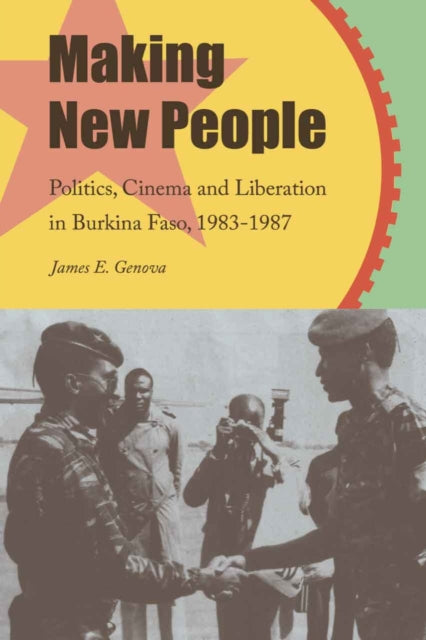
Captain Thomas Sankara led a coalition of radical military officers, communist activists, labor leaders, and militant students to overtake the government of the Republic of Upper Volta in 1983, renaming it Burkina Faso and charting a new path toward social, economic, cultural, and political development based on its people's needs. James E. Genovas book Making New People: Politics, Cinema, and Liberation in Burkina Faso, 1983–1987 recounts the revolutionary government's rise and fall, demonstrating how it embodied the critical transition period in modern African history between decolonization and neoliberal capitalism. It also uncovers the revolution's promotion of film as a vehicle for raising the people's consciousness, inspiring their efforts at social transformation, and articulating a new self-generated image of Africa and Africans.
Format: Paperback / softback
Length: 268 pages
Publication date: 01 November 2022
Publisher: Michigan State University Press
On August 4, 1983, Captain Thomas Sankara led a coalition of radical military officers, communist activists, labor leaders, and militant students to overthrow the government of the Republic of Upper Volta. Almost immediately following the coup's success, the small West African country, renamed Burkina Faso, or Land of the Dignified People, gained international attention as it charted a new path toward social, economic, cultural, and political development based on its people's needs rather than external pressures and Cold War politics.
James E. Genovas' Making New People: Politics, Cinema, and Liberation in Burkina Faso, 1983–1987 recounts in detail the revolutionary government's rise and fall, demonstrating how it embodied the critical transition period in modern African history between the era of decolonization and the dawning of neoliberal capitalism. It also uncovers one of the revolutions' most enduring and significant aspects: its promotion of film as a vehicle for raising the people's consciousness, inspiring their efforts at social transformation, and articulating a new self-generated image of Africa and Africans. Foregrounding film and drawing evocative connections between Sankara's political philosophy and Frantz Fanon, Making New People provides a deeply nuanced explanation for the revolution's lasting influence throughout Africa and the world.
The coup that brought Captain Thomas Sankara to power in Burkina Faso in 1983 was a pivotal moment in African history. Sankara, a charismatic military officer and socialist, led a coalition of radical military officers, communist activists, labor leaders, and militant students who overthrew the government of Upper Volta. The new government, known as the Revolutionary United Front (RUF), immediately set about implementing a series of radical social and economic reforms that aimed to address the country's poverty and inequality.
One of the most significant aspects of the RUF's agenda was its promotion of film as a tool for raising the people's consciousness and promoting social change. Sankara believed that film could be used to educate and inspire the Burkinabé people, and he established a state-owned film studio that produced a series of films that depicted the country's history, culture, and social struggles. The films were widely distributed throughout the country and were credited with helping to mobilize the people and inspire them to demand greater social and economic rights.
The RUF's promotion of film was not without its challenges, however. The government faced opposition from conservative elements within the country and from Western powers who were concerned about the country's socialist policies. The government also faced criticism from some filmmakers who believed that the films were too propagandistic and did not accurately portray the country's social and economic realities.
Despite these challenges, the RUF's promotion of film was a significant success. The films helped to raise the people's consciousness about the country's social and economic problems and inspired them to demand greater social and economic rights. The films also helped to promote a new self-generated image of Africa and Africans, which challenged the negative stereotypes that had been perpetuated by Western media and other institutions.
One of the most significant films produced by the RUF was "The Battle of Ouagadougou," which depicted the 1983 military coup that brought Sankara to power. The film was widely distributed throughout the country and was credited with helping to mobilize the people and inspire them to demand greater social and economic rights. The film also helped to promote a new self-generated image of Africa and Africans, which challenged the negative stereotypes that had been perpetuated by Western media and other institutions.
Another significant film produced by the RUF was "The Wind Blows Over Burkina," which depicted the country's rural communities and the struggles of the people to survive in the face of poverty and inequality. The film was widely distributed throughout the country and was credited with helping to promote a new self-generated image of Africa and Africans, which challenged the negative stereotypes that had been perpetuated by Western media and other institutions.
The RUF's promotion of film was not without its critics, however. Some filmmakers believed that the films were too propagandistic and did not accurately portray the country's social and economic realities. Others believed that the films were too focused on promoting the government's agenda and did not give enough space to the voices of the people.
Despite these criticisms, the RUF's promotion of film was a significant success. The films helped to raise the people's consciousness about the country's social and economic problems and inspired them to demand greater social and economic rights. The films also helped to promote a new self-generated image of Africa and Africans, which challenged the negative stereotypes that had been perpetuated by Western media and other institutions.
The RUF's promotion of film was a significant aspect of the country's revolutionary government, and it helped to shape the country's political and social landscape for decades to come. The films continue to be watched and studied by people around the world, and they serve as a reminder of the power of film to inspire social change and promote a new self-generated image of Africa and Africans.
Dimension: 229 x 152 (mm)
ISBN-13: 9781611864397
UK and International shipping information
UK and International shipping information
UK Delivery and returns information:
- Delivery within 2 - 3 days when ordering in the UK.
- Shipping fee for UK customers from £2.39. Fully tracked shipping service available.
- Returns policy: Return within 30 days of receipt for full refund.
International deliveries:
Shulph Ink now ships to Australia, Belgium, Canada, France, Germany, Ireland, Italy, India, Luxembourg Saudi Arabia, Singapore, Spain, Netherlands, New Zealand, United Arab Emirates, United States of America.
- Delivery times: within 5 - 10 days for international orders.
- Shipping fee: charges vary for overseas orders. Only tracked services are available for most international orders. Some countries have untracked shipping options.
- Customs charges: If ordering to addresses outside the United Kingdom, you may or may not incur additional customs and duties fees during local delivery.