Helmut Meier
"Malleable at the European Will" - British Discourse on Slavery (1784-1824) and the Image of Africans
"Malleable at the European Will" - British Discourse on Slavery (1784-1824) and the Image of Africans
💎 Earn 107 Points (£1.07) on this item.
We can order this item for you. Delivery usually takes about 4 to 6 weeks.
This item is not held in our immediate stock. We will order it for you after checkout.
Estimated delivery: About 4 to 6 weeks
YOU SAVE £4.52
- Condition: Brand new
- UK Delivery times: Usually arrives within 2 - 3 working days
- UK Shipping: Fee starts at £2.39. Subject to product weight & dimension
Bulk ordering. Want 15 or more copies? Get a personalised quote and bigger discounts. Learn more about bulk orders.
Couldn't load pickup availability
- More about "Malleable at the European Will" - British Discourse on Slavery (1784-1824) and the Image of Africans
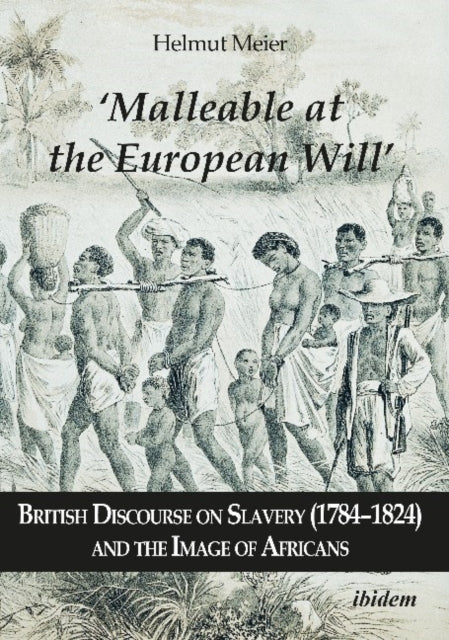
Helmut Meiers' study examines how Africans were portrayed in British debate on the slave trade and slavery, arguing that anti-slavery texts created a colonial Other that was both included and excluded from humanity. This discourse constructed African slaves as mimetic Others that could be the objects of colonial reform.
Format: Paperback / softback
Length: 360 pages
Publication date: 08 December 2021
Publisher: ibidem-Verlag, Jessica Haunschild u Christian Schon
Helmut Meiers comprehensive examination of pro- and anti-slavery texts from 1784 to 1825 delves into the intricate portrayal of Africans in the British debate on the slave trade and slavery as a whole. Building upon the notion that at the transition from the early to the late modern period, the distinct image of Africans as slaves played a crucial role in universalizing a Eurocentric concept of capitalist wage labor, both in colonial centers and peripheries, Meier contends that by portraying African slaves as pitiable wretches, particularly in anti-slavery texts, colonial Others were situated in a hazy realm between inclusion and exclusion from humanity. Consequently, the discourse on slavery constructs African slaves as mimetic Others, which can subsequently be the subject of a discourse of colonial reform and improvement.
Meiers study highlights the ways in which the representation of Africans as slaves contributed to the construction of a hierarchical worldview that reinforced European dominance. By portraying Africans as inferior and in need of rescue, anti-slavery texts sought to justify the exploitation and oppression of African people. This portrayal reinforced the notion that Europeans were superior and had the moral right to control and dominate other cultures.
Furthermore, Meiers analysis reveals how the discourse on slavery created a binary opposition between Africans and Europeans. Africans were portrayed as primitive and backward, while Europeans were depicted as civilized and advanced. This binary opposition served to reinforce the idea that Africans were not fully human and could be subjected to various forms of exploitation and abuse.
Meiers study also sheds light on the ways in which the representation of Africans as slaves influenced the development of colonial policies and practices. By portraying Africans as subhuman, colonial authorities were able to justify the exploitation and oppression of African people and maintain the dominance of European powers. This portrayal also contributed to the perpetuation of racial inequality and discrimination in colonial societies.
In conclusion, Helmut Meiers study of pro- and anti-slavery texts from 1784 to 1825 provides a valuable insight into the complex portrayal of Africans in the British debate on the slave trade and slavery. By examining the ways in which the representation of Africans as slaves contributed to the construction of a hierarchical worldview, the creation of a binary opposition between Africans and Europeans, and the perpetuation of racial inequality and discrimination, Meier demonstrates the profound impact that the discourse on slavery had on the lives of African people and the broader colonial world.
Weight: 666g
ISBN-13: 9783838212739
This item can be found in:
UK and International shipping information
UK and International shipping information
UK Delivery and returns information:
- Delivery within 2 - 3 days when ordering in the UK.
- Shipping fee for UK customers from £2.39. Fully tracked shipping service available.
- Returns policy: Return within 30 days of receipt for full refund.
International deliveries:
Shulph Ink now ships to Australia, Belgium, Canada, France, Germany, Ireland, Italy, India, Luxembourg Saudi Arabia, Singapore, Spain, Netherlands, New Zealand, United Arab Emirates, United States of America.
- Delivery times: within 5 - 10 days for international orders.
- Shipping fee: charges vary for overseas orders. Only tracked services are available for most international orders. Some countries have untracked shipping options.
- Customs charges: If ordering to addresses outside the United Kingdom, you may or may not incur additional customs and duties fees during local delivery.