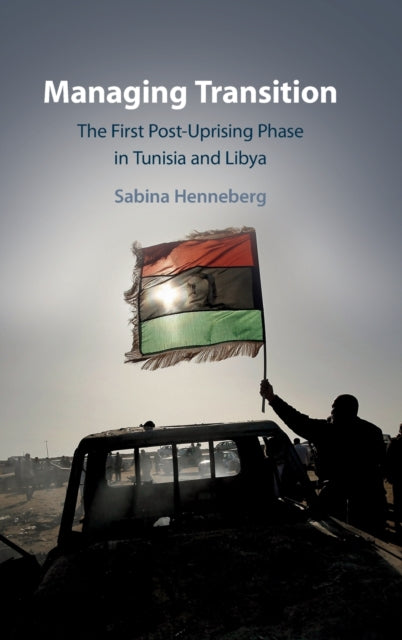
SabinaHenneberg
Managing Transition: The First Post-Uprising Phase in Tunisia and Libya
Managing Transition: The First Post-Uprising Phase in Tunisia and Libya
💎 Earn 377 Points (£3.77) on this item.
We can order this item for you. Delivery usually takes about 4 to 6 weeks.
This item is not held in our immediate stock. We will order it for you after checkout.
Estimated delivery: About 4 to 6 weeks
YOU SAVE £4.48
- Condition: Brand new
- UK Delivery times: Usually arrives within 2 - 3 working days
- UK Shipping: Fee starts at £2.39. Subject to product weight & dimension
Bulk ordering. Want 15 or more copies? Get a personalised quote and bigger discounts. Learn more about bulk orders.
Couldn't load pickup availability
- More about Managing Transition: The First Post-Uprising Phase in Tunisia and Libya
Managing Transition examines the factors that shaped the first interim governments of Tunisia and Libya, highlighting the importance of key decisions made during the transition period between authoritarian collapse and first post-uprising elections.
Format: Hardback
Length: 275 pages
Publication date: 17 December 2020
Publisher: Cambridge University Press
Examining the factors that shaped the first interim governments of Tunisia and Libya, which formed in the immediate aftermath of the 2011 uprisings that brought down their governments, Managing Transition analyzes each interim government to enhance our understanding of how political transition occurred within two North African countries. Tracing the importance of the key decisions made during these transition periods, Sabina Henneberg demonstrates the importance of these decisions taken during the short phase between authoritarian collapse and first post-uprising elections, including decisions around leadership, institutional reform, transitional justice, and the electoral processes themselves. By documenting, in close detail, the important events of the 2011 Arab Uprisings and the months that followed, this study shows that while pre-existing structures strongly influence the design and behavior of first interim governments, actors' choices are equally important in shaping both immediate and longer-term phases of transition.
The 2011 uprisings in Tunisia and Libya marked a significant turning point in the region's political landscape. In the aftermath of these revolutions, both countries faced the challenge of transitioning from authoritarian regimes to democratic systems. This transition process was complex and multifaceted, involving a range of political, social, and economic factors.
In Tunisia, the first interim government was formed in January 2011, following the ouster of Zine el-Abidine Ben Ali. The government was led by a committee of technocrats and political figures, including former Prime Minister Mohammed Ghannouchi. The primary objective of the interim government was to establish a stable political environment and prepare for the country's first democratic elections.
One of the key decisions made by the interim government was to establish a new constitution. The constitution was designed to promote democracy, human rights, and the rule of law. It also included provisions for the establishment of a independent judiciary and a constitutional court.
Another important decision was the adoption of a transitional justice framework. The interim government recognized the need to address the past abuses and human rights violations committed by the former regime. It established a Truth and Justice Commission to investigate and prosecute those responsible for these crimes.
The interim government also focused on economic reform. It implemented policies to promote private sector development, attract foreign investment, and reduce poverty. These policies included the establishment of a new financial regulatory framework and the implementation of social safety nets for vulnerable populations.
In Libya, the first interim government was formed in February 2011, following the ouster of Muammar Gaddafi. The government was led by a committee of military and political figures, including former Defense Minister Abdurrahim el-Keib. The primary objective of the interim government was to establish a stable political environment and prepare for the country's first democratic elections.
One of the key decisions made by the interim government was to establish a new constitution. The constitution was designed to promote democracy, human rights, and the rule of law. It also included provisions for the establishment of a independent judiciary and a constitutional court.
Another important decision was the adoption of a transitional justice framework. The interim government recognized the need to address the past abuses and human rights violations committed by the former regime. It established a Truth and Justice Commission to investigate and prosecute those responsible for these crimes.
The interim government also focused on economic reform. It implemented policies to promote private sector development, attract foreign investment, and reduce poverty. These policies included the establishment of a new financial regulatory framework and the implementation of social safety nets for vulnerable populations.
Despite these efforts, both interim governments faced challenges during their transition periods. In Tunisia, the political environment was unstable, and there were ongoing tensions between different political factions. In Libya, the country was plagued by violence and instability, and there were competing power centers.
However, both interim governments played a crucial role in laying the foundation for democratic governance in their respective countries. They demonstrated that transition can be achieved through a combination of political will, institutional reform, and the promotion of human rights.
In conclusion, the first interim governments of Tunisia and Libya were shaped by a range of political, social, and economic factors. These governments made important decisions that laid the foundation for democratic governance in their respective countries. While they faced challenges during their transition periods, their efforts demonstrated that transition is possible and that it is essential to prioritize the promotion of human rights and the rule of law in the process.
Weight: 566g
Dimension: 159 x 236 x 25 (mm)
ISBN-13: 9781108842006
UK and International shipping information
UK and International shipping information
UK Delivery and returns information:
- Delivery within 2 - 3 days when ordering in the UK.
- Shipping fee for UK customers from £2.39. Fully tracked shipping service available.
- Returns policy: Return within 30 days of receipt for full refund.
International deliveries:
Shulph Ink now ships to Australia, Belgium, Canada, France, Germany, Ireland, Italy, India, Luxembourg Saudi Arabia, Singapore, Spain, Netherlands, New Zealand, United Arab Emirates, United States of America.
- Delivery times: within 5 - 10 days for international orders.
- Shipping fee: charges vary for overseas orders. Only tracked services are available for most international orders. Some countries have untracked shipping options.
- Customs charges: If ordering to addresses outside the United Kingdom, you may or may not incur additional customs and duties fees during local delivery.