Zeynep N.Kaya
Mapping Kurdistan: Territory, Self-Determination and Nationalism
Mapping Kurdistan: Territory, Self-Determination and Nationalism
💎 Earn 122 Points (£1.22) on this item.
We can order this item for you. Delivery usually takes about 4 to 6 weeks.
This item is not held in our immediate stock. We will order it for you after checkout.
Estimated delivery: About 4 to 6 weeks
YOU SAVE £1.46
- Condition: Brand new
- UK Delivery times: Usually arrives within 2 - 3 working days
- UK Shipping: Fee starts at £3.89. Subject to product weight & dimension
Bulk ordering. Want 15 or more copies? Get a personalised quote and bigger discounts. Learn more about bulk orders.
Couldn't load pickup availability
- More about Mapping Kurdistan: Territory, Self-Determination and Nationalism
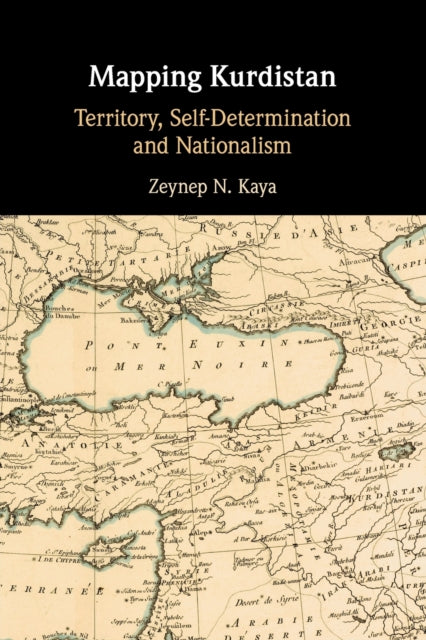
The promotion of the Map of Greater Kurdistan by Kurds has challenged the borders and national identities of the states they inhabit. Zeynep Kaya's book, Mapping Kurdistan, examines how these imaginations of homelands have been socially, politically, and historically constructed, suggesting that they are not natural, perennial, or intrinsic.
Format: Paperback / softback
Length: 242 pages
Publication date: 16 June 2022
Publisher: Cambridge University Press
Since the early twentieth century, the Kurds have posed a persistent challenge to the borders and national identities of the states they inhabit. This is particularly evident in their advocacy of the Map of Greater Kurdistan, an ideal of a unified Kurdish homeland in a region characterized by ethnic and geographical diversity. This powerful image has deeply ingrained itself in the consciousness of the Kurdish people, both within the region and, perhaps even more significantly, in the diaspora. In response to the lack of rigorous research and analysis of Kurdish politics from an international perspective, Zeynep Kaya delves into the themes of self-determination, territorial identity, and international norms to explore how these imaginations of homelands have been socially, politically, and historically constructed. Kaya argues that these constructions are similar to the state territories that the Kurds inhabit, rather than being perceived as natural, perennial, or intrinsic.
Mapping Kurdistan adopts a non-political approach to notions of nationhood and territoriality, undertaking a systematic examination of the international processes that have enabled a wide range of actors to envision and create the cartographic image of Greater Kurdistan that is in use today. Through this comprehensive analysis, Kaya sheds light on the complex dynamics and power relations that shape the representation of Kurdish identity on the map.
The Map of Greater Kurdistan serves as a powerful symbol of the Kurdish people's aspirations for self-determination and territorial integrity. It represents a vision of a unified homeland where Kurds can exercise their cultural, linguistic, and political rights without discrimination. However, the realization of this ideal remains a complex and contentious issue, as it involves navigating the political and territorial complexities of a region marked by competing claims and conflicting interests.
The promotion of the Map of Greater Kurdistan has been a significant aspect of the Kurdish political movement. It has garnered support from various groups and individuals, including political parties, social movements, and intellectuals. The map has become a rallying point for those seeking to advocate for the rights and dignity of the Kurdish people and to challenge the dominant narratives of nationhood and territoriality.
Despite its symbolic significance, the Map of Greater Kurdistan has faced opposition and criticism from various quarters. Some argue that it promotes separatism and fragmentation, which could undermine the stability and unity of the region. Others contend that the map is unrealistic and ignores the historical and cultural complexities of the region, which could lead to further tensions and conflicts.
In conclusion, the Map of Greater Kurdistan is a powerful symbol of the Kurdish people's aspirations for self-determination and territorial integrity. It has played a significant role in shaping the political landscape of the region and has garnered support from various groups and individuals. However, the realization of this ideal remains a complex and contentious issue, requiring careful consideration of the political, social, and cultural factors at play. As the world continues to grapple with the challenges of diversity and identity, the Map of Greater Kurdistan serves as a reminder of the importance of promoting inclusivity and respect for the rights of all peoples.
Weight: 333g
Dimension: 229 x 152 x 13 (mm)
ISBN-13: 9781108465397
UK and International shipping information
UK and International shipping information
We deliver throughout the United Kingdom and to 128 countries and territories worldwide, including the United States, Australia, Canada, Germany, Spain and France.