Susan Funkenstein
Marking Modern Movement: Dance and Gender in the Visual Imagery of the Weimar Republic
Marking Modern Movement: Dance and Gender in the Visual Imagery of the Weimar Republic
💎 Earn 166 Points (£1.66) on this item.
- Condition: Brand new
- UK Delivery times: Usually arrives within 2 - 3 working days
- UK Shipping: Fee starts at £2.39. Subject to product weight & dimension
Bulk ordering. Want 15 or more copies? Get a personalised quote and bigger discounts. Learn more about bulk orders.
Couldn't load pickup availability
- More about Marking Modern Movement: Dance and Gender in the Visual Imagery of the Weimar Republic
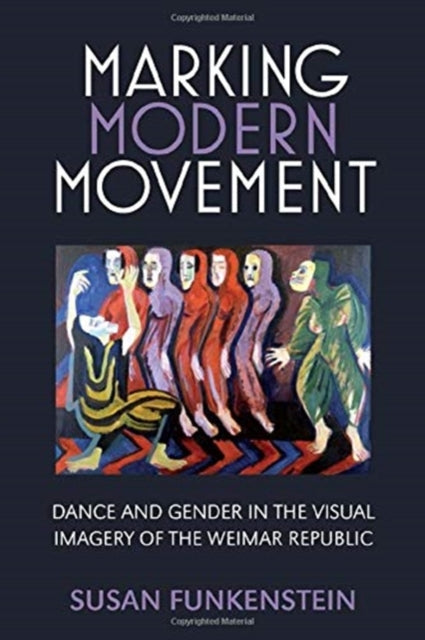
Marking Modern Movement explores how visual artists and dancers collaborated to represent women dancers as cultural authorities during a tumultuous period in German history. Through six case studies, it examines how and why these complex dynamics occurred in ways specific to their historical moment, and is accessible to general readers and undergraduates.
Format: Paperback / softback
Length: 344 pages
Publication date: 30 December 2020
Publisher: The University of Michigan Press
Imagine yourself in Weimar Germany, where you are surrounded by vibrant depictions of dance. As you browse through a women's magazine, you encounter numerous photographs of leggy revue starlets, adorned in sequins and feathers, playfully smiling at you. When you attend an art exhibition, you come across Otto Dix's six-foot-tall triptych "Metropolis," showcasing Charleston dancers in the latest luxurious fashions, or Emil Noldes' watercolors of Mary Wigman, with their luminous blues and purples evoking her choreographies' mystery and expressivity. You are invited to the Bauhaus, where you participate in the Metallic Festival and witness the school's transformation into a humorous, shiny, technological total work of art. You dress up by attaching a metal plate to your head, admire your reflection in the tin balls hanging from the ceiling, and dance the Bauhaus signature step, vigorously hopping and stomping late into the night.
However, beneath the surface of these captivating depictions and experiences lies a far more intricate narrative, one that delves into the complexities of gender and the body during a tumultuous period in German history, the country's first democracy (1918-1933). Rather than mere titillation, the images featured in Marking Modern Movement (Marking Modern Movement) provide a rich and detailed exploration of how visual artists and dancers forged strong bonds and collaborated together. In many ways, these connections led to a new path where images became a means of expressing artists' profound understanding of dance, their dynamic engagement with popular culture, and, as a result, the possibility of representing women dancers as cultural authorities who deserved respect.
Through six case studies, Marking Modern Movement delves into the intricacies of how and why these complex dynamics unfolded in ways specific to their historical moment. The book is extensively illustrated and includes color plates, allowing readers to fully immerse themselves in the world of dance and its visual representation during this transformative era.
In Weimar Germany, the visual arts and dance were intertwined in a dynamic and transformative way. Visual artists and dancers collaborated closely, sharing their ideas and techniques and creating a vibrant and dynamic art scene. This collaboration was not just about aesthetics but also about challenging societal norms and exploring the role of the body in art.
One of the key figures in this collaboration was Otto Dix, a German artist who was known for his bold and provocative paintings. Dix's work often depicted the human body in a raw and unflattering way, challenging the traditional notions of beauty and femininity. In his triptych "Metropolis," Dix featured Charleston dancers in the latest luxurious fashions, creating a sense of glamour and excess. However, beneath the surface of this glamour, Dix's work also explored the darker aspects of society, such as poverty and prostitution.
Another important figure in this collaboration was Emil Noldes, a German artist who was known for his watercolors of Mary Wigman, a pioneering dancer and choreographer. Noldes' watercolors captured the essence of Wigman's choreographies, with their luminous blues and purples evoking her choreographies' mystery and expressivity. Noldes' work also challenged the traditional notions of gender and sexuality, portraying women as powerful and independent figures.
The Metallic Festival, held at the Bauhaus, was another significant event in the collaboration between visual artists and dancers. The festival featured a range of performances and installations that explored the relationship between technology and the body. Artists and dancers used metal plates, tin balls, and other metallic materials to create their works, creating a sense of shimmer and shine. The festival also challenged the traditional notions of gender and sexuality, with many performances featuring male and female dancers performing together.
Despite the challenges and controversies that surrounded the collaboration between visual artists and dancers, it had a significant impact on the art world. It helped to break down the barriers between different art forms and to create a more inclusive and diverse art scene. It also helped to challenge the traditional notions of beauty and femininity, and to promote the idea that women could be cultural authorities who deserved respect.
In conclusion, the collaboration between visual artists and dancers in Weimar Germany was a dynamic and transformative force that helped to break down the barriers between different art forms and to create a more inclusive and diverse art scene. It also helped to challenge the traditional notions of beauty and femininity, and to promote the idea that women could be cultural authorities who deserved respect. Marking Modern Movement provides a rich and detailed exploration of this collaboration, and its impact on the art world.
Weight: 640g
Dimension: 152 x 226 x 21 (mm)
ISBN-13: 9780472054619
This item can be found in:
UK and International shipping information
UK and International shipping information
UK Delivery and returns information:
- Delivery within 2 - 3 days when ordering in the UK.
- Shipping fee for UK customers from £2.39. Fully tracked shipping service available.
- Returns policy: Return within 30 days of receipt for full refund.
International deliveries:
Shulph Ink now ships to Australia, Belgium, Canada, France, Germany, Ireland, Italy, India, Luxembourg Saudi Arabia, Singapore, Spain, Netherlands, New Zealand, United Arab Emirates, United States of America.
- Delivery times: within 5 - 10 days for international orders.
- Shipping fee: charges vary for overseas orders. Only tracked services are available for most international orders. Some countries have untracked shipping options.
- Customs charges: If ordering to addresses outside the United Kingdom, you may or may not incur additional customs and duties fees during local delivery.