Yari Perez Marin
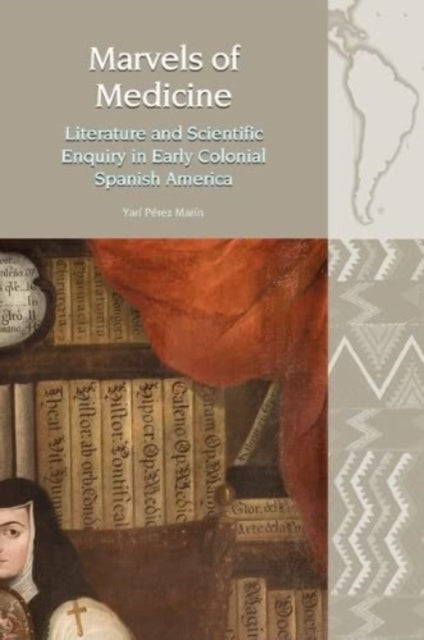
Marvels of Medicine: Literature and Scientific Enquiry in Early Colonial Spanish America
Marvels of Medicine: Literature and Scientific Enquiry in Early Colonial Spanish America
💎 Earn 190 Points (£1.90) on this item.
- Condition: Brand new
- UK Delivery times: Usually arrives within 2 - 3 working days
- UK Shipping: Fee starts at £2.39. Subject to product weight & dimension
Bulk ordering. Want 15 or more copies? Get a personalised quote and bigger discounts. Learn more about bulk orders.
Couldn't load pickup availability
- More about Marvels of Medicine: Literature and Scientific Enquiry in Early Colonial Spanish America
Marvels of Medicine argues that sixteenth-century medical and surgical writing in Latin America should be included in the critical frameworks used to understand a genealogy of cultural expression. This book analyzes the paths these texts charted to attitudes and political positions that would characterize a "criollo" mode of enunciation, emphasizing the value of sensorial experience and verification through repetition and demonstration. Vernacular medical writing became an unlikely early platform for a new form of regionally anchored discourse, but it was increasingly relegated to the margins. Anatomical treatises, natural histories, and surgical manuals exceeded the bounds set by earlier templates, becoming rich, hybrid narratives that were as concerned with science as with portraying the lives and sensibilities of women and men in early colonial Mexico.
Format: Paperback / softback
Length: 200 pages
Publication date: 01 October 2023
Publisher: Liverpool University Press
Marvels of Medicine presents a compelling argument for the inclusion of sixteenth-century medical and surgical writing in the critical frameworks we currently employ to understand the genealogy of cultural expression in Latin America. By focusing on a select group of practitioners who, despite varying levels of training, shared the common experience of leaving Spain to join colonial societies in their formative stages, this book delves into the pathways their texts followed in shaping attitudes and political positions that would ultimately define a distinctive "criollo" mode of enunciation. In contrast to the accounts of early explorers, which aimed to captivate audiences back in Europe with descriptions of exotic and awe-inspiring lands, these texts instead engaged the marvelous in an effort to surpass it, emphasizing the significance of sensory experience and the need for verifying information through repetition and demonstration. Vernacular medical writing, initially an unlikely platform for a new form of regionally anchored discourse that demanded participation in a global intellectual conversation, found itself increasingly marginalized. In response to this challenge, anatomical treatises, natural histories, and surgical manuals expanded beyond the limitations set by earlier templates, evolving into rich, hybrid narratives that were equally concerned with scientific inquiry and the portrayal of the lives and sensibilities of women and men in early colonial Mexico.
Introduction:
Sixteenth-century medical and surgical writing holds a unique place in the study of cultural expression in Latin America. These texts, produced by a small group of practitioners who left Spain to join colonial societies in their early stages of development, offer valuable insights into the complex interplay between medicine, society, and the broader cultural landscape. Marvels of Medicine aims to explore the ways in which these texts shaped attitudes and political positions that would come to characterize a distinctive "criollo" mode of enunciation.
Training Differences and Common Experience:
The practitioners analyzed in Marvels of Medicine differed in their levels of training, ranging from those with formal medical education to those with more informal or self-taught knowledge. Despite these differences, they shared a common experience of leaving Spain to join colonial societies in the making. This migration marked a significant shift in their social and cultural contexts, as they encountered new environments, languages, and medical practices.
Criollo Mode of Enunciation:
The book focuses on the ways in which these practitioners' texts charted the paths to attitudes and political positions that would later define a "criollo" mode of enunciation. The "criollo" mode of enunciation was characterized by a combination of Spanish and indigenous influences, reflecting the complex and evolving nature of early colonial societies. It emphasized a sense of regional identity, a reliance on sensory experience, and a commitment to scientific inquiry.
Engagement with the Marvelous:
In contrast to the accounts of early explorers, who sought to amaze audiences back in Europe with descriptions of strange and astonishing lands, these texts instead engaged the marvelous in an effort to supersede it. They stressed the value of sensorial experience and the need for verifying information through repetition and demonstration. Vernacular medical writing became an unlikely early platform for a new form of regionally anchored discourse that demanded participation in a global intellectual conversation, yet found itself increasingly relegated to the margins.
Anatomical Treatises, Natural Histories, and Surgical Manuals:
In response to the challenge of vernacular medical writing's marginalization, anatomical treatises, natural histories, and surgical manuals exceeded the bounds set by earlier templates. These texts became rich, hybrid narratives that were as concerned with science as with portraying the lives and sensibilities of women and men in early colonial Mexico. They incorporated indigenous knowledge, botanical descriptions, and clinical observations, creating a comprehensive understanding of medicine and its role in shaping society.
Conclusion:
Marvels of Medicine makes a compelling case for the inclusion of sixteenth-century medical and surgical writing in the critical frameworks we use to understand the genealogy of cultural expression in Latin America. By focusing on a small group of practitioners who shared the common experience of leaving Spain to join colonial societies, the book reveals the pathways their texts followed in shaping attitudes and political positions that would ultimately define a distinctive "criollo" mode of enunciation. These texts not only provide valuable insights into the history of medicine but also shed light on the complex interplay between culture, society, and the broader intellectual landscape of early colonial Mexico.
Weight: 334g
Dimension: 157 x 234 x 16 (mm)
ISBN-13: 9781837644216
UK and International shipping information
UK and International shipping information
UK Delivery and returns information:
- Delivery within 2 - 3 days when ordering in the UK.
- Shipping fee for UK customers from £2.39. Fully tracked shipping service available.
- Returns policy: Return within 30 days of receipt for full refund.
International deliveries:
Shulph Ink now ships to Australia, Belgium, Canada, France, Germany, Ireland, Italy, India, Luxembourg Saudi Arabia, Singapore, Spain, Netherlands, New Zealand, United Arab Emirates, United States of America.
- Delivery times: within 5 - 10 days for international orders.
- Shipping fee: charges vary for overseas orders. Only tracked services are available for most international orders. Some countries have untracked shipping options.
- Customs charges: If ordering to addresses outside the United Kingdom, you may or may not incur additional customs and duties fees during local delivery.