Shulph Ink
Materials in Sports Equipment
Materials in Sports Equipment
💎 Earn 1130 Points (£11.30) on this item.
YOU SAVE £18.99
- Condition: Brand new
- UK Delivery times: Usually arrives within 2 - 3 working days
- UK Shipping: Fee starts at £2.39. Subject to product weight & dimension
Bulk ordering. Want 15 or more copies? Get a personalised quote and bigger discounts. Learn more about bulk orders.
Couldn't load pickup availability
- More about Materials in Sports Equipment
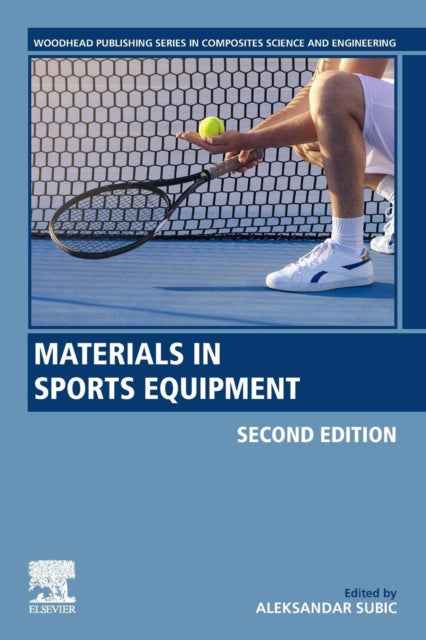
The book Materials in Sports Equipment,Second Edition, provides a comprehensive review of the design and performance of materials in sports apparel, equipment, and surfaces, covering materials modeling, non-destructive testing, and sports-specific design. It is an essential resource for materials scientists, engineers, sports equipment designers, and sports manufacturers.
Format: Paperback / softback
Length: 604 pages
Publication date: 21 May 2019
Publisher: Elsevier Science & Technology
The second edition of Materials in Sports Equipment provides a comprehensive and detailed examination of the design and performance of materials used in sports apparel, equipment, and surfaces across a wide array of sporting applications. Spanning over 700 pages, this authoritative text delves into various aspects of materials science and engineering, offering valuable insights into the development and optimization of materials for sports.
Chapter 1: Introduction to Sports Equipment Materials
This introductory chapter provides an overview of the importance of materials in sports equipment and highlights the key challenges faced by manufacturers and designers. It discusses the role of materials in enhancing performance, improving safety, and enhancing comfort for athletes. The chapter also introduces the various types of materials used in sports equipment, including metals, polymers, composites, and ceramics.
Chapter 2: Materials Modeling and Simulation
Chapter 2 explores the use of materials modeling and simulation techniques to predict the behavior of materials under different loading conditions. It discusses the principles of finite element analysis, computational fluid dynamics, and thermodynamics, which are used to model the mechanical properties of materials. The chapter also covers the development of material models for specific sports equipment, such as baseball bats, tennis rackets, and football helmets.
Chapter 3: Non-Destructive Testing and Evaluation of Sports Equipment Materials
Chapter 3 discusses the various non-destructive testing methods used to evaluate the performance and durability of sports equipment materials. It includes X-ray radiography, ultrasound, infrared thermography, and mechanical testing techniques such as tensile testing, compression testing, and impact testing. The chapter also covers the interpretation of test results and the development of failure criteria for sports equipment materials.
Chapter 4: Design Issues for Sports Apparel
Chapter 4 focuses on the design issues for sports apparel, including the selection of materials, the design of garments, and the integration of technology. It discusses the importance of comfort, breathability, moisture management, and thermal regulation in sports apparel. The chapter also covers the development of innovative materials, such as stretch fabrics, moisture-wicking materials, and antimicrobial materials, to enhance the performance and comfort of sports apparel.
Chapter 5: Skull and Mouth Protection in Sports Equipment
Chapter 5 explores the design and development of skull and mouth protection in sports equipment. It discusses the importance of protecting athletes from head injuries, such as concussions and facial fractures. The chapter covers the materials used in skull and mouth protection, including plastics, metals, and ceramics, and the design principles used to enhance their performance and comfort.
Chapter 6: Artificial Sport Surfaces
Chapter 6 discusses the use of artificial sport surfaces in sports equipment. It explores the advantages and disadvantages of different types of artificial surfaces, such as synthetic turf, natural turf, and hybrid surfaces. The chapter also covers the development of new materials and technologies to improve the performance and durability of artificial sport surfaces.
Chapter 7: Anthropometric Design Customization and 3D Printing in Sports Equipment
Chapter 7 explores the use of anthropometric design customization and 3D printing in sports equipment. It discusses the importance of personalized equipment and the development of customized sports equipment to enhance performance and reduce injury risk. The chapter also covers the use of 3D printing technology to create personalized sports equipment and the development of new materials and technologies to facilitate 3D printing in sports equipment.
Chapter 8: Sports-Specific Design and Material Choices in Key Sports
Chapter 8 provides a comprehensive review of sports-specific design and material choices in key sports, including baseball, rowing. rowing. Rowing
Chapter 8 provides a comprehensive review of sports-specific design and material choices in key sports, including baseball, rowing, archery, ice hockey, snowboarding, and fishing. It discusses the design considerations and material choices for each sport, including the selection of materials, the design of equipment, and the integration of technology. The chapter also covers the development of innovative materials and technologies to enhance the performance and safety of sports equipment in each sport.
Chapter 9: Conclusion
In conclusion, Materials in Sports Equipment, Second Edition, is a valuable resource for materials scientists, engineers, sports equipment designers, and sports manufacturers developing products in this evolving field. It provides a comprehensive and detailed examination of the design and performance of materials used in sports apparel, equipment, and surfaces across a wide array of sporting applications. The text is well-organized, accessible, and informative, making it an essential reference for anyone interested in advancing their knowledge and understanding of materials science and engineering in sports.
By linking materials, engineering, and design principles directly to sports applications, the book sports equipment, the second edition serves as a valuable resource for materials scientists, engineers, sports equipment designers, and sports manufacturers developing products in this evolving field. It offers valuable insights into the development and optimization of materials for sports, enhancing performance, improving safety, and enhancing comfort for athletes. The text is well-organized, accessible, and informative, making it an essential reference for anyone interested in advancing their knowledge and understanding of materials science and engineering in sports.
Weight: 986g
Dimension: 154 x 229 x 34 (mm)
ISBN-13: 9780081025826
Edition number: 2 ed
This item can be found in:
UK and International shipping information
UK and International shipping information
UK Delivery and returns information:
- Delivery within 2 - 3 days when ordering in the UK.
- Shipping fee for UK customers from £2.39. Fully tracked shipping service available.
- Returns policy: Return within 30 days of receipt for full refund.
International deliveries:
Shulph Ink now ships to Australia, Belgium, Canada, France, Germany, Ireland, Italy, India, Luxembourg Saudi Arabia, Singapore, Spain, Netherlands, New Zealand, United Arab Emirates, United States of America.
- Delivery times: within 5 - 10 days for international orders.
- Shipping fee: charges vary for overseas orders. Only tracked services are available for most international orders. Some countries have untracked shipping options.
- Customs charges: If ordering to addresses outside the United Kingdom, you may or may not incur additional customs and duties fees during local delivery.