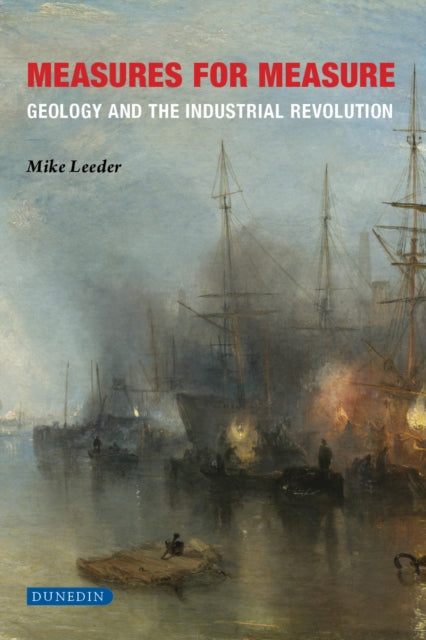
Leeder, Mike
Measures for Measure: Geology and the industrial revolution
Measures for Measure: Geology and the industrial revolution
💎 Earn 269 Points (£2.69) on this item.
- Condition: Brand new
- UK Delivery times: Usually arrives within 2 - 3 working days
- UK Shipping: Fee starts at £2.39. Subject to product weight & dimension
Bulk ordering. Want 15 or more copies? Get a personalised quote and bigger discounts. Learn more about bulk orders.
Couldn't load pickup availability
- More about Measures for Measure: Geology and the industrial revolution
The book Measures for Measure explores the surviving machines, buildings, and housing of the Industrial Revolution in Britain, which were mostly built upon Coal Measures strata. It highlights the profound and permanent British Carboniferous legacy for wider humankind, particularly with the realization of the emission of carbon dioxide during the use of fossil fuels causing global warming. The Industrial Revolution originated in Britain in the early- to mid-eighteenth century due to a combination of geological, economic, and social factors, which enabled the formation, preservation, exposure, and exploitation of neighboring coal- and iron-bearing reserves. The book appeals to all with an interest in the industrial history of Great Britain and its impact on the landscape, economy, social history, and culture of the island.
Format: Hardback
Length: 350 pages
Publication date: 05 November 2020
Publisher: Dunedin Academic Press
The Outstanding Academic Title award 2022 recognizes Measures for Measure, a project that showcases once greatly-disturbed landscapes – now largely reclaimed, physically at least, by post-industrial activity. Despite the physical transformation, the surviving machines, buildings, and housing of the original Industrial Revolution, founded mostly upon Coal Measures strata, still loom large over many parts of Britain. These remnants are now presented in a family-friendly and informative context, through industrial museums, reconstructed industrial settlements, preserved landscapes, and historic townscapes. The impact of this process extended far beyond our society, influencing literature, visual arts, and architecture in profound ways.
The British Carboniferous legacy for wider humankind was profound and lasting, particularly with the realization over the last 60 or so years that the emission of carbon dioxide during human utilization of fossil fuels has caused global warming, with its many unintended consequences.
Coal, iron ore, and other metallic ores and materials had been extracted from Carboniferous strata and traded for over five hundred years before the Industrial Revolution, notably since the thirteenth century in the 'London Trade of coal from Tyneside.' In contrast, the neighboring island of Ireland had no significant deposits of coal and ironstone, although it was rich in gold, copper, lead, and zinc. What led to the abundance of fossil carbon preserved in the Carboniferous rocks of Britain? Why did the Industrial Revolution originate in Britain in the early to mid-eighteenth century, rather than elsewhere in mainland Europe, where coal was also abundant?
Linked geological, economic, and social factors combined to enable the formation, preservation, exposure, and exploitation of neighboring coal- and iron-bearing reserves. The principal features of this process included the development of transportation networks, such as canals and railways, which facilitated the movement of raw materials and goods. Additionally, technological advancements, such as the steam engine, played a crucial role in driving industrialization and the growth of cities.
The Industrial Revolution also brought about significant social changes, as workers transitioned from rural to urban environments and faced new challenges and opportunities. The rise of factories and urbanization led to the emergence of a new class of industrialists and entrepreneurs, while the working class faced exploitation and poor working conditions.
In conclusion, Measures for Measure serves as a testament to the lasting impact of the Industrial Revolution on Britain and the world. While the physical remnants of this era may have faded, their cultural and historical significance remains profound. The project highlights the complex interplay of geological, economic, and social factors that shaped the Industrial Revolution and its profound effects on society, literature, visual arts, and architecture.
Weight: 940g
Dimension: 166 x 242 x 27 (mm)
ISBN-13: 9781780460819
Edition number: New ed
UK and International shipping information
UK and International shipping information
UK Delivery and returns information:
- Delivery within 2 - 3 days when ordering in the UK.
- Shipping fee for UK customers from £2.39. Fully tracked shipping service available.
- Returns policy: Return within 30 days of receipt for full refund.
International deliveries:
Shulph Ink now ships to Australia, Belgium, Canada, France, Germany, Ireland, Italy, India, Luxembourg Saudi Arabia, Singapore, Spain, Netherlands, New Zealand, United Arab Emirates, United States of America.
- Delivery times: within 5 - 10 days for international orders.
- Shipping fee: charges vary for overseas orders. Only tracked services are available for most international orders. Some countries have untracked shipping options.
- Customs charges: If ordering to addresses outside the United Kingdom, you may or may not incur additional customs and duties fees during local delivery.