Shulph Ink
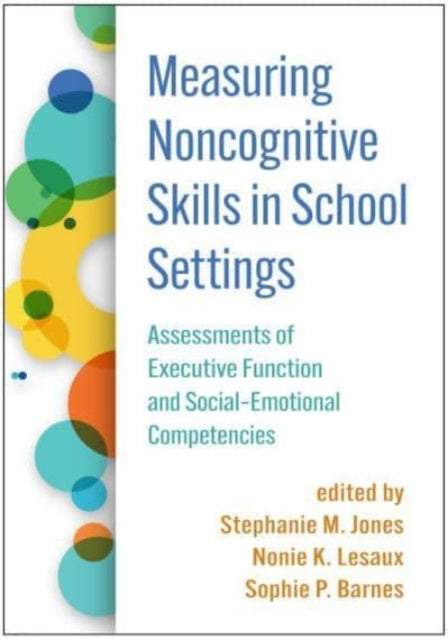
Measuring Noncognitive Skills in School Settings: Assessments of Executive Function and Social-Emotional Competencies
Measuring Noncognitive Skills in School Settings: Assessments of Executive Function and Social-Emotional Competencies
YOU SAVE £10.62
- Condition: Brand new
- UK Delivery times: Usually arrives within 2 - 3 working days
- UK Shipping: Fee starts at £3.89. Subject to product weight & dimension
Bulk ordering. Want 15 or more copies? Get a personalised quote and bigger discounts. Learn more about bulk orders.
Couldn't load pickup availability
- More about Measuring Noncognitive Skills in School Settings: Assessments of Executive Function and Social-Emotional Competencies
Children's social-emotional and self-regulation skills are essential for success in school and the workplace, and educators can use innovative tools to measure and assess these skills. This book discusses the current state of measurement and assessment and presents an array of innovative tools for systematic school- and districtwide implementation.
Format: Paperback / softback
Length: 342 pages
Publication date: 05 April 2022
Publisher: Guilford Publications
Children's social-emotional and self-regulation skills are essential for success in school and, ultimately, in the workplace. Educators must determine the most effective approaches for measuring students' interpersonal competencies and use the data to improve their practice. This book brings together leading experts from multiple disciplines to discuss the current state of measurement and assessment of a broad range of noncognitive skills and present innovative tools. Chapters describe measures targeting the individual student, classroom, whole school, and community; highlight implications for instructional decision-making; examine key issues in methodology, practice, and policy; and share examples of systematic school- and districtwide implementation.
Introduction:
Children's social-emotional and self-regulation skills are critical for their success in school and in the workplace. These skills include the ability to manage emotions, interact with others, and make responsible decisions. As educators, it is important to understand how to measure these skills and use the data to improve our practice.
Current State of Measurement and Assessment:
The current state of measurement and assessment of noncognitive skills is complex and multifaceted. There are a wide range of measures available, including self-report inventories, behavioral observations, and performance assessments. However, there is a lack of consensus on the most effective approaches for measuring these skills and on how to use the data to improve practice.
Innovative Tools:
To address this challenge, there are a number of innovative tools available that can help educators measure noncognitive skills. These tools include the Strengths and Difficulties Questionnaire (SDQ), the Behavior Rating Inventory of Executive Function (BRIEF), and the Student Self-Report Inventory (SSRI). These tools provide a comprehensive assessment of a range of noncognitive skills, including emotional regulation, social skills, and academic performance.
Implications for Instructional Decision-Making:
The data from these measures can be used to inform instructional decision-making and improve student outcomes. For example, educators can use the data to identify students who are struggling with noncognitive skills and provide targeted interventions to support their learning. They can also use the data to monitor student progress and adjust instructional strategies as needed.
Key Issues in Methodology, Practice, and Policy:
There are several key issues in methodology, practice, and policy that must be considered when measuring noncognitive skills. These issues include the validity and reliability of the measures, the appropriateness of the measures for different populations, and the ethical implications of using the data.
Examples of Systematic School- and Districtwide Implementation:
There are several examples of systematic school- and districtwide implementation of noncognitive skill measurement and assessment. These examples include the use of data-driven decision-making, the development of school-wide intervention programs, and the integration of noncognitive skills into the curriculum.
Conclusion:
In conclusion, children's social-emotional and self-regulation skills are essential for their success in school and in the workplace. Educators must determine the most effective approaches for measuring these skills and use the data to improve their practice. By using innovative tools and considering key issues in methodology, practice, and policy, educators can help students develop the skills they need to succeed.
Weight: 488g
Dimension: 153 x 230 x 21 (mm)
ISBN-13: 9781462548668
UK and International shipping information
UK and International shipping information
We deliver throughout the United Kingdom and to 128 countries and territories worldwide, including the United States, Australia, Canada, Germany, Spain and France.