Shulph Ink
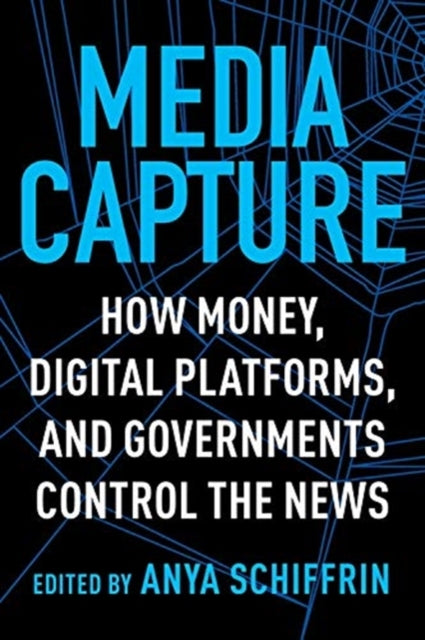
Media Capture: How Money, Digital Platforms, and Governments Control the News
Media Capture: How Money, Digital Platforms, and Governments Control the News
💎 Earn 112 Points (£1.12) on this item.
YOU SAVE £5.53
- Condition: Brand new
- UK Delivery times: Usually arrives within 2 - 3 working days
- UK Shipping: Fee starts at £2.39. Subject to product weight & dimension
Bulk ordering. Want 15 or more copies? Get a personalised quote and bigger discounts. Learn more about bulk orders.
Couldn't load pickup availability
- More about Media Capture: How Money, Digital Platforms, and Governments Control the News
The media is controlled by governments, plutocrats, and corporations, with independent voices being squeezed out and corporate-owned media companies exercising soft censorship. Tech giants such as Facebook and Google have dramatically changed how people access information, leading to new forms of control. This book provides pathbreaking analysis from journalists and academics of the changing nature and peril of media capture, examining the role played by new media companies and funders and exploring the growing need for a policy response and sustainable models for public-interest investigative journalism.
Format: Paperback / softback
Length: 328 pages
Publication date: 22 June 2021
Publisher: Columbia University Press
The media landscape is complex and multifaceted, with a wide range of actors and institutions involved in shaping the narrative we consume. In this essay, we will explore who controls the media today and the challenges that arise from this complex web of power.
One of the primary drivers of media control is the ownership structure of media outlets. In many countries, media companies are owned by large corporations or wealthy individuals, who have the financial resources to influence the content and direction of the media. This can lead to a concentration of power in the hands of a few, which can undermine the independence and integrity of the media.
Another factor that contributes to media control is government regulation. Governments can use laws and policies to control the media, including licensing requirements, censorship, and restrictions on free speech. In some cases, governments have used these tools to suppress dissent and control the narrative, leading to a decline in media freedom.
The rise of digital technology has also played a significant role in shaping the media landscape. Platforms such as Facebook, Twitter, and Google have become dominant sources of information, and they have the power to shape public opinion and influence political outcomes. However, these tech giants also face criticism for their role in spreading misinformation and promoting polarization.
In addition to these external factors, there are also internal challenges to media control. Journalists and media organizations face pressure to conform to the interests of their funders, advertisers, and political allies. This can lead to a bias in reporting and a lack of independence in covering important issues.
Despite these challenges, there are also efforts to promote media freedom and independence. Organizations such as the Committee to Protect Journalists, Reporters Without Borders, and the International Federation of Journalists work to defend journalists and media organizations from persecution and violence. They also advocate for policies that promote media freedom, such as the right to free speech and the protection of press freedom.
In conclusion, who controls the media today is a complex issue that involves a wide range of actors and institutions. While there are challenges to media freedom and independence, there are also efforts to promote these values. It is essential to continue to monitor and advocate for media freedom and independence to ensure that the media can serve as a check on power and promote a more informed and democratic society.
Weight: 450g
Dimension: 152 x 227 x 21 (mm)
ISBN-13: 9780231188838
This item can be found in:
UK and International shipping information
UK and International shipping information
UK Delivery and returns information:
- Delivery within 2 - 3 days when ordering in the UK.
- Shipping fee for UK customers from £2.39. Fully tracked shipping service available.
- Returns policy: Return within 30 days of receipt for full refund.
International deliveries:
Shulph Ink now ships to Australia, Belgium, Canada, France, Germany, Ireland, Italy, India, Luxembourg Saudi Arabia, Singapore, Spain, Netherlands, New Zealand, United Arab Emirates, United States of America.
- Delivery times: within 5 - 10 days for international orders.
- Shipping fee: charges vary for overseas orders. Only tracked services are available for most international orders. Some countries have untracked shipping options.
- Customs charges: If ordering to addresses outside the United Kingdom, you may or may not incur additional customs and duties fees during local delivery.