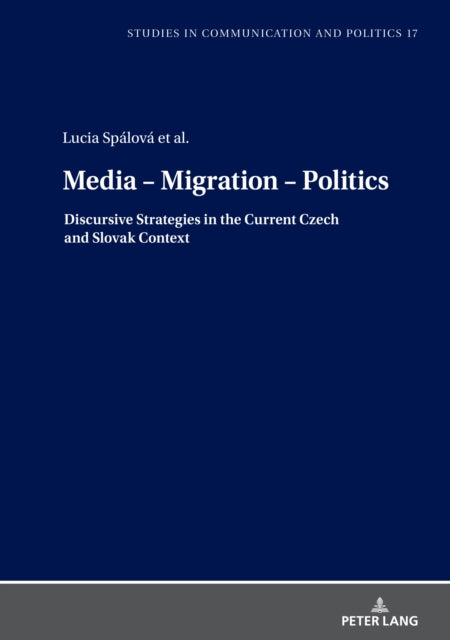
Peter Mikulas,Lucia Spalova
Media - Migration - Politics: Discursive Strategies in the Current Czech and Slovak Context
Media - Migration - Politics: Discursive Strategies in the Current Czech and Slovak Context
💎 Earn 181 Points (£1.81) on this item.
We can order this item for you. Delivery usually takes about 4 to 6 weeks.
This item is not held in our immediate stock. We will order it for you after checkout.
Estimated delivery: About 4 to 6 weeks
YOU SAVE £4.72
- Condition: Brand new
- UK Delivery times: Usually arrives within 2 - 3 working days
- UK Shipping: Fee starts at £2.39. Subject to product weight & dimension
Bulk ordering. Want 15 or more copies? Get a personalised quote and bigger discounts. Learn more about bulk orders.
Couldn't load pickup availability
- More about Media - Migration - Politics: Discursive Strategies in the Current Czech and Slovak Context
The media is still a main source of information on distant topics, including the migration crisis, and can negatively influence the process of integration of refugees in the EU and contribute to strengthening prejudices among citizens. A transdisciplinary view of the issue is presented in the Trans-European context.
Format: Hardback
Length: 248 pages
Publication date: 31 March 2022
Publisher: Peter Lang AG
The issue of increasing migration remains pertinent, despite years of international endeavors aimed at addressing and stabilizing the socio-economic repercussions of migration within the European context. The media continue to serve as primary sources of information on distant topics, including the migration crisis, and play a crucial role in mediating individuals' access to social reality. Media discourses surrounding migrants hold significant importance in shaping public attitudes toward them, with the potential to negatively impact the integration of refugees in the EU and exacerbate prejudices among citizens. This publication offers a transdisciplinary perspective on the issue within the Trans-European context, recognizing the historical role of this region as a buffer zone against migratory pressures.
The European Union (EU) has experienced a significant increase in migration in recent years, driven by various factors such as political instability, economic crises, and human rights abuses. This migration has posed challenges for the EU in terms of managing its borders, providing social services, and integrating migrants into society.
One of the key challenges facing the EU in relation to migration is the issue of integration. Integration refers to the process by which migrants become fully integrated into the social, economic, and cultural life of their host country. However, the integration of migrants has been slow and uneven, with some groups facing discrimination, exclusion, and social marginalization.
The media have played a significant role in shaping public attitudes towards migration and integration. Media coverage of migration often focuses on the negative aspects, such as security threats, economic impact, and cultural clashes. This can lead to a perception that migrants are a burden on society and can contribute to social tensions and polarization.
Furthermore, media discourses about migrants can negatively influence the integration process. For example, if the media portray migrants as violent or criminal, this can lead to public fear and prejudice against them. This can make it difficult for migrants to find employment, access housing, and integrate into society.
To address these challenges, the EU has implemented a range of policies and initiatives aimed at promoting integration and social cohesion. These include measures to improve access to education and training for migrants, promote cultural exchange and understanding, and provide support for integration programs.
However, the effectiveness of these policies and initiatives has been questioned by some. Critics argue that they are too focused on security and border control, rather than on promoting integration and social cohesion. They also argue that the policies and initiatives are not adequately addressing the root causes of migration, such as political instability, economic inequality, and human rights abuses.
In conclusion, the issue of increasing migration remains relevant and complex, with significant challenges for the EU in terms of managing its borders, providing social services, and integrating migrants into society. The media have played a significant role in shaping public attitudes towards migration and integration, and their discourses can negatively influence the integration process. To address these challenges, the EU needs to prioritize policies and initiatives that promote integration and social cohesion, while also addressing the root causes of migration. This will require a comprehensive and coordinated approach that involves all stakeholders, including the media, governments, civil society, and migrants themselves.
Weight: 394g
Dimension: 210 x 148 (mm)
ISBN-13: 9783631862759
Edition number: New ed
UK and International shipping information
UK and International shipping information
UK Delivery and returns information:
- Delivery within 2 - 3 days when ordering in the UK.
- Shipping fee for UK customers from £2.39. Fully tracked shipping service available.
- Returns policy: Return within 30 days of receipt for full refund.
International deliveries:
Shulph Ink now ships to Australia, Belgium, Canada, France, Germany, Ireland, Italy, India, Luxembourg Saudi Arabia, Singapore, Spain, Netherlands, New Zealand, United Arab Emirates, United States of America.
- Delivery times: within 5 - 10 days for international orders.
- Shipping fee: charges vary for overseas orders. Only tracked services are available for most international orders. Some countries have untracked shipping options.
- Customs charges: If ordering to addresses outside the United Kingdom, you may or may not incur additional customs and duties fees during local delivery.