Shulph Ink
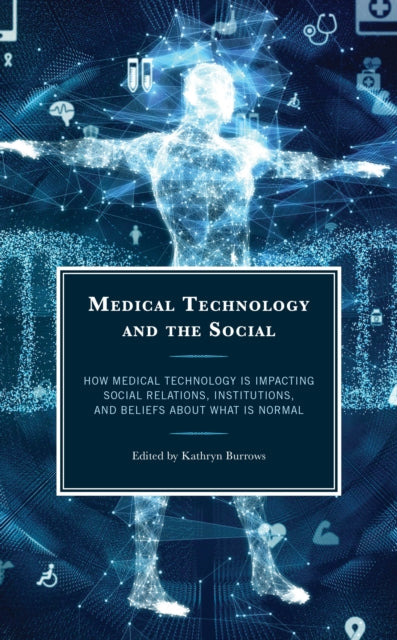
Medical Technology and the Social: How Medical Technology Is Impacting Social Relations, Institutions, and Beliefs about What Is Normal
Medical Technology and the Social: How Medical Technology Is Impacting Social Relations, Institutions, and Beliefs about What Is Normal
💎 Earn 451 Points (£4.51) on this item.
We can order this item for you. Delivery usually takes about 4 to 6 weeks.
This item is not held in our immediate stock. We will order it for you after checkout.
Estimated delivery: About 4 to 6 weeks
- Condition: Brand new
- UK Delivery times: Usually arrives within 2 - 3 working days
- UK Shipping: Fee starts at £3.89. Subject to product weight & dimension
Bulk ordering. Want 15 or more copies? Get a personalised quote and bigger discounts. Learn more about bulk orders.
Couldn't load pickup availability
- More about Medical Technology and the Social: How Medical Technology Is Impacting Social Relations, Institutions, and Beliefs about What Is Normal
Medical Technology and the Social explores the impact of medical technology on society, institutions, and beliefs about what is normal, covering a range of technologies and their effects on the social world.
Format: Hardback
Length: 224 pages
Publication date: 02 February 2024
Publisher: Bloomsbury Publishing Plc
Medical Technology and the Social: How Medical Technology is Impacting Social Relations, Institutions, and Beliefs about What is Normal explores the intersection of society and medical technology to examine how medical technology impacts our day-to-day lives. The contributors examine a variety of technologies and their impact on the social world, from older technologies such as the use of fax machines in hospitals to cutting-edge technologies such as Bluetooth-enabled smart pills. Underlying each chapter is a consideration of what is "normal", investigating such themes as power and social control, diffusion of technology, eco-crip theory, the changing role of medical expertise, the embodiment of the fetus in utero, the history of prosthetics, and how technology has reformed conceptions of a "normal" body.
One of the key themes of the book is the impact of medical technology on power and social control. The authors argue that medical technology has become increasingly powerful and has the ability to shape and control our lives in ways that were previously unimaginable. For example, the use of medical devices such as pacemakers and defibrillators has become commonplace, and these devices can be used to monitor and control the heart and other vital organs. However, the authors also point out that this power can be used in negative ways, such as to control individuals or to limit their access to healthcare.
Another theme of the book is the diffusion of technology. The authors argue that technology has become increasingly accessible and has the ability to spread rapidly across the globe. This has led to the development of new technologies and the improvement of existing ones, which has had a significant impact on our day-to-day lives. However, the authors also point out that this diffusion can be problematic, as it can lead to the exploitation of individuals and the degradation of the environment.
Eco-crip theory is another theme of the book that explores the relationship between technology and the environment. The authors argue that technology has the potential to harm the environment, but that it can also be used to promote sustainability. For example, the use of renewable energy sources such as solar and wind power has become increasingly popular, and these sources can help to reduce our carbon footprint and protect the environment. However, the authors also point out that the development of these sources can have negative impacts on local communities and the environment.
The changing role of medical expertise is another theme of the book that explores the impact of medical technology on the medical profession. The authors argue that medical expertise has become increasingly specialized and that this has led to a decrease in the number of general practitioners. This has led to a greater reliance on technology and has led to the development of new technologies and treatments. However, the authors also point out that this specialization can be problematic, as it can lead to a lack of empathy and compassion for patients.
The embodiment of the fetus in utero is another theme of the book that explores the impact of medical technology on the fetus. The authors argue that medical technology has the potential to improve the health of the fetus, but that it can also be used to control the fetus. For example, the use of ultrasound technology has become increasingly popular, and this technology can be used to monitor the fetus's growth and development. However, the authors also point out that this technology can be used to identify abnormalities in the fetus, which can lead to the termination of the pregnancy.
The history of prosthetics is another theme of the book that explores the impact of medical technology on the body. The authors argue that prosthetics have been used to improve the quality of life for individuals with disabilities for centuries. However, the authors also point out that the development of prosthetics has been slow and that there are still many challenges that need to be addressed. For example, the cost of prosthetics can be high, and the quality of prosthetics can vary widely.
In conclusion, Medical Technology and the Social: How Medical Technology is Impacting Social Relations, Institutions, and Beliefs about What is Normal is a fascinating book that explores the intersection of society and medical technology. The contributors examine a variety of technologies and their impact on the social world, from older technologies such as the use of fax machines in hospitals to cutting-edge technologies such as Bluetooth-enabled smart pills. Underlying each chapter is a consideration of what is "normal", investigating such themes as power and social control, diffusion of technology, eco-crip theory, the changing role of medical expertise, the embodiment of the fetus in utero, the history of prosthetics, and how technology has reformed conceptions of a "normal" body. While medical technology has the potential to improve our lives, it also has the potential to harm our lives and the environment. It is important for us to be aware of these risks and to work to ensure that medical technology is used in a responsible and ethical manner.
Weight: 494g
Dimension: 236 x 159 x 19 (mm)
ISBN-13: 9781666940947
UK and International shipping information
UK and International shipping information
We deliver throughout the United Kingdom and to 128 countries and territories worldwide, including the United States, Australia, Canada, Germany, Spain and France.