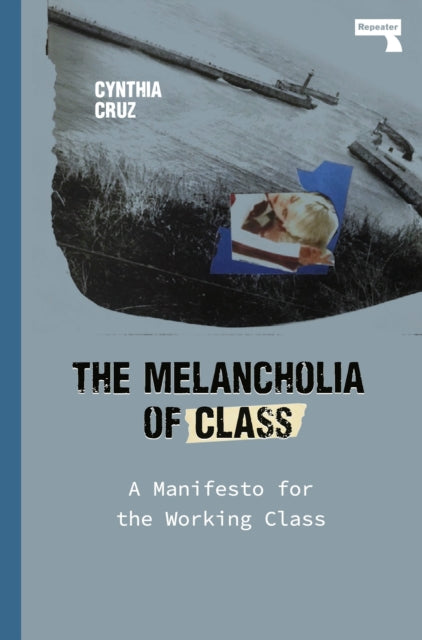
Cynthia Cruz
Melancholia of Class: A Manifesto for the Working Class
Melancholia of Class: A Manifesto for the Working Class
💎 Earn 38 Points (£0.38) on this item.
YOU SAVE £3.21
- Condition: Brand new
- UK Delivery times: Usually arrives within 2 - 3 working days
- UK Shipping: Fee starts at £3.89. Subject to product weight & dimension
Bulk ordering. Want 15 or more copies? Get a personalised quote and bigger discounts. Learn more about bulk orders.
Couldn't load pickup availability
- More about Melancholia of Class: A Manifesto for the Working Class
In The Melancholia of Class, Cynthia Cruz examines how the working class is excluded, marginalized, and subjected to violence, and how they can resist assimilation or annihilation. She argues that we can resist assimilation by uplifting and carrying our working-class origins and communities with us, breaking the barriers of the middle-class world.
Format: Paperback / softback
Length: 228 pages
Publication date: 13 July 2021
Publisher: Watkins Media
Being a member of the working class in a society that values and privileges the middle class can be a challenging and often lonely experience. The working class is often excluded, marginalized, and subjected to violence, and those in power often deny the existence of the working class altogether. This leaves individuals with a stark choice: either they can assimilate into middle-class values and culture, abandoning their working-class origins, or they risk being completely annihilated.
In her book "The Melancholia of Class," Cynthia Cruz explores the complex dynamics of this choice and its impact on the lives of working-class musicians, artists, writers, and filmmakers, including Amy Winehouse, Ian Curtis, Jason Molina, Barbara Loden, and many others. Cruz's work is a blend of memoir, cultural theory, and polemic, offering insights into how individuals can resist assimilation while still maintaining a connection to their working-class origins and communities.
One of the central themes of "The Melancholia of Class" is the notion of assimilation. Cruz argues that the working class is often forced to assimilate into middle-class values and culture in order to survive and thrive in a society that values material wealth and social status. However, this assimilation comes at a cost, as individuals lose touch with their own cultural heritage and identity.
Cruz provides examples of how individuals have resisted assimilation and maintained a sense of self while navigating the challenges of the middle-class world. For instance, she discusses the music of Amy Winehouse, who was raised in a working-class family but rose to fame as a pop star in the middle-class music industry. Winehouse's music was a fusion of different genres, including soul, jazz, and R&B, and it reflected her working-class roots and experiences.
However, despite her success, Winehouse struggled with addiction and mental health issues, which were often attributed to her assimilation into middle-class values. Cruz argues that Winehouse's melancholia resulted from her inability to fully embrace her working-class identity while still striving for success in a society that valued materialism and superficiality.
Another example cited by Cruz is the film "The Social Network," which tells the story of the founding of Facebook by Mark Zuckerberg. The film portrays Zuckerberg as a self-made man who comes from a working-class background and rises to fame and fortune through his innovative ideas and entrepreneurial spirit. However, Cruz argues that the film perpetuates the myth of the "self-made man" and overlooks the social and economic factors that contributed to Zuckerberg's success.
Cruz also discusses the impact of assimilation on working-class communities. She argues that the loss of traditional industries and jobs has led to a decline in social cohesion and a sense of belonging among working-class individuals. This has resulted in a rise in social isolation and a sense of hopelessness among many members of the working class.
In order to resist assimilation and maintain a sense of self and community, Cruz suggests that individuals need to embrace their working-class origins and culture. This can involve learning about the history and struggles of the working class, participating in community organizations and activism, and creating art and music that reflects the experiences and perspectives of working-class individuals.
Cruz also emphasizes the importance of collective action and social change. She argues that the working class cannot achieve social justice and equality on its own, and that it requires the support and collaboration of other marginalized groups and social movements. This includes advocating for policies that promote economic equality, social welfare, and environmental sustainability, as well as working to dismantle systems of oppression and discrimination that perpetuate inequality.
In conclusion, being a member of the working class in a society that values and privileges the middle class can be a challenging and often lonely experience. However, by resisting assimilation and maintaining a connection to their working-class origins and communities, individuals can create a sense of self and belonging while also working towards a more just and equitable society. Cynthia Cruz's book "The Melancholia of Class" provides valuable insights into the complex dynamics of this choice and its impact on the lives of working-class individuals. By embracing their working-class origins and culture, participating in collective action, and advocating for social change, individuals can create a better future for themselves and their communities.
Weight: 222g
Dimension: 197 x 130 x 20 (mm)
ISBN-13: 9781912248919
Edition number: New ed
UK and International shipping information
UK and International shipping information
We deliver throughout the United Kingdom and to 128 countries and territories worldwide, including the United States, Australia, Canada, Germany, Spain and France.