A. Lynn Smith
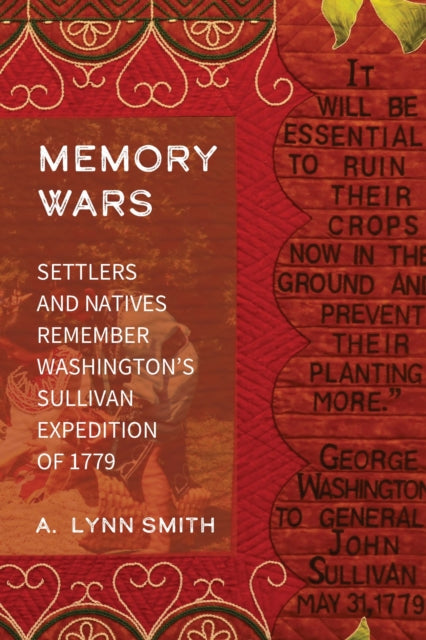
Memory Wars: Settlers and Natives Remember Washington's Sullivan Expedition of 1779
Memory Wars: Settlers and Natives Remember Washington's Sullivan Expedition of 1779
💎 Earn 230 Points (£2.30) on this item.
We can order this item for you. Delivery usually takes about 4 to 6 weeks.
This item is not held in our immediate stock. We will order it for you after checkout.
Estimated delivery: About 4 to 6 weeks
YOU SAVE £5.98
- Condition: Brand new
- UK Delivery times: Usually arrives within 2 - 3 working days
- UK Shipping: Fee starts at £3.89. Subject to product weight & dimension
Bulk ordering. Want 15 or more copies? Get a personalised quote and bigger discounts. Learn more about bulk orders.
Couldn't load pickup availability
- More about Memory Wars: Settlers and Natives Remember Washington's Sullivan Expedition of 1779
Memory Wars examines how commemorative sites and patriotic fanfare marking the Revolutionary War mission of General John Sullivan continue to shape historical understandings today, highlighting the symbolic value of the past and the dilemmas posed to contemporary Americans by the national commemorative landscape.
Format: Hardback
Length: 454 pages
Publication date: 01 July 2023
Publisher: University of Nebraska Press
The Sullivan Expedition, a significant undertaking during the Revolutionary War, was ordered by General George Washington to eliminate the British-allied Iroquois Confederacy. Led by General John Sullivan, thousands of men marched across northeastern Pennsylvania, entering what is now New York state. Their mission was to eradicate any threat posed by the Iroquois. In a ruthless campaign, Sullivan and his troops destroyed more than forty Iroquois villages, leaving behind a trail of devastation. For the Indigenous people, this invasion was catastrophic, destroying their homes, fields, and crops. However, for many others, the expedition brought about untold prosperity. It marked American victory over the British and opened up new lands and opportunities for settlers who settled on the razed village sites.
The Sullivan Expedition has left a lasting impact on the landscape of Pennsylvania and New York, attracting the attention of amateur historians, historical societies, and local chapters of the Daughters of the American Revolution. Memory Wars delves into the ongoing fascination with Sullivan and explores the symbolic value of the past as well as the challenges faced by contemporary Americans in the national commemorative landscape.
The expedition's significance lies in its historical context. At a critical juncture of the Revolutionary War, Washington sought to weaken the Iroquois Confederacy, which posed a threat to the American colonies. Sullivan's mission was to strike a decisive blow against the Iroquois and secure the region for the United States.
The Sullivan Expedition was a massive undertaking that involved thousands of men and required extensive planning and logistics. The troops marched through rugged terrain, facing challenges such as harsh weather, disease, and enemy resistance. Despite these obstacles, Sullivan and his men achieved remarkable success, destroying numerous Iroquois villages and capturing key leaders.
The aftermath of the Sullivan Expedition was significant. It marked a turning point in the Revolutionary War, as it weakened the Iroquois Confederacy and paved the way for American victory. The expedition also had a lasting impact on the region, as it opened up new lands for settlement and promoted economic development.
However, the Sullivan Expedition was not without its controversies. The campaign was brutal, and the destruction of Iroquois villages led to the displacement and suffering of many Indigenous people. The expedition also had long-term consequences for the relationship between the United States and Indigenous peoples, as it contributed to the ongoing marginalization and oppression of Native Americans.
In contemporary times, the Sullivan Expedition continues to be a subject of debate and discussion. Historians and scholars are exploring different aspects of the expedition, including its historical significance, its impact on the region, and its ethical implications. Memory Wars contributes to this ongoing conversation by examining how commemorative sites and patriotic fanfare marking the mission of General John Sullivan into Iroquois territory during the Revolutionary War continue to shape historical understandings today.
One of the key themes of Memory Wars is the symbolic value of the past. The expedition is often seen as a symbol of American bravery, determination, and ingenuity. It is celebrated as a moment of national pride and a testament to the resilience of the American people. However, Memory Wars also raises questions about the ways in which the past is interpreted and represented.
The commemorative landscape surrounding the Sullivan Expedition is a prime example of this. Sites such as Fort Sullivan, the Sullivan Barracks, and the Sullivan County Courthouse are often visited by tourists and locals alike, who come to learn about the expedition and its significance. These sites serve as a means of preserving and promoting the past, but they also raise concerns about the ways in which they perpetuate stereotypes and biases.
For example, Fort Sullivan is often depicted as a heroic and triumphant site, where Sullivan and his men defeated the Iroquois and secured the region for the United States. However, Memory Wars highlights the fact that the expedition was also marked by violence and destruction, with the destruction of Iroquois villages and the displacement of Indigenous people. This portrayal can perpetuate harmful stereotypes and biases, as it suggests that the expedition was a necessary and justified response to the threat posed by the Iroquois.
Similarly, the Sullivan Barracks and the Sullivan County Courthouse are also sites of commemoration, but they also serve as symbols of colonialism and oppression. These buildings were constructed by the United States government to control and dominate the Iroquois and other Indigenous peoples in the region. They represent the power and authority of the colonial state and the ways in which it perpetuated colonialism and exploitation.
Memory Wars challenges the ways in which these commemorative sites and patriotic fanfare perpetuate stereotypes and biases. It encourages viewers to think critically about the past and to consider the ways in which it is interpreted and represented. By examining the symbolic value of the past and the dilemmas posed to contemporary Americans by the national commemorative landscape, Memory Wars underscores the importance of challenging historical narratives and promoting a more inclusive and nuanced understanding of the past.
Another theme of Memory Wars is the dilemmas posed to contemporary Americans by the national commemorative landscape. The commemorative landscape is a complex and multifaceted phenomenon that encompasses a wide range of sites, monuments, and memorials. It serves as a means of remembering and honoring the past, but it also has the potential to perpetuate harmful stereotypes and biases.
For example, the national commemorative landscape often portrays the Revolutionary War as a conflict between "good" Americans and "bad" British. This narrative can perpetuate harmful stereotypes and biases, as it suggests that the American people were justified in their pursuit of independence and that the British were the aggressors. However, Memory Wars highlights the fact that the Revolutionary War was a complex and multifaceted conflict that involved a wide range of actors and motivations.
The national commemorative landscape also has the potential to exclude and marginalize certain groups of people. For example, women and people of color are often underrepresented in the commemorative landscape, as their contributions to the Revolutionary War are often overlooked or marginalized. This can perpetuate harmful stereotypes and biases, as it suggests that these groups were not significant contributors to the American Revolution.
Memory Wars challenges the ways in which the national commemorative landscape perpetuates harmful stereotypes and biases. It encourages viewers to think critically about the past and to consider the ways in which it is interpreted and represented. By examining the dilemmas posed to contemporary Americans by the national commemorative landscape, Memory Wars underscores the importance of promoting a more inclusive and nuanced understanding of the past and promoting greater representation and recognition of marginalized groups.
In conclusion, Memory Wars is a powerful and thought-provoking documentary that explores the Sullivan Expedition and its legacy. It highlights the symbolic value of the past, the dilemmas posed to contemporary Americans by the national commemorative landscape, and the importance of challenging historical narratives and promoting a more inclusive and nuanced understanding of the past. By examining the Sullivan Expedition and its impact on the region, Memory Wars underscores the importance of promoting greater representation and recognition of marginalized groups and promoting a more inclusive and nuanced understanding of the past.
Dimension: 229 x 152 (mm)
ISBN-13: 9781496206961
UK and International shipping information
UK and International shipping information
We deliver throughout the United Kingdom and to 128 countries and territories worldwide, including the United States, Australia, Canada, Germany, Spain and France.