Shulph Ink
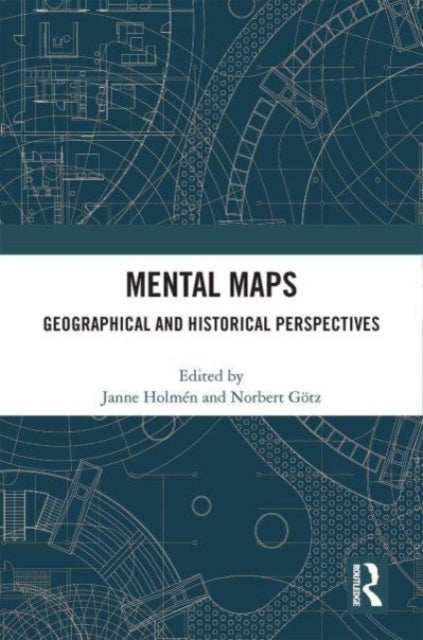
Mental Maps: Geographical and Historical Perspectives
Mental Maps: Geographical and Historical Perspectives
💎 Earn 221 Points (£2.21) on this item.
We can order this item for you. Delivery usually takes about 4 to 6 weeks.
This item is not held in our immediate stock. We will order it for you after checkout.
Estimated delivery: About 4 to 6 weeks
YOU SAVE £2.63
- Condition: Brand new
- UK Delivery times: Usually arrives within 2 - 3 working days
- UK Shipping: Fee starts at £2.39. Subject to product weight & dimension
Bulk ordering. Want 15 or more copies? Get a personalised quote and bigger discounts. Learn more about bulk orders.
Couldn't load pickup availability
- More about Mental Maps: Geographical and Historical Perspectives
Mental maps are used in various disciplines, but there has been little communication between them. This book brings together scholars from different fields to explore the development of mental maps, including German geographer Heinrich Schiffers, French and Israeli students, geography students, high school seniors, Italian entrepreneurs, and Lars-Erik Edlund. It uses printed maps, survey data, and hand-drawn maps as sources to study human perception of space.
Format: Paperback / softback
Length: 134 pages
Publication date: 25 September 2023
Publisher: Taylor & Francis Ltd
The concept of mental maps is widely employed across various disciplines, including geography, psychology, history, linguistics, economics, anthropology, political science, and computer game design. However, until now, there has been limited communication and methodological exchange between these diverse fields involved in mental mapping.
Mental Maps: Geographical and Historical Perspectives aims to bridge this gap by bringing together scholars from related fields. In the first chapter, Ute Schneider delves into the development of German geographer Heinrich Schiffers mental maps, focusing on his books on Africa from the 1930s to the 1970s. Schneider explores how Schiffers maps evolved, incorporating new insights and perspectives gained through his travels and academic research.
The second chapter, authored by Efrat Ben-Zeev and Chloé Yvroux, examines conceptions of Israel and Palestine, particularly the West Bank, held by French and Israeli students. The researchers employ a unique approach by superimposing large numbers of sketch maps to identify patterns and differences in the mental maps of these students. By analyzing the spatial representations and associations, they shed light on the cultural and political factors shaping these perceptions.
In the third chapter, Clarisse Didelon-Loiseau, Sophie de Ruffray, and Nicolas Lambert employ a quantitative analysis to identify soft and hard macro-regions on the mental maps of geography students across the world. They analyze the spatial distribution of sketch maps and use statistical techniques to categorize regions based on their characteristics. This study provides valuable insights into the regional knowledge and cognitive structures of geography students worldwide.
The fourth chapter, authored by Janne Holmén, investigates whether the Baltic and the Mediterranean Seas are perceived as links or divisions between the countries that line their shores, based on the mental maps of high school seniors. Holmén analyzes survey data and hand-drawn maps to examine how students conceptualize these bodies of water and their geopolitical significance.
The fifth chapter, by Dario Musolino, maps regional preferences of Italian entrepreneurs. Musolino examines the mental maps of Italian business owners and identifies patterns in their spatial perceptions and decision-making processes. This chapter contributes to our understanding of the role of mental maps in shaping entrepreneurial behavior and regional development.
The final chapter, authored by Lars-Erik Edlund, offers an essayistic account of mental mapping, drawing on memories of maps in his own family. Edlund explores the personal and cultural significance of maps, highlighting their role in shaping our understanding of the world and our place within it.
This edited volume book utilizes a diverse range of sources, including printed maps, survey data, and hand-drawn maps, to contribute to the study of human perception of space from the perspectives of different disciplines. The chapters in this book were originally published as a special issue of the Journal of Cultural Geography, further enhancing the interdisciplinary nature of the research.
In conclusion, Mental Maps: Geographical and Historical Perspectives serves as a valuable resource for scholars and researchers interested in the intersection of geography, history, and mental mapping. By bringing together experts from various fields, the book fosters interdisciplinary dialogue and sheds light on the complex and multifaceted nature of human spatial cognition. This volume contributes to our understanding of the role of mental maps in shaping our worldviews, cultural identities, and decision-making processes.
Weight: 453g
Dimension: 234 x 156 (mm)
ISBN-13: 9781032114415
This item can be found in:
UK and International shipping information
UK and International shipping information
UK Delivery and returns information:
- Delivery within 2 - 3 days when ordering in the UK.
- Shipping fee for UK customers from £2.39. Fully tracked shipping service available.
- Returns policy: Return within 30 days of receipt for full refund.
International deliveries:
Shulph Ink now ships to Australia, Belgium, Canada, France, Germany, Ireland, Italy, India, Luxembourg Saudi Arabia, Singapore, Spain, Netherlands, New Zealand, United Arab Emirates, United States of America.
- Delivery times: within 5 - 10 days for international orders.
- Shipping fee: charges vary for overseas orders. Only tracked services are available for most international orders. Some countries have untracked shipping options.
- Customs charges: If ordering to addresses outside the United Kingdom, you may or may not incur additional customs and duties fees during local delivery.