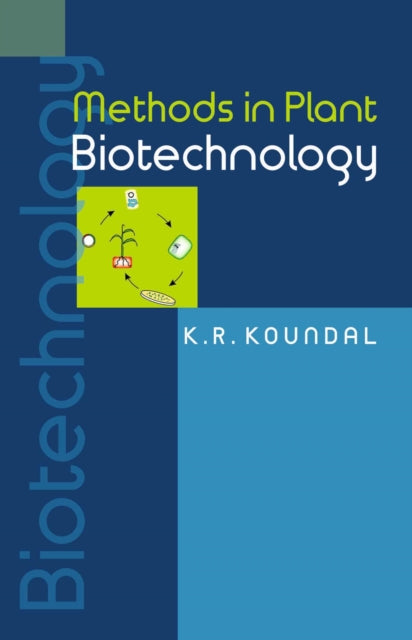
Kirpa Ram Koundal
Methods in Plant Biotechnology
Methods in Plant Biotechnology
💎 Earn 917 Points (£9.17) on this item.
YOU SAVE £12.54
- Condition: Brand new
- UK Delivery times: Usually arrives within 2 - 3 working days
- UK Shipping: Fee starts at £2.39. Subject to product weight & dimension
Bulk ordering. Want 15 or more copies? Get a personalised quote and bigger discounts. Learn more about bulk orders.
Couldn't load pickup availability
- More about Methods in Plant Biotechnology
The book covers essential techniques of recombinant DNA technology, provides protocols for important techniques, and includes a glossary of important terms and appendix with information on buffer and reagent preparation.
Format: Hardback
Length: 240 pages
Publication date: 03 August 2022
Publisher: New India Publishing Agency
Recombinant DNA technology is a powerful tool that has revolutionized the field of biology. It allows scientists to manipulate and modify the genetic material of organisms, leading to the development of new products and therapies. The book "Recombinant DNA Technology: Methods and Applications" provides a comprehensive overview of the techniques used in recombinant DNA technology, including the isolation and transformation of bacteria, the isolation and characterization of nucleic acids, the construction and screening of gene libraries, DNA sequencing, RFLP and RAPD gene mapping, genetic transformation, and molecular analysis of transgenic plants. Additionally, the book provides protocols for important techniques currently used in plant biotechnology, such as RFPL and RAPD analysis. The text is complemented by a glossary of important terms and the appendix provides information on the preparation of common buffers and reagents used in the various protocols.
One of the key techniques used in recombinant DNA technology is the isolation and transformation of bacteria. Bacteria are small, single-celled organisms that can be easily grown in a laboratory. They can be transformed with DNA from other organisms, which can then be used to produce proteins or other products. The isolation and transformation of bacteria can be done using a variety of methods, including transformation with plasmids, transformation with bacteriophages, and transformation with electroporation. Plasmids are small, circular DNA molecules that can be inserted into the bacterial genome. They can carry genes that encode proteins or other products. Bacteriophages are viruses that can infect bacteria. They can be used to insert DNA into the bacterial genome. Electroporation is a method that uses electrical pulses to create holes in the bacterial cell membrane, which allows DNA to enter the cell.
Once DNA has been transformed into a bacterial cell, it can be expressed. Expression is the process by which the DNA is turned into a protein or other product. The expression of DNA can be controlled by a variety of factors, including the promoter, the ribosome binding site, and the terminator. Promoters are DNA sequences that control the transcription of DNA into RNA. Ribosome binding sites are DNA sequences that bind to the ribosome, which is the protein that translates RNA into protein. Terminators are DNA sequences that stop the transcription of DNA into RNA.
DNA sequencing is a technique that allows scientists to determine the sequence of DNA. DNA sequencing can be done using a variety of methods, including DNA sequencing by synthesis, DNA sequencing by ligation, and DNA sequencing by PCR. DNA sequencing by synthesis is a method that uses a DNA polymerase to synthesize DNA. DNA sequencing by ligation is a method that uses DNA ligase to join DNA fragments together. DNA sequencing by PCR is a method that uses a DNA polymerase to amplify DNA.
RFLP and RAPD gene mapping are techniques that allow scientists to identify the location of genes on a chromosome. RFLP is a technique that uses restriction enzymes to cut DNA into fragments. The fragments are then separated by gel electrophoresis. RAPD is a technique that uses random primers to amplify DNA. The amplified DNA is then separated by gel electrophoresis.
Genetic transformation is a technique that allows scientists to introduce DNA into a cell. Genetic transformation can be done using a variety of methods, including transformation with plasmids, transformation with bacteriophages, and transformation with electroporation. Plasmids are small, circular DNA molecules that can be inserted into the bacterial genome. Bacteriophages are viruses that can infect bacteria. Electroporation is a method that uses electrical pulses to create holes in the bacterial cell membrane, which allows DNA to enter the cell.
Molecular analysis of transgenic plants is a technique that allows scientists to study the effects of transgenic plants on the environment and human health. Molecular analysis of transgenic plants can be done using a variety of methods, including DNA sequencing, RFLP and RAPD gene mapping, and genetic transformation. DNA sequencing can be used to determine the sequence of DNA in transgenic plants. RFLP and RAPD gene mapping can be used to identify the location of genes on a chromosome in transgenic plants. Genetic transformation can be used to introduce DNA into transgenic plants.
In addition to the techniques described above, the book also provides protocols for important techniques currently used in plant biotechnology, such as RFPL and RAPD analysis. RFPL is a technique that uses fluorescence to detect the presence of DNA in a sample. RAPD is a technique that uses random primers to amplify DNA. The amplified DNA is then separated by gel electrophoresis.
The appendix provides information on the preparation of common buffers and reagents used in the various protocols. Common buffers and reagents include buffers, enzymes, and nucleotides. Buffers are used to maintain the pH of a solution. Enzymes are used to catalyze chemical reactions. Nucleotides are used to build DNA and RNA.
The book "Recombinant DNA Technology: Methods and Applications" is a valuable resource for scientists, researchers, and students who are interested in recombinant DNA technology. The book provides a comprehensive overview of the techniques used in recombinant DNA technology, including the isolation and transformation of bacteria, the isolation and characterization of nucleic acids, the construction and screening of gene libraries, DNA sequencing, RFLP and RAPD gene mapping, genetic transformation, and molecular analysis of transgenic plants. Additionally, the book provides protocols for important techniques currently used in plant biotechnology, such as RFPL and RAPD analysis. The text is complemented by a glossary of important terms and the appendix provides information on the preparation of common buffers and reagents used in the various protocols.
Weight: 560g
Dimension: 152 x 11 x 229 (mm)
ISBN-13: 9789390591725
This item can be found in:
UK and International shipping information
UK and International shipping information
UK Delivery and returns information:
- Delivery within 2 - 3 days when ordering in the UK.
- Shipping fee for UK customers from £2.39. Fully tracked shipping service available.
- Returns policy: Return within 30 days of receipt for full refund.
International deliveries:
Shulph Ink now ships to Australia, Belgium, Canada, France, Germany, Ireland, Italy, India, Luxembourg Saudi Arabia, Singapore, Spain, Netherlands, New Zealand, United Arab Emirates, United States of America.
- Delivery times: within 5 - 10 days for international orders.
- Shipping fee: charges vary for overseas orders. Only tracked services are available for most international orders. Some countries have untracked shipping options.
- Customs charges: If ordering to addresses outside the United Kingdom, you may or may not incur additional customs and duties fees during local delivery.