Shulph Ink
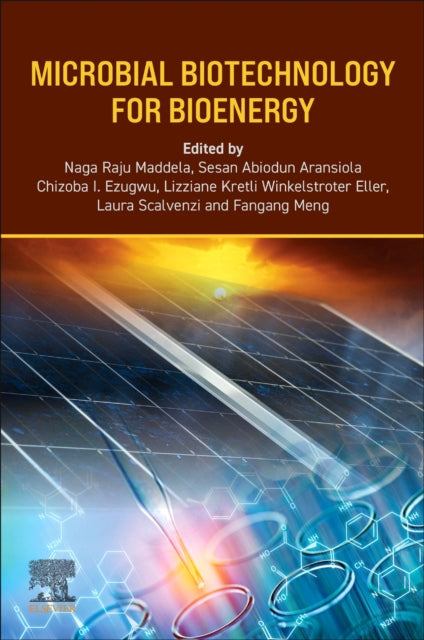
Microbial Biotechnology for Bioenergy
Microbial Biotechnology for Bioenergy
💎 Earn 618 Points (£6.18) on this item.
YOU SAVE £10.38
- Condition: Brand new
- UK Delivery times: Usually arrives within 2 - 3 working days
- UK Shipping: Fee starts at £2.39. Subject to product weight & dimension
Bulk ordering. Want 15 or more copies? Get a personalised quote and bigger discounts. Learn more about bulk orders.
Couldn't load pickup availability
- More about Microbial Biotechnology for Bioenergy
Microbial Biotechnology for Bioenergy explores emerging biotechnological and microbiological approaches in bioenergy, including feedstock sources, challenges, decarbonisation, and emerging innovations and technologies. It also examines policy and environmental aspects, providing a global perspective and impact projections based on present-day global statistics.
Format: Paperback / softback
Length: 496 pages
Publication date: 13 March 2024
Publisher: Elsevier - Health Sciences Division
Microbial Biotechnology for Bioenergy is a comprehensive book that explores the emerging biotechnological and microbiological approaches in bioenergy and their economic, social, and environmental implications. The book is divided into three sections: Section 1 provides an overview of bioenergy, global statistics and projections for future bioenergy development, the role of biotechnology and bioprocesses in bioenergy, feedstock sources, challenges, decarbonisation, and emerging innovations and technologies. Section 2 examines biotechnology and microbiology for bioenergy, including chapters on bioconversion of biomass energy and biological residues, utilizing organic waste, the biotechnology of biofuels including bioethanol, biodiesel, and biohydrogen, the sustainability of cellulosic ethanol energy and artificial photosynthesis, Power-to-X and integrating energy storage innovation, and microbial fuel cell sustainability. Finally, Section 3 explores policy and environmental aspects, providing a global perspective and impact projections based on present-day global statistics.
One of the key aspects of Microbial Biotechnology for Bioenergy is its focus on the development of new products and the improvement of existing products. The book provides insights into the unique nature of graphene and its types, including morphology and thickness, mechanical properties, electrical conductivity, elastic properties of 2D and 3D structures, and more. This information is valuable for biotechnologists, environmental engineers, and microbiologists working in bioenergy, as it can help them develop new products that are more efficient, sustainable, and cost-effective.
Another important aspect of the book is its discussion of the economic, social, and environmental implications of bioenergy. The book highlights the potential benefits of bioenergy, such as reducing greenhouse gas emissions, improving air quality, and providing a source of renewable energy. However, it also discusses the challenges associated with bioenergy, such as land use, water use, and the impact on biodiversity. The book provides strategies for addressing these challenges, such as using sustainable feedstock sources, improving bioprocesses, and developing energy storage technologies.
In addition to its technical content, Microbial Biotechnology for Bioenergy also includes case studies and examples of successful bioenergy projects. These case studies provide valuable insights into the practical aspects of bioenergy development and can help researchers and practitioners develop new strategies for implementing bioenergy projects.
Overall, Microbial Biotechnology for Bioenergy is a valuable reference for biotechnologists, environmental engineers, and microbiologists working in bioenergy. The book provides a comprehensive overview of the emerging biotechnological and microbiological approaches in bioenergy and their economic, social, and environmental implications. It also provides insights into the unique nature of graphene and its types, as well as strategies for addressing the challenges associated with bioenergy. With its practical examples and case studies, the book is a valuable tool for researchers and practitioners in the field of bioenergy.
Weight: 1018g
Dimension: 191 x 237 x 26 (mm)
ISBN-13: 9780443141126
This item can be found in:
UK and International shipping information
UK and International shipping information
UK Delivery and returns information:
- Delivery within 2 - 3 days when ordering in the UK.
- Shipping fee for UK customers from £2.39. Fully tracked shipping service available.
- Returns policy: Return within 30 days of receipt for full refund.
International deliveries:
Shulph Ink now ships to Australia, Belgium, Canada, France, Germany, Ireland, Italy, India, Luxembourg Saudi Arabia, Singapore, Spain, Netherlands, New Zealand, United Arab Emirates, United States of America.
- Delivery times: within 5 - 10 days for international orders.
- Shipping fee: charges vary for overseas orders. Only tracked services are available for most international orders. Some countries have untracked shipping options.
- Customs charges: If ordering to addresses outside the United Kingdom, you may or may not incur additional customs and duties fees during local delivery.