Shulph Ink
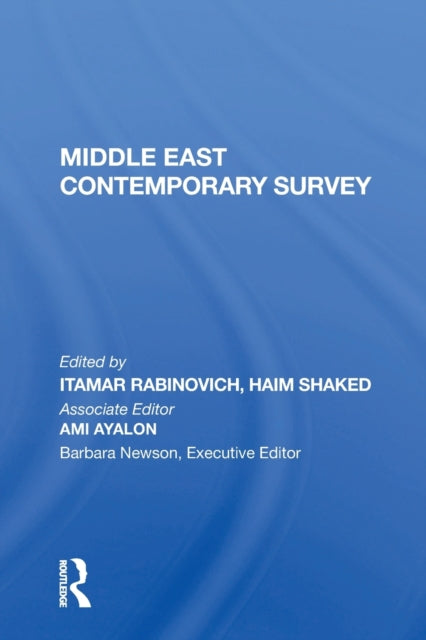
Middle East Contemporary Survey, Volume Xi, 1987
Middle East Contemporary Survey, Volume Xi, 1987
💎 Earn 207 Points (£2.07) on this item.
We can order this item for you. Delivery usually takes about 4 to 6 weeks.
This item is not held in our immediate stock. We will order it for you after checkout.
Estimated delivery: About 4 to 6 weeks
YOU SAVE £2.47
- Condition: Brand new
- UK Delivery times: Usually arrives within 2 - 3 working days
- UK Shipping: Fee starts at £2.39. Subject to product weight & dimension
Bulk ordering. Want 15 or more copies? Get a personalised quote and bigger discounts. Learn more about bulk orders.
Couldn't load pickup availability
- More about Middle East Contemporary Survey, Volume Xi, 1987
The Middle East Contemporary Survey (MECS) is an annual record of political developments in the Middle East since 1977. It is a standard reference work for scholars, researchers, policymakers, students, and journalists. The material is arranged in two parts: essays on regional issues and country-by-country surveys. Volume XI, covering 1987, discusses major themes such as the Lebanese Civil War, the Iran-Iraq War, and the Palestinian uprising.
Format: Paperback / softback
Length: 748 pages
Publication date: 30 June 2022
Publisher: Taylor & Francis Ltd
Established in 1977, the Middle East Contemporary Survey (MECS) stands as a singular and indispensable annual chronicle of political developments across the Middle East. Widely recognized as the preeminent reference work on events and trends in the region, it serves as a continuous and up-to-date resource for scholars, researchers, analysts, policymakers, students, and journalists alike. Delving into the intricate tapestry of the Middle Eastern landscape, the MECS offers a comprehensive examination of the region's ever-evolving dynamics.
In each edition, the content is structured into two distinct sections. The first part encompasses a series of essays that explore broad regional issues and shed light on the interconnectedness of the Middle East with the rest of the world. The second section comprises in-depth country-by-country surveys of all Arab states, as well as Turkey, Israel, and Iran. The focus of this section lies in unraveling the inner workings of each country's polity and society. Given the nature of this type of work, the events of the preceding year inevitably shape the overarching themes of each volume.
Volume XI, which spans the year 1987, serves as a poignant testament to the events and developments of that particular year. Within its pages, readers are invited to explore a range of topics that were central to the Middle Eastern landscape during that time. These topics include:
The Lebanese Civil War: A protracted conflict that erupted in 1975 and continued until 1990, the Lebanese Civil War was a pivotal moment in the region's history. It witnessed the rise and fall of various political factions, the displacement of millions of people, and the devastating impact on the country's infrastructure and economy.
The Iran-Iraq War: Another significant conflict that unfolded in the 1980s, the Iran-Iraq War was a protracted and bloody war that lasted for eight years. It resulted in the deaths of millions of people, the destruction of vast swathes of land, and the emergence of new political alliances and rivalries in the region.
The Palestinian Liberation Organization (PLO): Established in 1964, the PLO was a key player in the struggle for the establishment of a Palestinian state. The organization's activities, including armed resistance and diplomatic negotiations, played a significant role.
The Gulf War: In August 1990, Iraq invaded Kuwait, triggering a regional conflict that became known as the Gulf War. The war was a watershed moment in the Middle East, as it led to the overthrow of the Iraqi regime, the establishment of a new political order in the region, and the emergence of new regional powers.
The Oslo Accords: Signed in 1993, the Oslo Accords were a landmark peace agreement between Israel and the PLO. The agreement aimed to establish a two-state solution to the Israeli-Palestinian conflict and paved the way for subsequent peace negotiations and the eventual establishment of the State of Israel.
These topics, among others, provide a glimpse into the complex and multifaceted nature of the Middle East in the 1980s. The MECS, through its comprehensive coverage and insightful analysis, serves as a valuable resource for those seeking to understand the region's past, present, and future.
In conclusion, the Middle East Contemporary Survey (MECS) stands as a testament to the enduring significance of studying and understanding the Middle East. Established in 1977, this unique annual record of political developments has become the standard reference work on events and trends in the region. Designed to be a continuous and up-to-date resource for scholars, researchers, analysts, policymakers, students, and journalists alike, the MECS offers a comprehensive examination of the ever-evolving Middle Eastern landscape.
In each edition, the content is structured into two distinct sections. The first part encompasses a series of essays that explore broad regional issues and shed light on the interconnectedness of the Middle East with the rest of the world. The second section comprises in-depth country-by-country surveys of all Arab states, as well as Turkey, Israel, and Iran. The focus of this section lies in unraveling the inner workings of each country's polity and society. Given the nature of this type of work, the events of the preceding year inevitably shape the overarching themes of each volume.
Volume XI, which spans the year 1987, serves as a poignant testament to the events and developments of that particular year. Within its pages, readers are invited to explore a range of topics that were central to the Middle Eastern landscape during that time. These topics include:
The Lebanese Civil War: A protracted conflict that erupted in 1975 and continued until 1990, the Lebanese Civil War was a pivotal moment in the region's history. It witnessed the rise.
The Iran-Iraq War: Another significant conflict that unfolded in the 1980s, the Iran-Iraq War was a protracted and bloody war that lasted for eight years. It resulted in the deaths of millions of people, the destruction of vast swathes of land, and the emergence of new political alliances and rivalries in the region.
The Palestinian Liberation Organization (PLO): Established in 1964, the PLO was a key player in the struggle for the establishment of a Palestinian state. The organization's activities, including armed resistance and diplomatic negotiations, played a significant role.
The Gulf War: In August 1990, Iraq invaded Kuwait, triggering a regional conflict that became known as the Gulf War. The war was a watershed moment in the Middle East, as it led to the overthrow of the Iraqi regime, the establishment of a new political order in the region, and the emergence of new regional powers.
The Oslo Accords: Signed in 1993, the Oslo Accords were a landmark peace agreement between Israel and the PLO. The agreement aimed to establish a two-state solution to the Israeli-Palestinian conflict and paved the way.
These topics, among others, provide a glimpse into the complex and multifaceted nature of the Middle East in the 1980s. The MECS, through its comprehensive coverage and insightful analysis, serves as a valuable resource for those seeking to understand the region's past, present, and future.
In conclusion, the Middle East Contemporary Survey (MECS) stands as a testament to the enduring significance of studying and understanding the Middle East. Established in 1977, this unique annual record of political developments has become the standard reference work on events and trends in the region. Designed to be a continuous and up-to-date resource for scholars, researchers, analysts, policymakers, students, and journalists alike, the MECS offers a comprehensive examination of the ever-evolving Middle Eastern landscape.
In each edition, the content is structured into two distinct sections. The first part encompasses a series of essays that explore broad regional issues and shed light on the interconnectedness of the Middle East with the rest of the world. The second section comprises in-depth country-by-country surveys of all Arab states, as well as Turkey, Israel, and Iran. The focus of this section lies in unraveling the inner workings of each country's polity and society. Given the nature of this type of work, the events of the preceding year inevitably shape the overarching themes of each volume.
Volume XI, which spans the year 1987, serves as a poignant testament to the events and developments of that particular year. Within its pages, readers are invited to explore a range of topics that were central to the Middle Eastern landscape during that time. These topics include:
The Lebanese Civil War: A protracted conflict that erupted in 1975 and continued until 1990, the Lebanese Civil War was a pivotal moment in the region's history. It witnessed the rise.
The Iran-Iraq War: Another significant conflict that unfolded in the 1980s, the Iran-Iraq War was a protracted and bloody war that lasted for eight years. It resulted in the deaths of millions of people, the destruction of vast swathes of land, and the emergence of new political alliances and rivalries in the region.
The Palestinian Liberation Organization (PLO): Established in 1964, the PLO was a key player in the struggle for the establishment of a Palestinian state. The organization's activities, including armed resistance and diplomatic negotiations, played a significant role.
The Gulf War: In August 1990, Iraq invaded Kuwait, triggering a regional conflict that became known as the Gulf War. The war was a watershed moment in the Middle East, as it led to the overthrow of the Iraqi regime, the establishment of a new political order in the region, and the emergence of new regional powers.
The Oslo Accords: Signed in 1993, the Oslo Accords were a landmark peace agreement between Israel and the PLO. The agreement aimed to establish a two-state solution to the Israeli-Palestinian conflict and paved.
These topics, among others, provide a glimpse into the complex and multifaceted nature of the Middle East in the 1980s. The MECS, through its comprehensive coverage and insightful analysis, serves as a valuable resource for those seeking to understand the region's past, present, and future.
In conclusion, the Middle East Contemporary Survey (MECS) stands as a testament to the enduring significance of studying and understanding the Middle East. Established in 1977, this unique annual record of political developments has become the standard reference work on events and trends in the region. Designed to be a continuous and up-to-date resource for scholars, researchers, analysts, policymakers, students, and journalists alike, the MECS offers a comprehensive examination of the ever-evolving Middle Eastern landscape.
In each edition, the content is structured into two distinct sections. The first part encompasses a series of essays that explore broad regional issues and shed light on the interconnectedness of the Middle East with the rest of the world. The second section comprises in-depth country-by-country surveys of all Arab states, as well as Turkey, Israel, and Iran. The focus of this section lies in unraveling the inner workings of each country's polity and society. Given the nature of this type of work, the events of the preceding year inevitably shape the overarching themes of each volume.
Volume XI, which spans the year 1987, serves as a poignant testament to the events and developments of that particular year. Within its pages, readers are invited to explore a range of topics that were central to the Middle Eastern landscape during that time. These topics include:
The Lebanese Civil War: A protracted conflict that erupted in 1975 and continued until 1990, the Lebanese Civil War was a pivotal moment in the region's history. It witnessed the.
The Iran-Iraq War: Another significant conflict that unfolded in the 1980s, the Iran-Iraq War was a protracted and bloody war that lasted for eight years. It resulted in the deaths of millions of people, the destruction of vast swathes of land, and the emergence of new political alliances and rivalries in the region.
The Palestinian Liberation Organization (PLO): Established in 1964, the PLO was a key player in the struggle for the establishment of a Palestinian state. The organization's activities, including armed resistance and diplomatic negotiations, played a significant role.
The Gulf War: In August 1990, Iraq invaded Kuwait, triggering a regional conflict that became known as the Gulf War. The war was a watershed moment in the Middle East, as it led to the overthrow of the Iraqi regime, the establishment of a new political order in the region, and the emergence of new regional powers.
The Oslo Accords: Signed in 1993, the Oslo Accords were a landmark peace agreement between Israel and the PLO. The agreement aimed to establish a two-state solution to the Israeli-Palestinian conflict and paved.
These topics, among others, provide a glimpse into the complex and multifaceted nature of the Middle East in the 1980s. The MECS, through its comprehensive coverage and insightful analysis, serves as a valuable resource for those seeking to understand the region's past, present, and future.
In conclusion, the Middle East Contemporary Survey (MECS) stands as a testament to the enduring significance of studying and understanding the Middle East. Established in 1977, this unique annual record of political developments has become the standard reference work on events and trends in the region. Designed to be a continuous and up-to-date resource for scholars, researchers, analysts, policymakers, students, and journalists alike, the MECS offers a comprehensive examination of the ever-evolving Middle Eastern landscape.
In each edition, the content is structured into two distinct sections. The first part encompasses a series of essays that explore broad regional issues and shed light on the interconnectedness of the Middle East with the rest of the world. The second section comprises in-depth country-by-country surveys of all Arab states, as well as Turkey, Israel, and Iran. The focus of this section lies in unraveling the inner workings of each country's polity and society. Given the nature of this type of work, the events of the preceding year inevitably shape the overarching themes of each volume.
Volume XI, which spans the year 1987, serves as a poignant testament to the events and developments of that particular year. Within its pages, readers are invited to explore a range of topics that were central to the Middle Eastern landscape during that time. These topics include:
The Lebanese Civil War: A protracted conflict that erupted in 1975 and continued until 1990, the Lebanese Civil War was a pivotal moment in the region's history. It witnessed the.
The Iran-Iraq War: Another significant conflict that unfolded in the 1980s, the Iran-Iraq War was a protracted and bloody war that lasted for eight years. It resulted in the deaths of millions of people, the destruction of vast swathes of land, and the emergence of new political alliances and rivalries in the region.
The Palestinian Liberation Organization (PLO): Established in 1964, the PLO was a key player in the struggle for the establishment of a Palestinian state. The organization's activities, including armed resistance and diplomatic negotiations, played a significant role.
The Gulf War: In August 1990, Iraq invaded Kuwait, triggering a regional conflict that became known as the Gulf War. The war was a watershed moment in the Middle East, as it led to the overthrow of the Iraqi regime, the establishment of a new political order in the region, and the emergence of new regional powers.
The Oslo Accords: Signed in 1993, the Oslo Accords were a landmark peace agreement between Israel and the PLO. The agreement aimed to establish a two-state solution to the Israeli-Palestinian conflict and paved.
These topics, among others, provide a glimpse into the complex and multifaceted nature of the Middle East in the 1980s. The MECS, through its comprehensive coverage and insightful analysis, serves as a valuable resource for those seeking to understand the region's past, present, and future.
In conclusion, the Middle East Contemporary Survey (MECS) stands as a testament to the enduring significance of studying and understanding the Middle East. Established in 1977, this unique annual record of political developments has become the standard reference work on events and trends in the region. Designed to be a continuous and up-to-date resource for scholars, researchers, analysts, policymakers, students, and journalists alike, the MECS offers a comprehensive examination of the ever-evolving Middle Eastern landscape.
Dimension: 229 x 152 (mm)
ISBN-13: 9780367152987
UK and International shipping information
UK and International shipping information
UK Delivery and returns information:
- Delivery within 2 - 3 days when ordering in the UK.
- Shipping fee for UK customers from £2.39. Fully tracked shipping service available.
- Returns policy: Return within 30 days of receipt for full refund.
International deliveries:
Shulph Ink now ships to Australia, Belgium, Canada, France, Germany, Ireland, Italy, India, Luxembourg Saudi Arabia, Singapore, Spain, Netherlands, New Zealand, United Arab Emirates, United States of America.
- Delivery times: within 5 - 10 days for international orders.
- Shipping fee: charges vary for overseas orders. Only tracked services are available for most international orders. Some countries have untracked shipping options.
- Customs charges: If ordering to addresses outside the United Kingdom, you may or may not incur additional customs and duties fees during local delivery.