SarahTeo
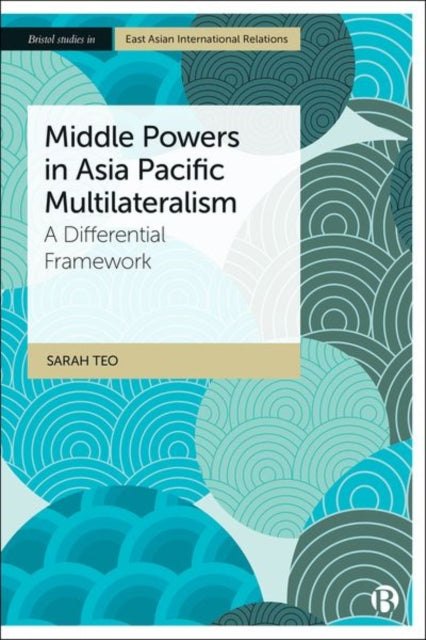
Middle Powers in Asia Pacific Multilateralism: A Differential Framework
Middle Powers in Asia Pacific Multilateralism: A Differential Framework
💎 Earn 424 Points (£4.24) on this item.
We can order this item for you. Delivery usually takes about 4 to 6 weeks.
This item is not held in our immediate stock. We will order it for you after checkout.
Estimated delivery: About 4 to 6 weeks
YOU SAVE £5.04
- Condition: Brand new
- UK Delivery times: Usually arrives within 2 - 3 working days
- UK Shipping: Fee starts at £2.39. Subject to product weight & dimension
Bulk ordering. Want 15 or more copies? Get a personalised quote and bigger discounts. Learn more about bulk orders.
Couldn't load pickup availability
- More about Middle Powers in Asia Pacific Multilateralism: A Differential Framework
This book explores the participation of middle powers in multilateralism, using Australia, Indonesia, and South Korea as examples, and argues that they seek to dilute major power stratificatory forces and establish functionally differentiated roles in multilateral diplomacy. It offers a valuable new framework for understanding their behaviour.
Format: Hardback
Length: 216 pages
Publication date: 25 November 2022
Publisher: Bristol University Press
Middle powers have played a significant role in multilateralism, and this book examines their participation in regional organizations. Drawing on insights from differentiation theory, the book analyzes the cases of Australia, Indonesia, and South Korea, focusing on their roles in the creation of the Asia-Pacific Economic Cooperation (APEC) and the East Asia Summit. Through its analysis, the book argues that middle powers seek to dilute major power stratificatory forces and establish functionally differentiated roles for themselves in multilateral diplomacy. The book provides a valuable new framework for explaining and understanding the behavior of middle powers in multilateralism.
Middle Powers in Multilateralism: A Differentiation Theory Perspective
Middle powers have played a significant role in multilateralism, and this book examines their participation in regional organizations. Drawing on insights from differentiation theory, the book analyzes the cases of Australia, Indonesia, and South Korea, focusing on their roles in the creation of the Asia-Pacific Economic Cooperation (APEC) and the East Asia Summit. Through its analysis, the book argues that middle powers seek to dilute major power stratificatory forces and establish functionally differentiated roles for themselves in multilateral diplomacy. The book provides a valuable new framework for explaining and understanding the behavior of middle powers in multilateralism.
Australia's Role in Regional Organizations
Australia has been a key player in regional organizations, particularly in the Asia-Pacific region. It has been a founding member of APEC and has played a significant role in its development. Australia's participation in APEC has been characterized by its commitment to free trade and economic integration, and it has been a strong advocate for the region's economic development. Australia has also been involved in regional security issues, particularly in the South China Sea, and has worked to promote stability and peace in the region. In addition, Australia has been a member of the East Asia Summit since its inception and has played a significant role in its development. Australia's participation in the East Asia Summit has been characterized by its commitment to promoting regional cooperation and stability, and it has been a strong advocate for the region's economic development.
Indonesia's Role in Regional Organizations
Indonesia has been a key player in regional organizations, particularly in the Southeast Asian region. It has been a founding member of APEC and has played a significant role in its development. Indonesia's participation in APEC has been characterized by its commitment to free trade and economic integration, and it has been a strong advocate for the region's economic development. Indonesia has also been involved in regional security issues, particularly in the South China Sea, and has worked to promote stability and peace in the region. In addition, Indonesia has been a member of the East Asia Summit since its inception and has played a significant role in its development. Indonesia's participation in the East Asia Summit has been characterized by its commitment to promoting regional cooperation and stability, and it has been a strong advocate for the region's economic development.
South Korea's Role in Regional Organizations
South Korea has been a key player in regional organizations, particularly in the Northeast Asian region. It has been a founding member of APEC and has played a significant role in its development. South Korea's participation in APEC has been characterized by its commitment to free trade and economic integration, and it has been a strong advocate for the region's economic development. South Korea has also been involved in regional security issues, particularly in the North Korean nuclear issue, and has worked to promote stability and peace in the region. In addition, South Korea has been a member of the East Asia Summit since its inception and has played a significant role in its development. South Korea's participation in the East Asia Summit has been characterized by its commitment to promoting regional cooperation and stability, and it has been a strong advocate for the region's economic development.
Conclusion
In conclusion, middle powers have played a significant role in multilateralism, and this book examines their participation in regional organizations. Drawing on insights from differentiation theory, the book analyzes the cases of Australia, Indonesia, and South Korea, focusing on their roles in the creation of the Asia-Pacific Economic Cooperation (APEC) and the East Asia Summit. Through its analysis, the book argues that middle powers seek to dilute major power stratificatory forces and establish functionally differentiated roles for themselves in multilateral diplomacy. The book provides a valuable new framework for explaining and understanding the behavior of middle powers in multilateralism.
Weight: 478g
Dimension: 162 x 242 x 18 (mm)
ISBN-13: 9781529216479
UK and International shipping information
UK and International shipping information
UK Delivery and returns information:
- Delivery within 2 - 3 days when ordering in the UK.
- Shipping fee for UK customers from £2.39. Fully tracked shipping service available.
- Returns policy: Return within 30 days of receipt for full refund.
International deliveries:
Shulph Ink now ships to Australia, Belgium, Canada, France, Germany, Ireland, Italy, India, Luxembourg Saudi Arabia, Singapore, Spain, Netherlands, New Zealand, United Arab Emirates, United States of America.
- Delivery times: within 5 - 10 days for international orders.
- Shipping fee: charges vary for overseas orders. Only tracked services are available for most international orders. Some countries have untracked shipping options.
- Customs charges: If ordering to addresses outside the United Kingdom, you may or may not incur additional customs and duties fees during local delivery.