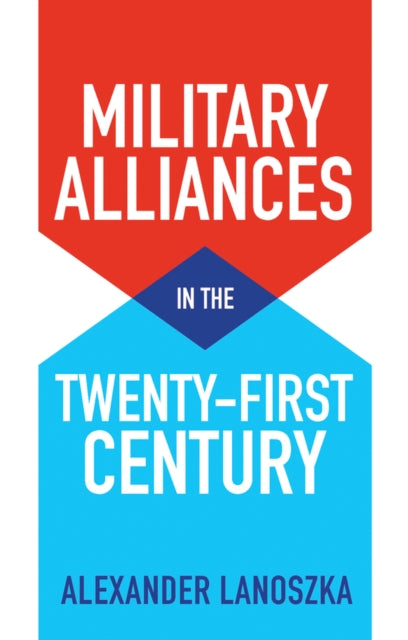
Alexander Lanoszka
Military Alliances in the Twenty-First Century
Military Alliances in the Twenty-First Century
💎 Earn 221 Points (£2.21) on this item.
We can order this item for you. Delivery usually takes about 4 to 6 weeks.
This item is not held in our immediate stock. We will order it for you after checkout.
Estimated delivery: About 4 to 6 weeks
YOU SAVE £5.75
- Condition: Brand new
- UK Delivery times: Usually arrives within 2 - 3 working days
- UK Shipping: Fee starts at £2.39. Subject to product weight & dimension
Bulk ordering. Want 15 or more copies? Get a personalised quote and bigger discounts. Learn more about bulk orders.
Couldn't load pickup availability
- More about Military Alliances in the Twenty-First Century
Alliance politics is a regular headline grabber, with the US demanding that its allies increase their defense spending and contribute more to military operations. Alexander Lanoszka's book "Military Alliances in the Twenty-First Century" challenges conventional wisdom that military alliances are prone to dysfunction, arguing that they are by their very nature prone to dysfunction.
Format: Hardback
Length: 272 pages
Publication date: 21 January 2022
Publisher: Polity Press
Alliance politics is a captivating topic that often dominates headlines, particularly when potential military crises involving Russia, North Korea, or China emerge. Concerns arise among leaders and citizens alike regarding the unity and commitment of US allies in the face of such challenges. As rival powers strengthen their security cooperation, the United States has heightened its demands for its allies to increase their defense spending and contribute more to military operations in the Middle East and other regions. The prospect of former President Donald Trump unilaterally ending alliances alarmed longstanding partners, even as NATO welcomed new members into its ranks.
"Military Alliances in the Twenty-First Century: The Politics That Shape Security Arrangements" is a groundbreaking book that delves into the intricate politics that shape these security arrangements. Authored by Alexander Lanoszka, this book challenges the prevailing conventional wisdom that has dominated our understanding of military alliances throughout history and into the present. While it is true that military alliances face internal challenges today, Lanoszka argues that their inherent nature predisposes them to dysfunction.
The book is organized into six thematic chapters, each exploring different aspects of military alliances. In the first chapter, Lanoszka challenges the notion that military alliances are primarily driven by shared interests and security concerns. He argues that alliances are often shaped by a complex interplay of political, economic, and cultural factors, which can lead to tensions and conflicts.
Chapter two examines the historical evolution of military alliances, from the ancient alliances between city-states to the modern-day alliances between nations. Lanoszka highlights the factors that have influenced the formation and dissolution of alliances, such as power dynamics, territorial disputes, and ideological differences. He also explores the role of military alliances in shaping world history, including the two World Wars and the Cold War.
Chapter three explores the challenges that military alliances face in the twenty-first century. Lanoszka discusses the rise of non-traditional security threats, such as terrorism and cyber warfare, which require a coordinated response from alliance members. He also examines the challenges posed by the changing nature of warfare, including the increasing use of precision weapons and the emergence of new military technologies.
Chapter four examines the role of individual states in military alliances. Lanoszka argues that states are often motivated by self-interest rather than shared interests and that their actions in alliances can be influenced by domestic political considerations. He also explores the dynamics of power within alliances, including the balance of power between the major powers and the role of smaller states.
Chapter five examines the impact of military alliances on international relations. Lanoszka argues that alliances can create both opportunities and challenges for states, including the potential for conflict and cooperation. He also explores the role of alliances in shaping global institutions, such as the United Nations and NATO.
Chapter six examines the future of military alliances. Lanoszka argues that alliances will continue to play an important role in shaping international security in the twenty-first century, but that they will face new challenges and opportunities. He suggests that alliances will need to adapt to the changing nature of security threats and the changing political landscape, and that they will need to be more flexible and adaptable in order to remain effective.
In conclusion, "Military Alliances in the Twenty-First Century: The Politics That Shape Security Arrangements" is a must-read for anyone interested in understanding the complex politics that shape military alliances in the modern world. Alexander Lanoszka's book challenges conventional wisdom and provides a fresh perspective on the dynamics of these security arrangements. By exploring the historical evolution, challenges, and opportunities of military alliances, Lanoszka offers valuable insights into the future of international security. This book will be of interest to scholars, policymakers, and anyone who wants to better understand the complex dynamics of the global political landscape.
Weight: 454g
Dimension: 145 x 221 x 28 (mm)
ISBN-13: 9781509545568
This item can be found in:
UK and International shipping information
UK and International shipping information
UK Delivery and returns information:
- Delivery within 2 - 3 days when ordering in the UK.
- Shipping fee for UK customers from £2.39. Fully tracked shipping service available.
- Returns policy: Return within 30 days of receipt for full refund.
International deliveries:
Shulph Ink now ships to Australia, Belgium, Canada, France, Germany, Ireland, Italy, India, Luxembourg Saudi Arabia, Singapore, Spain, Netherlands, New Zealand, United Arab Emirates, United States of America.
- Delivery times: within 5 - 10 days for international orders.
- Shipping fee: charges vary for overseas orders. Only tracked services are available for most international orders. Some countries have untracked shipping options.
- Customs charges: If ordering to addresses outside the United Kingdom, you may or may not incur additional customs and duties fees during local delivery.