Stephen B.Dobranski
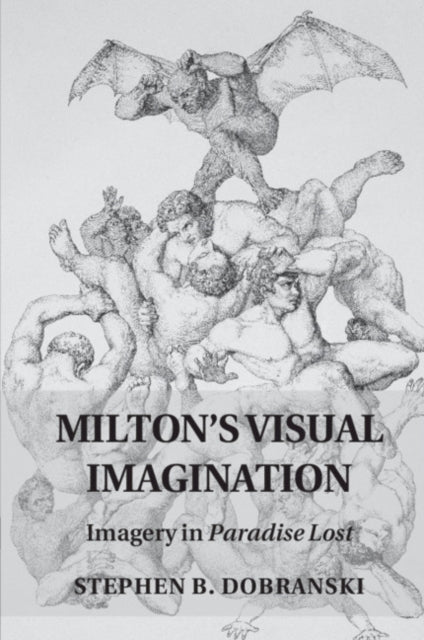
Milton's Visual Imagination: Imagery in Paradise Lost
Milton's Visual Imagination: Imagery in Paradise Lost
We can order this item for you. Delivery usually takes about 4 to 6 weeks.
This item is not held in our immediate stock. We will order it for you after checkout.
Estimated delivery: About 4 to 6 weeks
YOU SAVE £2.99
- Condition: Brand new
- UK Delivery times: Usually arrives within 2 - 3 working days
- UK Shipping: Fee starts at £3.89. Subject to product weight & dimension
Bulk ordering. Want 15 or more copies? Get a personalised quote and bigger discounts. Learn more about bulk orders.
Couldn't load pickup availability
- More about Milton's Visual Imagination: Imagery in Paradise Lost
John Milton's poetry is often criticized for its lack of visual detail, but Stephen B. Dobranski argues that Milton uses imagery to advance the narrative and express his heterodox beliefs, particularly in his use of objects and gestures to accommodate seventeenth-century readers. This book is a significant contribution to our understanding of early modern visual culture and Milton's epic.
Format: Paperback / softback
Length: 233 pages
Publication date: 22 July 2021
Publisher: Cambridge University Press
Critics have long been critical of John Milton's poetry, viewing him as an author who prioritized the ear over the eye. However, in his book "Visual Imagination," Stephen B. Dobranski challenges this notion by asserting that Milton actually enhances his biblical source text with vivid and sometimes astonishing visual details. Dobranski argues that Milton's imagery, which has often been disparaged by critics, plays a crucial role in advancing the epic's narrative while simultaneously expressing his unconventional beliefs.
In particular, Milton employs the meaning of objects and gestures to navigate the inherent complexity of his subject matter and to appeal to seventeenth-century readers. By integrating Milton's material philosophy with an analysis of both his poetic tradition and cultural context, this book makes a significant contribution to our understanding of early modern visual culture and Milton's epic.
Dobranski delves into Milton's use of visual imagery to convey themes and ideas, highlighting how he creates a sense of realism and depth in his writing. He examines how Milton's images contribute to the emotional impact of his poems, such as the depiction of Satan's fall in "Paradise Lost" or the horror of the battlefield in "Paradise Regained." Dobranski also explores how Milton's imagery reflects his religious beliefs and his opposition to established religious institutions.
One of the key arguments of "Visual Imagination" is that Milton's imagery is not merely ornamental or decorative but serves a functional purpose. Dobranski argues that Milton uses visual details to enhance the narrative and to convey the author's ideas more effectively. He demonstrates how Milton's imagery can create a sense of urgency, tension, and drama, which helps to engage the reader and immerse them in the story.
Furthermore, Dobranski argues that Milton's imagery is not limited to the visual realm but extends to the auditory as well. He explores how Milton uses sound and music to create a sense of atmosphere and to enhance the emotional impact of his poems. Dobranski demonstrates how Milton's use of rhyme, meter, and alliteration contributes to the rhythm and flow of his writing, which in turn helps to convey the author's ideas more effectively.
In addition to his analysis of Milton's imagery, Dobranski also provides a broader cultural context for his work. He discusses how Milton's poetry was influenced by the visual culture of his time, including the works of artists such as Raphael and Michelangelo. Dobranski also explores how Milton's poetry was shaped by the political and social conditions of his era, particularly the English Civil Wars and the rise of Protestantism.
Overall, "Visual Imagination" is a groundbreaking work that offers a fresh perspective on John Milton's poetry. By challenging traditional interpretations and highlighting the importance of visual imagery in Milton's work, Dobranski provides a valuable contribution to our understanding of early modern visual culture and Milton's epic. This book will be of interest to scholars and students of literature, history, and art, as well as anyone who enjoys reading and studying great works of literature.
Weight: 364g
Dimension: 151 x 227 x 17 (mm)
ISBN-13: 9781107476240
UK and International shipping information
UK and International shipping information
We deliver throughout the United Kingdom and to 128 countries and territories worldwide, including the United States, Australia, Canada, Germany, Spain and France.