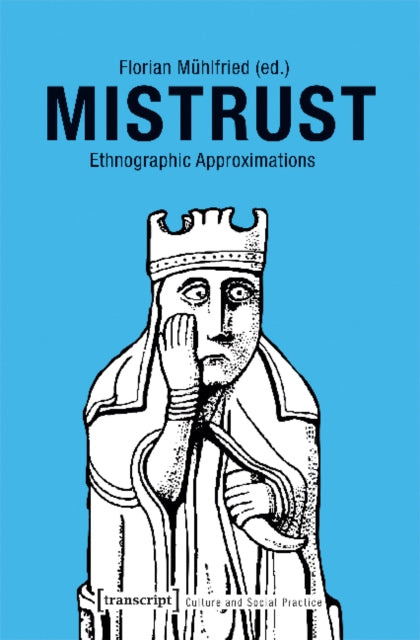
Florian Muhlfried
Mistrust - Ethnographic Approximations
Mistrust - Ethnographic Approximations
💎 Earn 161 Points (£1.61) on this item.
We can order this item for you. Delivery usually takes about 4 to 6 weeks.
This item is not held in our immediate stock. We will order it for you after checkout.
Estimated delivery: About 4 to 6 weeks
YOU SAVE £6.79
- Condition: Brand new
- UK Delivery times: Usually arrives within 2 - 3 working days
- UK Shipping: Fee starts at £2.39. Subject to product weight & dimension
Bulk ordering. Want 15 or more copies? Get a personalised quote and bigger discounts. Learn more about bulk orders.
Couldn't load pickup availability
- More about Mistrust - Ethnographic Approximations
This volume explores the idea that mistrust can be more than just the flip side of trust, offering a rich empirical trove of the social life of mistrust across various settings.
Format: Paperback / softback
Length: 250 pages
Publication date: 08 December 2021
Publisher: Transcript Verlag
Scholars have long recognized the importance of trust as a fundamental social virtue. Consequently, there has been a wealth of research dedicated to fostering trust within free markets, cultivating trust within the state, and rebuilding trust within civil society. However, the contributors to this volume take a different approach. Instead of focusing solely on building and restoring trust, they delve into the question of whether mistrust can exist as a distinct entity, separate from trust itself. By conducting ethnographic studies that examine the actions of various actors when they express distrust, this volume presents a comprehensive and empirically rich exploration of the social dynamics of mistrust across a diverse range of contexts.
In the realm of social science, trust has been recognized as a cornerstone of healthy and functioning societies. It serves as the foundation upon which relationships are built, transactions are conducted, and communities are united. Trust is not a static concept, but rather a dynamic entity that can be cultivated, nurtured, and destroyed.
One of the primary challenges in understanding trust is its multifaceted nature. Trust can be expressed in various ways, including verbal agreements, written contracts, social norms, and cultural values. It can be directed towards individuals, groups, institutions, or even society as a whole. Trust can be positive, negative, or neutral, depending on the circumstances and the intentions of the parties involved.
Trust plays a critical role in economic development, as it enables individuals and businesses to engage in mutually beneficial transactions. Trust promotes cooperation, collaboration, and innovation, which are essential for economic growth and prosperity. Without trust, economic transactions become risky and costly, as parties are hesitant to engage in transactions with unknown or untrustworthy counterparts.
Trust is also crucial in the realm of politics and governance. Effective political leaders and governments must establish and maintain trust with their constituents to ensure their legitimacy and effectiveness. Trust is built through transparent communication, accountability, and the delivery of public services that meet the needs of the people. When trust is lost, political instability, social unrest, and even violence can ensue.
In addition to its economic and political significance, trust is also important in the context of social relationships. Trust is the foundation of close personal relationships, such as family, friends, and romantic partnerships. Trust enables individuals to share their feelings, vulnerabilities, and resources with others, knowing that they will be treated with respect and care. Trust is also essential in professional relationships, such as between employers and employees, and between clients and service providers.
However, trust can be fragile and easily destroyed. Trust can be betrayed by individuals or institutions who act in a dishonest, selfish, or harmful manner. Trust can also be eroded by a lack of transparency, accountability, and mutual respect. When trust is lost, it can take a long time to rebuild, and the consequences can be severe.
One of the key challenges in rebuilding trust is identifying the factors that contribute to its loss. Different factors can influence trust, including personal experiences, cultural norms, social institutions, and political systems. Understanding these factors can help policymakers and individuals develop strategies to promote trust and prevent its loss.
In conclusion, trust is a fundamental social good that plays a critical role in economic development, politics, and social relationships. Trust is not a static concept, but rather a dynamic entity that can be cultivated, nurtured, and destroyed. Understanding the nature of trust, its importance, and its challenges is essential for promoting trust and building healthy and functioning societies.
Weight: 666g
Dimension: 226 x 147 x 15 (mm)
ISBN-13: 9783837639230
This item can be found in:
UK and International shipping information
UK and International shipping information
UK Delivery and returns information:
- Delivery within 2 - 3 days when ordering in the UK.
- Shipping fee for UK customers from £2.39. Fully tracked shipping service available.
- Returns policy: Return within 30 days of receipt for full refund.
International deliveries:
Shulph Ink now ships to Australia, Belgium, Canada, France, Germany, Ireland, Italy, India, Luxembourg Saudi Arabia, Singapore, Spain, Netherlands, New Zealand, United Arab Emirates, United States of America.
- Delivery times: within 5 - 10 days for international orders.
- Shipping fee: charges vary for overseas orders. Only tracked services are available for most international orders. Some countries have untracked shipping options.
- Customs charges: If ordering to addresses outside the United Kingdom, you may or may not incur additional customs and duties fees during local delivery.