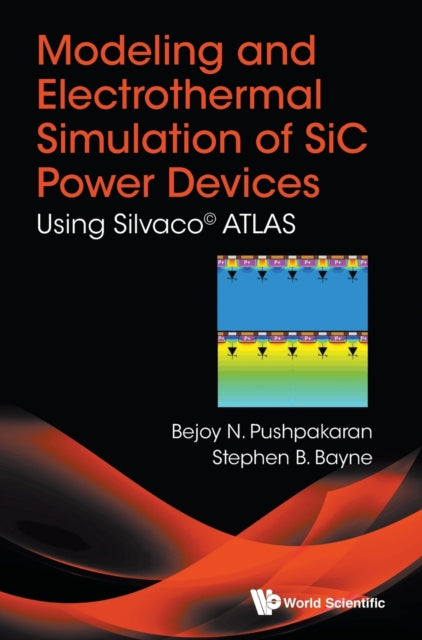
Bejoy NPushpakaran,Stephen BBayne
Modeling And Electrothermal Simulation Of Sic Power Devices: Using Silvaco (c) Atlas
Modeling And Electrothermal Simulation Of Sic Power Devices: Using Silvaco (c) Atlas
💎 Earn 640 Points (£6.40) on this item.
YOU SAVE £26.97
- Condition: Brand new
- UK Delivery times: Usually arrives within 2 - 3 working days
- UK Shipping: Fee starts at £2.39. Subject to product weight & dimension
Bulk ordering. Want 15 or more copies? Get a personalised quote and bigger discounts. Learn more about bulk orders.
Couldn't load pickup availability
- More about Modeling And Electrothermal Simulation Of Sic Power Devices: Using Silvaco (c) Atlas
This book provides a comprehensive guide to simulating wide bandgap Silicon Carbide (SiC) power semiconductor devices using Silvaco© ATLAS Technology Computer Aided Design (TCAD) software. It covers physics-based TCAD modeling, non-isothermal simulation, and offers valuable tips and insights based on the authors' experience.
Format: Hardback
Length: 464 pages
Publication date: 12 April 2019
Publisher: World Scientific Publishing Co Pte Ltd
The primary objective of this comprehensive book is to offer a thorough grasp of wide bandgap Silicon Carbide (SiC) power semiconductor device simulation utilizing Silvaco© ATLAS Technology Computer Aided Design (TCAD) software. Due to the wide bandgap characteristic of the semiconductor material, physics-based TCAD modeling of SiC power devices presents significant challenges. The material presented herein endeavors to expedite the learning process for initiating successful SiC device simulation by providing a detailed explanation of simulation code and the influence of various modeling and simulation parameters on the simulation outcomes. Thorough coverage has been provided for non-isothermal simulation, aimed at predicting heat dissipation and lattice temperature rise within a SiC device structure during switching conditions. Key insights, including runtime error messages, code debugging techniques, implications of utilizing specific models and parameter values, and other valuable factors for device simulation, have been derived from the authors' extensive experience in simulating SiC device structures. This book serves as a valuable resource for students, researchers, and semiconductor professionals engaged in the field of SiC semiconductor technology. Readers will be granted access to the source code of numerous fully functional simulation programs, which exemplify the utilization of Silvaco© ATLAS for simulating SiC power device structures. Additionally, supplementary material is available for download to further enhance their understanding and practical application of the discussed topics.
Introduction:
Wide bandgap Silicon Carbide (SiC) power semiconductor devices have gained significant attention in recent years due to their superior electrical properties, such as high breakdown voltage, high switching speed, and high thermal conductivity. However, the simulation of SiC power devices poses unique challenges due to their wide bandgap nature, which results in complex physical phenomena and numerical computations. This book aims to provide a comprehensive guide to simulating SiC power devices using Silvaco© ATLAS Technology Computer Aided Design (TCAD) software.
Challenges of Physics-Based TCAD Modeling of SiC Power Devices:
Physics-based TCAD modeling of SiC power devices can be extremely challenging due to the wide bandgap of the semiconductor material. The bandgap determines the energy level of electrons and holes in the semiconductor, which in turn affects the electrical properties of the device. Additionally, the complex device structure, including multiple layers, p-n junctions, and interfaces, adds to the complexity of the simulation process.
Objectives of This Book:
The primary goal of this book is to provide a sound understanding of wide bandgap Silicon Carbide (SiC) power semiconductor device simulation using Silvaco© ATLAS Technology Computer Aided Design (TCAD) software. The book will cover the following topics:
- Introduction to Silvaco© ATLAS TCAD Software: This chapter will provide an overview of the Silvaco© ATLAS TCAD software and its features for simulating SiC power devices. It will cover the user interface, simulation engine, and various tools available for modeling and simulation.
- Physics-Based TCAD Modeling of SiC Power Devices: This chapter will discuss the principles of physics-based TCAD modeling of SiC power devices. It will cover the basics of semiconductor physics, including bandgap theory, electron and hole mobility, and electric field distribution. The chapter will also introduce the concept of device simulation and the steps involved in creating a simulation model.
- Non-Isothermal Simulation: This chapter will focus on non-isothermal simulation, which is essential for predicting heat dissipation and lattice temperature rise in a SiC device structure under switching conditions. It will cover the principles of non-isothermal simulation, including heat transfer mechanisms, thermal resistance, and heat source definition. The chapter will also provide examples of non-isothermal simulation in SiC power devices.
- Code Debugging and Error Handling: This chapter will discuss the importance of code debugging and error handling in device simulation. It will cover common errors that can occur during simulation, such as convergence issues, numerical instability, and runtime errors. The chapter will provide techniques for identifying and resolving these errors, including code optimization, parameter tuning, and post-processing analysis.
- Implications of Using Certain Models and Parameter Values: This chapter will discuss the implications of using certain models and parameter values in device simulation. It will cover the effects of device geometry, material properties, and operating conditions on the simulation results. The chapter will also provide guidelines for selecting appropriate models and parameter values for different types of SiC power devices.
- Case Studies and Examples: This chapter will present case studies and examples of SiC power device simulation using Silvaco© ATLAS TCAD software. It will cover the simulation of various types of SiC power devices, such as power switches, inverters, and motor drivers. The chapter will discuss the simulation results, including power density, efficiency, and temperature distribution.
- Conclusion:
In conclusion, this book aims to provide a comprehensive guide to simulating wide bandgap Silicon Carbide (SiC) power semiconductor devices using Silvaco© ATLAS Technology Computer Aided Design (TCAD) software. The book will cover the key concepts, techniques, and tools required for successful device simulation, and it will be useful for students, researchers, and semiconductor professionals working in the area of SiC semiconductor technology.
Related Links:
For more information and resources related to SiC semiconductor technology and device simulation, please visit the following links:
- : Access a wide range of training and tutorial resources available for Silvaco© ATLAS TCAD software. These resources can help you get started with device simulation and improve your skills.
- : Join the Silvaco© ATLAS TCAD community to connect with other users and share your experiences and knowledge.
- : Join the Silvaco© ATLAS TCAD community to connect with other users and share your experiences and knowledge.
Weight: 982g
Dimension: 179 x 252 x 32 (mm)
ISBN-13: 9789813237827
UK and International shipping information
UK and International shipping information
UK Delivery and returns information:
- Delivery within 2 - 3 days when ordering in the UK.
- Shipping fee for UK customers from £2.39. Fully tracked shipping service available.
- Returns policy: Return within 30 days of receipt for full refund.
International deliveries:
Shulph Ink now ships to Australia, Belgium, Canada, France, Germany, Ireland, Italy, India, Luxembourg Saudi Arabia, Singapore, Spain, Netherlands, New Zealand, United Arab Emirates, United States of America.
- Delivery times: within 5 - 10 days for international orders.
- Shipping fee: charges vary for overseas orders. Only tracked services are available for most international orders. Some countries have untracked shipping options.
- Customs charges: If ordering to addresses outside the United Kingdom, you may or may not incur additional customs and duties fees during local delivery.