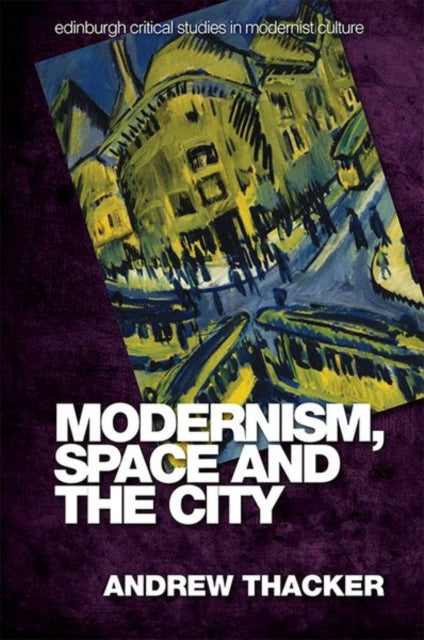
Andrew Thacker
Modernism, Space and the City
Modernism, Space and the City
YOU SAVE £27.19
- Condition: Brand new
- UK Delivery times: Usually arrives within 2 - 3 working days
- UK Shipping: Fee starts at £3.89. Subject to product weight & dimension
Bulk ordering. Want 15 or more copies? Get a personalised quote and bigger discounts. Learn more about bulk orders.
Couldn't load pickup availability
- More about Modernism, Space and the City
The book explores the role of cities in modernist writing, focusing on four European cities and the perspectives of literary outsiders. It examines the transnational qualities of modernist writing and includes authors such as Mulk Raj Anand, Blaise Cendrars, Bryher, Joseph Conrad, T. S. Eliot, Christopher Isherwood, Hope Mirrlees, Naomi Mitchison, Jean Rhys, Sam Selvon, and Stephen Spender. It is the first book to bring affect theory and literary geography together to analyse modernism and situates the literary and filmic texts within the context of urban spaces and cultural institutions.
Format: Hardback
Length: 296 pages
Publication date: 31 January 2019
Publisher: Edinburgh University Press
The city has played a crucial role in the construction of modernism, and this innovative book explores its development in four European cities: London, Paris, Berlin, and Vienna. By focusing on how literary outsiders represented various spaces in these cities, it draws upon contemporary theories of affect and literary geography. Particular attention is given to the transnational qualities of modernist writing by examining writers whose view of the cities considered is that of migrants, exiles, or strangers, including Mulk Raj Anand, Blaise Cendrars, Bryher, Joseph Conrad, T. S. Eliot, Christopher Isherwood, Hope Mirrlees, Naomi Mitchison, Jean Rhys, Sam Selvon, and Stephen Spender.
Key Features:
The first book in modernist studies to bring detailed discussion of these four cities together.
Breaks new ground in being the first book to bring affect theory and literary geography together in order to analyse modernism.
An extensive range of authors is analysed, from the canonical to the previously marginal.
Situates the literary and filmic texts within the context of urban spaces and cultural institutions.
The book begins by examining the historical and cultural context of modernism in each city, including the rise of industrialization, the growth of urban populations, and the emergence of new artistic movements. It then explores the ways in which literary outsiders represented these spaces, using a range of literary techniques such as realism, surrealism, and expressionism.
One of the key themes of the book is the impact of migration on modernist writing. Writers who were migrants, exiles, or strangers often had a unique perspective on the cities they lived in, and their writing often reflected this. For example, Mulk Raj Anand's novel "Untouchable" explores the experiences of an Indian man living in London, while Blaise Cendrars' novel "The Human Comedy" explores the life of a Frenchman living in Paris.
Another important theme of the book is the role of literary geography in modernist writing. Literary geography involves the study of the relationship between literature and the physical environment, and it has been used to analyse the works of writers such as Joseph Conrad, T. S. Eliot, and Christopher Isherwood. The book explores the ways in which these writers used the city as a setting for their stories, and how this influenced their writing.
The book also examines the ways in which modernist writing has been influenced by other cultural institutions, such as museums, galleries, and theaters. For example, Joseph Conrad's novel "Heart of Darkness" was influenced by his experiences in the Congo, while T. S. Eliot's poem "The Waste Land" was influenced by his experiences in London.
In addition to its analysis of modernist writing, the book also includes a number of essays on contemporary issues related to the city. These essays include discussions of gentrification, urban renewal, and the impact of globalization on the city.
Overall, this book is a valuable contribution to the field of modernist studies. It provides a detailed and insightful analysis of the development of modernist writing in four European cities, and it highlights the importance of migration, literary geography, and other cultural institutions in shaping modernist literature.
The city has played a crucial role in the construction of modernism, and this innovative book explores its development in four European cities: London, Paris, Berlin, and Vienna. By focusing on how literary outsiders represented various spaces in these cities, it draws upon contemporary theories of affect and literary geography. Particular attention is given to the transnational qualities of modernist writing by examining writers whose view of the cities considered is that of migrants, exiles, or strangers, including Mulk Raj Anand, Blaise Cendrars, Bryher, Joseph Conrad, T. S. Eliot, Christopher Isherwood, Hope Mirrlees, Naomi Mitchison, Jean Rhys, Sam Selvon, and Stephen Spender.
Key Features:
The first book in modernist studies to bring detailed discussion of these four cities together.
Breaks new ground in being the first book to bring affect theory and literary geography together in order to analyse modernism.
An extensive range of authors is analysed, from the canonical to the previously marginal.
Situates the literary and filmic texts within the context of urban spaces and cultural institutions.
The book begins by examining the historical and cultural context of modernism in each city, including the rise of industrialization, the growth of urban populations, and the emergence of new artistic movements. It then explores the ways in which literary outsiders represented these spaces, using a range of literary techniques such as realism, surrealism, and expressionism.
One of the key themes of the book is the impact of migration on modernist writing. Writers who were migrants, exiles, or strangers often had a unique perspective on the cities they lived in, and their writing often reflected this. For example, Mulk Raj Anand's novel "Untouchable" explores the experiences of an Indian man living in London, while Blaise Cendrars' novel "The Human Comedy" explores the life of a Frenchman living in Paris.
Another important theme of the book is the role of literary geography in modernist writing. Literary geography involves the study of the relationship between literature and the physical environment, and it has been used to analyse the works of writers such as Joseph Conrad, T. S. Eliot, and Christopher Isherwood. The book explores the ways in which these writers used the city as a setting for their stories, and how this influenced their writing.
The book also examines the ways in which modernist writing has been influenced by other cultural institutions, such as museums, galleries, and theaters. For example, Joseph Conrad's novel "Heart of Darkness" was influenced by his experiences in the Congo, while T. S. Eliot's poem "The Waste Land" was influenced by his experiences in London.
In addition to its analysis of modernist writing, the book also includes a number of essays on contemporary issues related to the city. These essays include discussions of gentrification, urban renewal, and the impact of globalization on the city.
Overall, this book is a valuable contribution to the field of modernist studies. It provides a detailed and insightful analysis of the development of modernist writing in four European cities, and it highlights the importance of migration, literary geography, and other cultural institutions in shaping modernist literature.
Weight: 550g
Dimension: 161 x 240 x 22 (mm)
ISBN-13: 9780748633470
UK and International shipping information
UK and International shipping information
We deliver throughout the United Kingdom and to 128 countries and territories worldwide, including the United States, Australia, Canada, Germany, Spain and France.