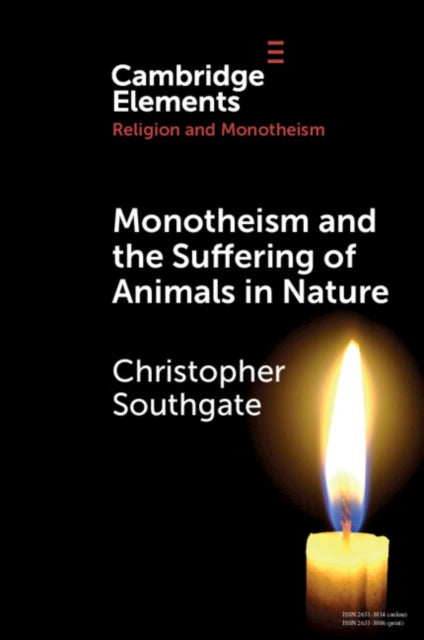
ChristopherSouthgate
Monotheism and the Suffering of Animals in Nature
Monotheism and the Suffering of Animals in Nature
💎 Earn 84 Points (£0.84) on this item.
We can order this item for you. Delivery usually takes about 4 to 6 weeks.
This item is not held in our immediate stock. We will order it for you after checkout.
Estimated delivery: About 4 to 6 weeks
YOU SAVE £1.01
- Condition: Brand new
- UK Delivery times: Usually arrives within 2 - 3 working days
- UK Shipping: Fee starts at £2.39. Subject to product weight & dimension
Bulk ordering. Want 15 or more copies? Get a personalised quote and bigger discounts. Learn more about bulk orders.
Couldn't load pickup availability
- More about Monotheism and the Suffering of Animals in Nature
This Element examines the problem of non-human creature suffering in monotheistic religions, comparing Judaism, Christianity, and Islam, and exploring Christian thought. It considers fall-event, freedom of process, and constraint on God's possibilities, evaluating self-emptying proposals. It also examines God's providential relationship and resurrection lives for animals. The Element concludes with two innovative proposals at the cutting-edge of the debate.
Format: Paperback / softback
Length: 75 pages
Publication date: 06 July 2023
Publisher: Cambridge University Press
This Element delves into a specific facet of the problem posed to monotheistic religious thought by suffering, specifically the plight of non-human creatures in nature. It conducts a comparative analysis between Judaism, Christianity, and Islam, before delving into a comprehensive exploration of the issue within Christian thought. Following a clarification of the nature of the problem, the Element examines a diverse array of possible responses, encompassing those rooted in a fall event, those based on the freedom of process, and those that propose a limitation on the capabilities of God as the creator. Proposals centered around the motif of self-emptying are critically evaluated. Additionally, the Element addresses two other aspects of the question: God's providential relationship to the evolving creation and the possibility of resurrection lives for animals. After considering the potential of combining different explanations, the Element concludes its discussion by examining two innovative proposals that are at the forefront of the ongoing debate.
Introduction:
The Element addresses the issue of suffering, particularly the suffering of non-human creatures in nature, within the context of monotheistic religious thought. It explores the comparative perspectives of Judaism, Christianity, and Islam, before delving into a comprehensive examination of the problem within Christian thought. The Element aims to provide a comprehensive analysis of the various responses to the problem of suffering, including those based on a fall event, freedom of process, and constraints on the possibilities for God as creator. Additionally, it examines the providential relationship between God and the evolving creation and explores the possibility of resurrection lives for animals. The Element concludes by examining two innovative proposals that are at the cutting-edge of the debate.
Comparative Analysis:
The Element begins by comparing the perspectives of Judaism, Christianity, and Islam on the issue of suffering. Judaism emphasizes the importance of compassion and justice for all creatures, while Christianity emphasizes the redemptive power of God's love and the ultimate victory of good over evil. Islam, on the other hand, emphasizes the balance between divine justice and mercy and the belief that God is the ultimate healer and provider.
Christian Thought:
Within Christian thought, the Element explores the problem of suffering in depth. It examines the various interpretations of the Bible and the teachings of the Church Fathers, as well as the philosophical and theological debates surrounding the issue. Christian thinkers. The Element also considers the role of human free will and the concept of divine foreknowledge in understanding the problem of suffering.
Possible Responses:
The Element considers a range of possible responses to the problem of suffering. These include proposals based on a fall event, which suggest that suffering is a result of human sin and rebellion against God. Other responses propose that suffering is a necessary part of the process of human growth and development and that it can be used as a means of fostering empathy and compassion. Still, others suggest that suffering is a result of the limitations of human understanding and that it can be overcome through faith and trust in God.
Self-Emptying:
One of the most significant responses to the problem of suffering is the concept of self-emptying, which is central to the teachings of Jesus Christ. According to this concept, God emptied himself of his divine glory and took on the form of a human being, suffering and dying on the cross as a sacrifice for the sins of all people. This self-emptying is seen as a means of reconciling humans to God and providing them with the hope of eternal life.
Providential Relationship:
The Element also examines the providential relationship between God and the evolving creation. It considers the question of whether God is actively involved in the suffering of non-human creatures in nature and whether there is a purpose to their suffering. Some Christians argue that God is not actively involved in the suffering of non-human creatures and that it is a result of the fallen nature of the world. Others argue that God is actively involved in the suffering of non-human creatures and that it is a means of bringing about his ultimate purpose of redemption and restoration.
Resurrection Lives for Animals:
The possibility of resurrection lives for animals is another aspect of the problem of suffering that the Element explores. Some Christians believe that animals will be resurrected to live with humans in a new heaven and earth, while others believe that animals will not be resurrected and that their existence is merely a temporary one. The Element considers the arguments for and against resurrection lives for animals and evaluates the theological and ethical implications of each position.
Conclusion:
In conclusion, the Element provides a comprehensive analysis of the problem of suffering within the context of monotheistic religious thought. It compares the perspectives of Judaism, Christianity, and Islam, explores the problem in depth within Christian thought, considers a range of possible responses, and examines the concept of self-emptying and the providential relationship between God and the evolving creation. Additionally, it explores the possibility of resurrection lives for animals and evaluates the theological and ethical implications of each position. The Element concludes by examining two innovative proposals that are at the cutting-edge of the debate.
Weight: 128g
Dimension: 152 x 229 x 8 (mm)
ISBN-13: 9781108948685
This item can be found in:
UK and International shipping information
UK and International shipping information
UK Delivery and returns information:
- Delivery within 2 - 3 days when ordering in the UK.
- Shipping fee for UK customers from £2.39. Fully tracked shipping service available.
- Returns policy: Return within 30 days of receipt for full refund.
International deliveries:
Shulph Ink now ships to Australia, Belgium, Canada, France, Germany, Ireland, Italy, India, Luxembourg Saudi Arabia, Singapore, Spain, Netherlands, New Zealand, United Arab Emirates, United States of America.
- Delivery times: within 5 - 10 days for international orders.
- Shipping fee: charges vary for overseas orders. Only tracked services are available for most international orders. Some countries have untracked shipping options.
- Customs charges: If ordering to addresses outside the United Kingdom, you may or may not incur additional customs and duties fees during local delivery.