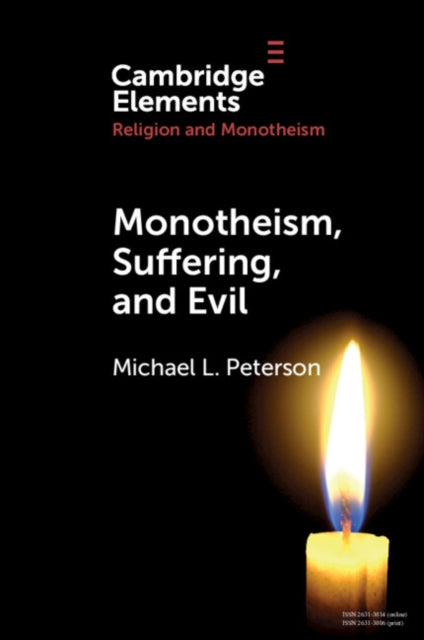
Michael L. Peterson
Monotheism, Suffering, and Evil
Monotheism, Suffering, and Evil
💎 Earn 84 Points (£0.84) on this item.
We can order this item for you. Delivery usually takes about 4 to 6 weeks.
This item is not held in our immediate stock. We will order it for you after checkout.
Estimated delivery: About 4 to 6 weeks
YOU SAVE £1.01
- Condition: Brand new
- UK Delivery times: Usually arrives within 2 - 3 working days
- UK Shipping: Fee starts at £2.39. Subject to product weight & dimension
Bulk ordering. Want 15 or more copies? Get a personalised quote and bigger discounts. Learn more about bulk orders.
Couldn't load pickup availability
- More about Monotheism, Suffering, and Evil
The problem of suffering and evil is the most difficult challenge to monotheistic belief. Judaism, Christianity, and Islam respond to this problem in different ways, with objections to the enterprise of theodicy and additional objections to the monotheistic God. The best response to the argument from gratuitous evil is recommended.
Format: Paperback / softback
Length: 75 pages
Publication date: 12 May 2022
Publisher: Cambridge University Press
The Problem of Suffering and Evil presents a formidable challenge to monotheistic belief systems. This Element explores the responses of Judaism, Christianity, and Islam to the issue of suffering and evil. It examines diverse versions of the problem, the range of answers offered by these religions, and recurring themes in philosophical and religious sources. Additionally, it addresses objections to the endeavor of theodicy, which seeks to explain the existence of evil in the world in terms of the actions of a benevolent God. Furthermore, this Element considers broader criticisms of the monotheistic God and proposes a recommended approach for monotheism to address the most challenging formulation of the problem, namely, the argument from gratuitous evil.
Suffering and evil are ubiquitous aspects of human existence, posing profound questions to religious belief systems. Monotheistic religions, such as Judaism, Christianity, and Islam, have grappled with these challenges throughout their histories. The Problem of Suffering and Evil revolves around the question of why a good and omnipotent God allows suffering and evil to exist in the world.
Judaism, one of the oldest monotheistic religions, offers various explanations for the existence of suffering. According to traditional Jewish belief, suffering is a result of human free will and the fallibility of human nature. The Torah emphasizes the importance of repentance, prayer, and ethical behavior as means of mitigating suffering and seeking God's forgiveness. Judaism also emphasizes the concept of a messianic era, in which God will ultimately bring about a world of justice and peace.
Christianity, another major monotheistic religion, also addresses the problem of suffering. The Christian belief in the crucifixion and resurrection of Jesus Christ provides a basis for hope in the face of suffering. Christians believe that Jesus died for the sins of all people and that by believing in him and accepting his sacrifice, one can be saved from eternal separation from God. Christianity also emphasizes the importance of love, compassion, and service to others as means of promoting goodness and reducing suffering.
Islam, the third major monotheistic religion, also offers explanations for the existence of suffering. Islam emphasizes the concept of divine justice and the belief that God tests individuals and communities to bring them closer to him. Muslims believe that suffering is a part of life and that it serves as a means of purification and growth. Islam also emphasizes the importance of seeking God's guidance and following his teachings to achieve success and happiness in life.
Despite these diverse responses, monotheistic religions face several objections to their explanations of suffering. One of the most prominent objections is the argument from evil, which challenges the idea that a good and omnipotent God exists. The argument from evil argues that if God is omnipotent and omnibenevolent, then evil must exist for some reason. However, monotheistic religions offer various responses to this argument.
Judaism, for example, emphasizes the concept of free will and human responsibility. Judaism teaches that God created humans with the ability to choose between good and evil and that human actions have consequences. Judaism also emphasizes the importance of repentance and seeking God's forgiveness for one's sins.
Christianity, on the other hand, emphasizes the concept of divine grace and redemption. Christians believe that God loves all people and that Jesus Christ died for the sins of all people. Christians believe that by believing in Jesus and accepting his sacrifice, one can be saved from eternal separation from God. Christianity also emphasizes the importance of faith and trust in God's plan for the world.
Islam, similarly, emphasizes the concept of divine justice and the belief that God tests individuals and communities to bring them closer to him. Muslims believe that suffering is a part of life and that it serves as a means of purification and growth. Islam also emphasizes the importance of seeking God's guidance and following his teachings to achieve success and happiness in life.
Despite these responses, the argument from evil remains a challenging objection to monotheistic belief systems. Some critics argue that the existence of evil is incompatible with the idea of a good and omnipotent God. However, monotheistic religions continue to grapple with this objection and seek to find ways to explain the existence of evil in the world in terms of their beliefs.
In conclusion, the Problem of Suffering and Evil presents a formidable challenge to monotheistic belief systems. Judaism, Christianity, and Islam offer diverse responses to the issue of suffering and evil, emphasizing free will, human responsibility, divine grace, and redemption. However, the argument from evil remains a challenging objection, and monotheistic religions continue to grapple with this issue and seek to find ways to explain the existence of evil in the world in terms of their beliefs.
Weight: 136g
Dimension: 152 x 228 x 8 (mm)
ISBN-13: 9781108822879
UK and International shipping information
UK and International shipping information
UK Delivery and returns information:
- Delivery within 2 - 3 days when ordering in the UK.
- Shipping fee for UK customers from £2.39. Fully tracked shipping service available.
- Returns policy: Return within 30 days of receipt for full refund.
International deliveries:
Shulph Ink now ships to Australia, Belgium, Canada, France, Germany, Ireland, Italy, India, Luxembourg Saudi Arabia, Singapore, Spain, Netherlands, New Zealand, United Arab Emirates, United States of America.
- Delivery times: within 5 - 10 days for international orders.
- Shipping fee: charges vary for overseas orders. Only tracked services are available for most international orders. Some countries have untracked shipping options.
- Customs charges: If ordering to addresses outside the United Kingdom, you may or may not incur additional customs and duties fees during local delivery.