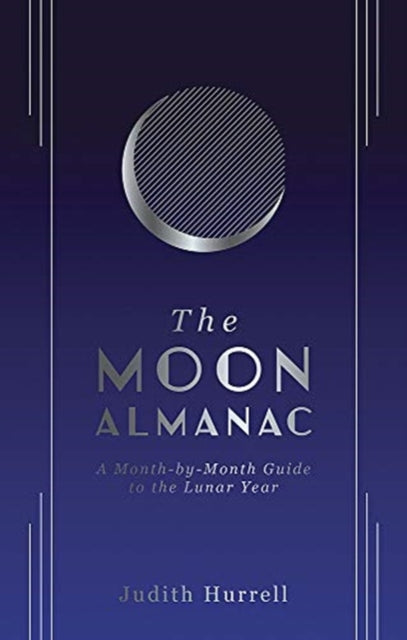
Judith Hurrell
Moon Almanac: A Month-by-Month Guide to the Lunar Year
Moon Almanac: A Month-by-Month Guide to the Lunar Year
💎 Earn 36 Points (£0.36) on this item.
YOU SAVE £2.68
- Condition: Brand new
- UK Delivery times: Usually arrives within 2 - 3 working days
- UK Shipping: Fee starts at £2.39. Subject to product weight & dimension
Bulk ordering. Want 15 or more copies? Get a personalised quote and bigger discounts. Learn more about bulk orders.
Couldn't load pickup availability
- More about Moon Almanac: A Month-by-Month Guide to the Lunar Year
The Hunters Moon, a Smiling Moon, or a Pink Moon can be spotted at different times. The phases of the moon can help your garden grow, and the moon has an influence on hamsters, coral, and skylarks. This guide explores the moon's influence on the natural world and its depiction in folklore and the arts.
\n Format: Hardback
\n Length: 208 pages
\n Publication date: 23 August 2021
\n Publisher: Summersdale Publishers
\n
The Hunter's Moon, also known as the "Smiling Moon," is a captivating astronomical event that occurs when the moon appears to smile or grin due to its position in the sky. This phenomenon occurs during the full moon phase, when the moon is on the opposite side of the Earth from the sun. The moon's orbit around the Earth is not perfectly circular, so it sometimes appears to be closer or farther away from the sun than it actually is. This can cause the moon to appear larger or smaller than it actually is, and it can also cause the moon to appear to be tilted or rotated slightly.
One of the most notable features of the Hunter's Moon is its appearance. The moon appears to be a bright, white orb with a slight smile or grin on its face. This is caused by the moon's position in the sky and the way the sun's light is reflected off of it. The sun's light is refracted by the Earth's atmosphere, which causes the moon to appear to be a different color than it actually is. The Hunter's Moon is often associated with the fall season, as it occurs during the time of year when many animals are preparing for hibernation or migration. This is because the moon's light can help to regulate the animals' internal clocks and make them more likely to engage in activities that will help them to survive the winter.
Another interesting aspect of the Hunter's Moon is its historical significance. The moon has been observed and celebrated by many different cultures throughout history, and it has been used in a variety of ways to mark important events and festivals. For example, the Native Americans of North America used the Hunter's Moon to mark the beginning of the hunting season, and they would often hold ceremonies and rituals to honor the moon and the animals that it represented. In Europe, the Hunter's Moon was often associated with the harvest season, and it was used to mark the time when crops were ready to be harvested.
Despite its many benefits, the Hunter's Moon is not without its challenges. For example, the moon's bright light can be disruptive to sleep, and it can also make it difficult to see in low-light conditions. Additionally, the moon's position in the sky can affect the tides and the weather, which can have a significant impact on human activities and the environment.
In conclusion, the Hunter's Moon is a fascinating astronomical event that occurs when the moon appears to smile or grin due to its position in the sky. This phenomenon is caused by the moon's position in the sky and the way the sun's light is reflected off of it. The Hunter's Moon is often associated with the fall season, as it occurs during the time of year when many animals are preparing for hibernation or migration. It is also a significant historical event that has been observed and celebrated by many different cultures throughout history. Despite its many benefits, the Hunter's Moon is not without its challenges, and it is important to be aware of these challenges when planning activities that may be affected by the moon's position in the sky.
The phases of the moon can have a significant impact on your garden's growth and productivity. Here are some ways in which the moon's phases can affect your garden:
Lunar Phase: The lunar phase can affect the amount of light that your garden receives. During the full moon phase, the moon is directly opposite the sun, which means that the sun's light is blocked by the moon. This can result in a decrease in the amount of light that reaches your garden, which can slow down the growth of plants and reduce the yield of fruits and vegetables.
On the other hand, during the new moon phase, the moon is not directly opposite the sun, which means that the sun's light is not blocked by the moon. This can result in an increase in the amount of light that reaches your garden, which can promote the growth of plants and increase the yield of fruits and vegetables.
Tidal Phase: The tidal phase can also affect the growth of your garden. During the high tide. The moon is at its highest point in the sky, which means that the gravitational pull of the moon is strongest. This can result in an increase in the amount of water that is drawn up from the soil, which can promote the growth of plants and increase the yield of fruits and vegetables.
On the other hand, during the low tide phase, the moon is at its lowest point in the sky, which means that the gravitational pull of the moon is weakest. This can result in a decrease in the amount of water that is drawn up from the soil, which can slow down the growth of plants and reduce the yield of fruits and vegetables.
In conclusion, the phases of the moon can have a significant impact on your garden's growth and productivity. By understanding the effects of the lunar phase, tidal phase, and other astronomical events on your garden, you can optimize your gardening practices to ensure that your plants receive the right
The influence of the moon on hamsters, coral, and skylarks is profound and multifaceted. Here are some ways in which the moon can affect these animals:
Hamsters:
Hamsters are nocturnal animals, which means that they are most active at night and sleep during the day. The moon's phases can have a significant impact on their behavior and activity levels. During the full moon phase, hamsters may become more active and playful, as the increased light can stimulate their senses and encourage them to explore their environment. This increased activity can lead to increased exercise and exploration, which can help to keep hamsters healthy and happy.
On the other hand, during the new moon phase, hamsters may become less active and more lethargic, as the decreased light can make it difficult for them to see and navigate their environment. This decreased activity can lead to a decrease in exercise and exploration, which can lead to weight gain and other health problems.
Coral:
Coral is a type of marine organism that is found in the ocean and is known for its vibrant colors and intricate structures. The moon's phases can have a significant impact on the growth and health of coral reefs. During the full moon phase, the moon's light can stimulate the growth of coral by providing additional light for photosynthesis. This increased light can lead to the growth of new coral and the repair of damaged coral.
On the other hand, during the new moon phase, the decreased light can slow down the growth of coral by reducing the amount of photosynthesis that occurs. This decreased light can lead to the death of coral and the destruction of coral reefs.
Skylarks:
Skylarks are birds that are known for their melodious songs and their ability to fly high in the sky. The moon's phases can have a significant impact on their behavior and activity levels. During the full moon phase, skylarks may become more active and vocal, as the increased light can stimulate their senses and encourage them to sing and fly. This increased activity can lead to increased communication and socialization, which can help to strengthen their bonds with other skylarks and promote the survival of their species.
On the other hand, during the new moon phase, skylarks may become less active and vocal, as the decreased light can make it difficult for them to see and navigate their environment. This decreased activity can lead to a decrease in communication and socialization, which can lead to a decrease in the survival of their species.
In conclusion, the moon's phases can have a significant impact on hamsters, coral, and skylarks. By understanding the effects of the lunar phase, tidal phase, and other astronomical events on these animals, we can better understand the complex relationships between these animals and their environment and take steps to protect and conserve them.
Navigating the rhythms of the night sky with this evocative collection of poetry, prose and precious wisdom will open your eyes to the wonders of our brightest celestial neighbour.
The Hunter's Moon, also known as the "Smiling Moon," is a captivating astronomical event that occurs when the moon appears to smile or grin due to its position in the sky. This phenomenon occurs during the full moon phase, when the moon is on the opposite side of the Earth from the sun. The moon's orbit around the Earth is not perfectly circular, so it sometimes appears to be closer or farther away from the sun than it actually is. This can cause the moon to appear larger or smaller than it actually is, and it can also cause the moon to appear to be tilted or rotated slightly.
One of the most notable features of the Hunter's Moon is its appearance. The moon appears to be a bright, white orb with a slight smile or grin on its face. This is caused by the moon's position in the sky and the way the sun's light is reflected off of it. The sun's light is refracted by the Earth's atmosphere, which causes the moon to appear to be a different color than it actually is. The Hunter's Moon is often associated with the fall season, as it occurs during the time of year when many animals are preparing for hibernation or migration. This is because the moon's light can help to regulate the animals' internal clocks and make them more likely to engage in activities that will help them to survive the winter.
Another interesting aspect of the Hunter's Moon is its historical significance. The moon has been observed and celebrated by many different cultures throughout history, and it has been used in a variety of ways to mark important events and festivals. For example, the Native Americans of North America used the Hunter's Moon to mark the beginning of the hunting season, and they would often hold ceremonies and rituals to honor the moon and the animals that it represented. In Europe, the Hunter's Moon was often associated with the harvest season, and it was used to mark the time when crops were ready to be harvested.
Despite its many benefits, the Hunter's Moon is not without its challenges. For example, the moon's bright light can be disruptive to sleep, and it can also make it difficult to see in low-light conditions. Additionally, the moon's position in the sky can affect the tides and the weather, which can have a significant impact on human activities and the environment.
In conclusion, the Hunter's Moon is a fascinating astronomical event that occurs when the moon appears to smile or grin due to its position in the sky. This phenomenon is caused by the moon's position in the sky and the way the sun's light is reflected off of it. The Hunter's Moon is often associated with the fall season, as it occurs during the time of year when many animals are preparing for hibernation or migration. It is also a significant historical event that has been observed and celebrated by many different cultures throughout history. Despite its many benefits, the Hunter's Moon is not without its challenges, and it is important to be aware of these challenges when planning activities that may be affected by the moon's position in the sky.
The phases of the moon can have a significant impact on your garden's growth and productivity. Here are some ways in which the moon's phases can affect your garden:
Lunar Phase: The lunar phase can affect the amount of light that your garden receives. During the full moon phase, the moon is directly opposite the sun, which means that the sun's light is blocked by the moon. This can result in a decrease in the amount of light that reaches your garden, which can slow down the growth of plants and reduce the yield of fruits and vegetables.
On the other hand, during the new moon phase, the moon is not directly opposite the sun, which means that the sun's light is not blocked by the moon. This can result in an increase in the amount of light that reaches your garden, which can promote the growth of plants and increase the yield of fruits and vegetables.
Tidal Phase: The tidal phase can also affect the growth of your garden. During the high tide. The moon is at its highest point in the sky, which means that the gravitational pull of the moon is strongest. This can result in an increase in the amount of water that is drawn up from the soil, which can promote the growth of plants and increase the yield of fruits and vegetables.
On the other hand, during the low tide phase, the moon is at its lowest point in the sky, which means that the gravitational pull of the moon is weakest. This can result in a decrease in the amount of water that is drawn up from the soil, which can slow down the growth of plants and reduce the yield of fruits and vegetables.
In conclusion, the phases of the moon can have a significant impact on your garden's growth and productivity. By understanding the effects of the lunar phase, tidal phase, and other astronomical events on your garden, you can optimize your gardening practices to ensure that your plants receive the
The influence of the moon on hamsters, coral, and skylarks is profound and multifaceted. Here are some ways in which the moon can affect these animals:
Hamsters:
Hamsters are nocturnal animals, which means that they are most active at night and sleep during the day. The moon's phases can have a significant impact on their behavior and activity levels. During the full moon phase, hamsters may become more active and playful, as the increased light can stimulate their senses and encourage them to explore their environment. This increased activity can lead to increased exercise and exploration, which can help to keep hamsters healthy and happy.
On the other hand, during the new moon phase, hamsters may become less active and more lethargic, as the decreased light can make it difficult for them to see and navigate their environment. This decreased activity can lead to a decrease in exercise and exploration, which can lead to weight gain and other health problems.
Coral:
Coral is a type of marine organism that is found in the ocean and is known for its vibrant colors and intricate structures. The moon's phases can have a significant impact on the growth and health of coral reefs. During the full moon phase, the moon's light can stimulate the growth of coral by providing additional light for photosynthesis. This increased light can lead to the growth of new coral and the repair of damaged coral.
On the other hand, during the new moon phase, the decreased light can slow down the growth of coral by reducing the amount of photosynthesis that occurs. This decreased light can lead to the death of coral and the destruction of coral reefs.
Skylarks:
Skylarks are birds that are known for their melodious songs and their ability to fly high in the sky. The moon's phases can have a significant impact on their behavior and activity levels. During the full moon phase, skylarks may become more active and vocal, as the increased light can stimulate their senses and encourage them to sing and fly. This increased activity can lead to increased communication and socialization, which can help to strengthen their bonds with other skylarks and promote the survival of their species.
On the other hand, during the new moon phase, skylarks may become less active and vocal, as the decreased light can make it difficult for them to see and navigate their environment. This decreased activity can lead to a decrease in communication and socialization, which can lead to a decrease in the survival of their species.
In conclusion, the moon's phases can have a significant impact on hamsters, coral, and skylarks. By understanding the effects of the lunar phase, tidal phase, and other astronomical events on these animals, we can better understand the complex relationships between these animals and their environment and take steps to protect and conserve them.
Navigating the rhythms of the night sky with this evocative collection of poetry, prose and precious wisdom will open your eyes to the wonders of our brightest celestial neighbour.
\n Weight: 372g\n
Dimension: 184 x 117 x 22 (mm)\n
ISBN-13: 9781787839915\n \n
This item can be found in:
UK and International shipping information
UK and International shipping information
UK Delivery and returns information:
- Delivery within 2 - 3 days when ordering in the UK.
- Shipping fee for UK customers from £2.39. Fully tracked shipping service available.
- Returns policy: Return within 30 days of receipt for full refund.
International deliveries:
Shulph Ink now ships to Australia, Belgium, Canada, France, Germany, Ireland, Italy, India, Luxembourg Saudi Arabia, Singapore, Spain, Netherlands, New Zealand, United Arab Emirates, United States of America.
- Delivery times: within 5 - 10 days for international orders.
- Shipping fee: charges vary for overseas orders. Only tracked services are available for most international orders. Some countries have untracked shipping options.
- Customs charges: If ordering to addresses outside the United Kingdom, you may or may not incur additional customs and duties fees during local delivery.