RitaFloyd
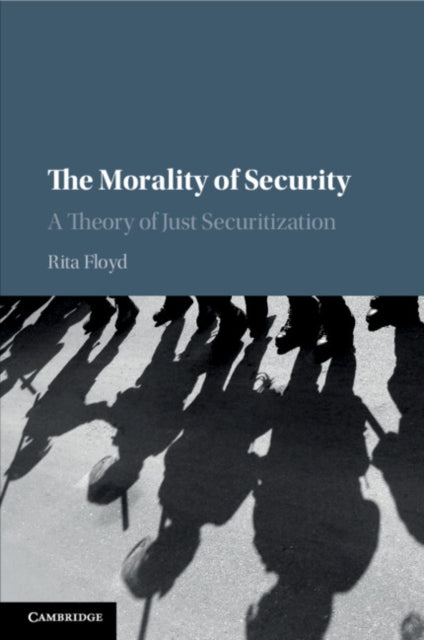
Morality of Security: A Theory of Just Securitization
Morality of Security: A Theory of Just Securitization
💎 Earn 160 Points (£1.60) on this item.
We can order this item for you. Delivery usually takes about 4 to 6 weeks.
This item is not held in our immediate stock. We will order it for you after checkout.
Estimated delivery: About 4 to 6 weeks
YOU SAVE £1.90
- Condition: Brand new
- UK Delivery times: Usually arrives within 2 - 3 working days
- UK Shipping: Fee starts at £2.39. Subject to product weight & dimension
Bulk ordering. Want 15 or more copies? Get a personalised quote and bigger discounts. Learn more about bulk orders.
Couldn't load pickup availability
- More about Morality of Security: A Theory of Just Securitization
Floyd's Just Securitization Theory combines security studies and philosophy's just war tradition to address when it is permissible to move an issue out of normal politics and treat it as a security issue, how security measures should be conducted, and when and how securitization should be reversed. It provides a normative framework for evaluating past and present securitizations, guiding practitioners in making informed decisions, and empowering the public to hold actors accountable for their views on security.
Format: Paperback / softback
Length: 259 pages
Publication date: 30 September 2021
Publisher: Cambridge University Press
When is it permissible to move an issue out of normal politics and treat it as a security issue?
The concept of securitization is a powerful tool that allows governments and other actors to prioritize certain issues and allocate resources to address them. However, it is important to consider when and how securitization should be used, as it can have unintended consequences and undermine democratic values. In this essay, I will argue that securitization is permissible when it is necessary to protect the lives and well-being of individuals or communities from imminent threats. Securitization can be justified when there is a clear and present danger that cannot be addressed through other means, and when the measures taken to address the threat are proportionate to the risk. However, securitization should not be used as a tool to justify military intervention or other forms of coercion, or to suppress political opposition or dissent. Instead, securitization should be used in a way that respects human rights and promotes democratic values.
One of the key challenges of securitization is determining when an issue should be moved out of normal politics and treated as a security issue. This decision is often made by governments and other actors based on a combination of factors, including the nature of the threat, the level of risk, and the political will of the affected population. However, there are many different perspectives on when securitization is appropriate, and there is no clear consensus on the criteria that should be used to make this decision. Some argue that securitization is only permissible when there is a direct threat to national security, while others argue that it is also permissible when there is a threat to human rights or social stability.
Another challenge of securitization is determining how security measures should be conducted. Security measures can take many different forms, including military intervention, economic sanctions, diplomatic pressure, and social programs. Each of these measures has its own advantages and disadvantages, and it is important to consider the potential impact on human rights and social stability when implementing them. For example, military intervention can be effective in addressing certain threats, but it can also lead to civilian casualties and undermine democratic values. Economic sanctions can be effective in promoting political change, but they can also hurt the affected population and undermine economic stability.
Finally, it is important to consider when and how securitization should be reversed. Securitization can be a powerful tool for addressing certain threats, but it can also become entrenched and difficult to reverse. When securitization becomes excessive or abusive, it is important to take steps to address the underlying causes of the threat and to promote democratic values and human rights. This may involve engaging in dialogue with political opposition, promoting social programs, and engaging in diplomatic pressure to address the underlying causes of the threat.
In conclusion, securitization is a powerful tool that can be used to address certain threats and promote social stability. However, it is important to consider when and how securitization should be used, and to ensure that it is used in a way that respects human rights and promotes democratic values. Securitization should not be used as a tool to justify military intervention or other forms of coercion, or to suppress political opposition or dissent. Instead, securitization should be used in a way that promotes dialogue, promotes social programs, and engages in diplomatic pressure to address the underlying causes of the threat. By doing so, we can ensure that securitization is used to promote security and stability, rather than to undermine them.
Weight: 386g
Dimension: 151 x 228 x 22 (mm)
ISBN-13: 9781108452960
This item can be found in:
UK and International shipping information
UK and International shipping information
UK Delivery and returns information:
- Delivery within 2 - 3 days when ordering in the UK.
- Shipping fee for UK customers from £2.39. Fully tracked shipping service available.
- Returns policy: Return within 30 days of receipt for full refund.
International deliveries:
Shulph Ink now ships to Australia, Belgium, Canada, France, Germany, Ireland, Italy, India, Luxembourg Saudi Arabia, Singapore, Spain, Netherlands, New Zealand, United Arab Emirates, United States of America.
- Delivery times: within 5 - 10 days for international orders.
- Shipping fee: charges vary for overseas orders. Only tracked services are available for most international orders. Some countries have untracked shipping options.
- Customs charges: If ordering to addresses outside the United Kingdom, you may or may not incur additional customs and duties fees during local delivery.