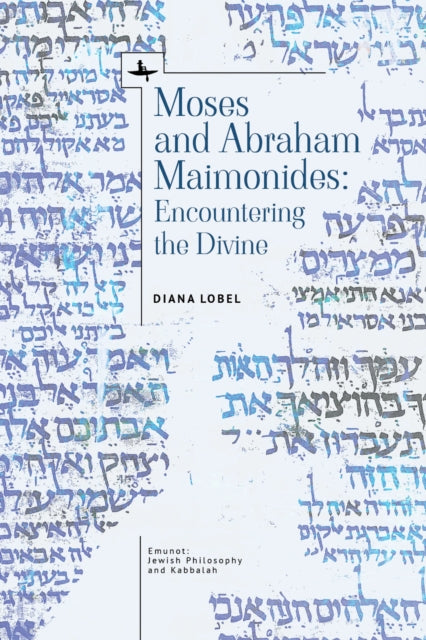
Diana Lobel
Moses and Abraham Maimonides: Encountering the Divine
Moses and Abraham Maimonides: Encountering the Divine
YOU SAVE £5.05
- Condition: Brand new
- UK Delivery times: Usually arrives within 2 - 3 working days
- UK Shipping: Fee starts at £3.89. Subject to product weight & dimension
Bulk ordering. Want 15 or more copies? Get a personalised quote and bigger discounts. Learn more about bulk orders.
Couldn't load pickup availability
- More about Moses and Abraham Maimonides: Encountering the Divine
Moses Maimonides and his son Abraham Maimonides crafted a philosophical interpretation of Torah and Judaism, exploring the spark of divine illumination and revelation of the divine name Ehyeh asher Ehyeh.
Format: Paperback / softback
Length: 238 pages
Publication date: 07 July 2022
Publisher: Academic Studies Press
Moses Maimonides, a proud heir to the Andalusian tradition of Aristotelian philosophy, crafted a bold and original philosophical interpretation of Torah and Judaism. His son Abraham Maimonides is a fascinating maverick whose Torah commentary mediates between the philosophical interpretations of his father, the contextual approach of Biblical exegetes such as Saadya, and the Sufi-flavored illuminative mysticism of his Egyptian Pietist circle. This pioneering study explores the intersecting approaches of Moses and Abraham Maimonides to the spark of divine illumination and revelation of the divine name Ehyeh asher Ehyeh, "I am that I am / I will be who I will be."
Moses Maimonides, a prominent figure in the Andalusian tradition of Aristotelian philosophy, left an indelible mark on the interpretation of Torah and Judaism. As a proud heir to this philosophical lineage, he ventured into uncharted territories, crafting a unique and innovative philosophical perspective. His son, Abraham Maimonides, emerged as a fascinating maverick, whose Torah commentary blurred the boundaries between his father's philosophical interpretations, the contextual approach of Biblical exegetes like Saadya, and the Sufi-flavored illuminative mysticism of his Egyptian Pietist circle. This groundbreaking study delves into the intricate interplay between Moses and Abraham Maimonides' approaches to the divine spark of illumination and the revelation of the divine name, Ehyeh asher Ehyeh, which translates to "I am that I am / I will be who I will be."
In his philosophical interpretation of Torah and Judaism, Moses Maimonides drew upon the rich tapestry of Andalusian philosophy, blending it with his own unique insights. He embraced the principles of Aristotelianism, emphasizing the importance of reason, logic, and empirical evidence in understanding the divine. Maimonides' interpretation of the Torah was guided by his belief in the unity of God, a concept that resonated with the broader philosophical framework of his time. He sought to harmonize the various teachings of the Torah and reconcile them with the broader philosophical ideas of his era.
One of the key aspects of Maimonides' interpretation was his emphasis on the role of the intellect in understanding the divine. He believed that the intellect was capable of grasping the fundamental truths of the universe and that it was essential for developing a comprehensive understanding of the divine. Maimonides' philosophical approach to the Torah was characterized by his meticulous attention to detail and his commitment to logical reasoning. He meticulously analyzed the text of the Torah, seeking to uncover its underlying meanings and principles. Through his philosophical lens, Maimonides interpreted the Torah as a guide to living a moral and ethical life, emphasizing the importance of compassion, justice, and charity.
In addition to his philosophical interpretations, Maimonides also incorporated the contextual approach of Biblical exegetes like Saadya into his work. Saadya, a prominent Jewish scholar of the 12th century, was known for his emphasis on the historical and cultural context of the Torah. Maimonides recognized the value of understanding the historical and social context in which the Torah was written, recognizing that it could provide valuable insights into the meaning and purpose of the text. By incorporating the insights of Saadya into his own interpretation, Maimonides sought to create a more comprehensive and nuanced understanding of the Torah.
However, Maimonides' interpretation of the Torah was not without its challenges. One of the most significant challenges he faced was the influence of the Sufi-flavored illuminative mysticism of his Egyptian Pietist circle. The Pietist movement, which emerged in Egypt in the 12th century, was characterized by its emphasis on mystical experiences and the pursuit of spiritual enlightenment. Maimonides, despite his philosophical inclinations, was drawn to the mystical aspects of the Pietist movement, which provided him with a deeper understanding of the divine.
Abraham Maimonides, Moses Maimonides' son, took his father's philosophical interpretations to new heights. He emerged as a fascinating maverick, whose Torah commentary blurred the boundaries between his father's philosophical interpretations, the contextual approach of Biblical exegetes like Saadya, and the Sufi-flavored illuminative mysticism of his Egyptian Pietist circle. Abraham Maimonides' commentary was characterized by its eclectic nature, drawing upon a wide range of sources and traditions. He sought to create a synthesis of different philosophical perspectives, creating a Torah commentary that was both accessible and profound.
One of the key aspects of Abraham Maimonides' commentary was his emphasis on the mystical aspects of the Torah. He believed that the Torah contained hidden depths of meaning that could only be accessed through mystical experiences and spiritual practices. Abraham Maimonides' commentary was filled with references to mystical texts and practices, such as the Kabbalah and the Zohar, which provided him with a deeper understanding of the divine. Through his mystical interpretations, Abraham Maimonides sought to connect the dots between the philosophical and mystical aspects of the Torah, creating a commentary that was both intellectually stimulating and spiritually enriching.
In addition to his emphasis on the mystical aspects of the Torah, Abraham Maimonides also incorporated the contextual approach of Biblical exegetes like Saadya into his work. He recognized the value of understanding the historical and cultural context in which the Torah was written, recognizing that it could provide valuable insights into the meaning and purpose of the text. By incorporating the insights of Saadya into his own commentary, Abraham Maimonides sought to create a more comprehensive and nuanced understanding of the Torah.
However, Abraham Maimonides' commentary was not without its challenges. One of the most significant challenges he faced was the influence of the Sufi-flavored illuminative mysticism of his Egyptian Pietist circle. The Pietist movement, which emerged in Egypt in the 12th century, was characterized by its emphasis on mystical experiences and the pursuit of spiritual enlightenment. Abraham Maimonides, despite his philosophical inclinations, was drawn to the mystical aspects of the Pietist movement, which provided him with a deeper understanding of the divine.
In conclusion, Moses Maimonides and Abraham Maimonides were two influential figures who left an indelible mark on the interpretation of Torah and Judaism. Moses Maimonides, a proud heir to the Andalusian tradition of Aristotelian philosophy, crafted a bold and original philosophical interpretation of the Torah, emphasizing the role of the intellect in understanding the divine. He drew upon the principles of Aristotelianism, incorporating them into his interpretation of the Torah. Maimonides' commentary was characterized by his meticulous attention to detail and his commitment to logical reasoning. He incorporated the insights of Biblical exegetes like Saadya into his work, creating a more comprehensive and nuanced understanding of the Torah.
On the other hand, Abraham Maimonides, Moses Maimonides' son, took his father's philosophical interpretations to new heights. He emerged as a fascinating maverick, whose Torah commentary blurred the boundaries between his father's philosophical interpretations, the contextual approach of Biblical exegetes like Saadya, and the Sufi-flavored illuminative mysticism of his Egyptian Pietist circle. Abraham Maimonides' commentary was characterized by its eclectic nature, drawing upon a wide range of sources and traditions. He sought to create a synthesis of different philosophical perspectives, creating a Torah commentary that was both accessible and profound. Abraham Maimonides' commentary was filled with references to mystical texts and practices, such as the Kabbalah and the Zohar, which provided him with a deeper understanding of the divine. Through his mystical interpretations, Abraham Maimonides sought to connect the dots between the philosophical and mystical aspects of the Torah, creating a commentary that was both intellectually stimulating and spiritually enriching.
While Moses Maimonides and Abraham Maimonides had their own unique approaches to the interpretation of the Torah, they both recognized the importance of the divine spark of illumination and the revelation of the divine name, Ehyeh asher Ehyeh. They both sought to understand the underlying principles of the universe and to live a moral and ethical life in accordance with the teachings of the Torah. Their philosophical interpretations and mystical experiences continue to inspire and influence scholars and practitioners of Judaism and other religious traditions to this day.
Weight: 21g
Dimension: 234 x 155 (mm)
ISBN-13: 9781644695371
UK and International shipping information
UK and International shipping information
We deliver throughout the United Kingdom and to 128 countries and territories worldwide, including the United States, Australia, Canada, Germany, Spain and France.