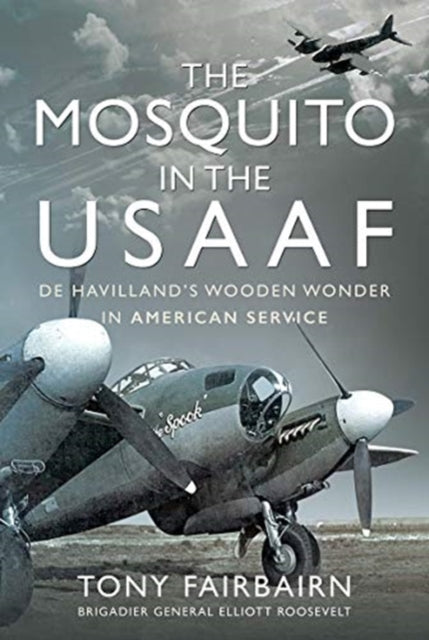
Tony Fairbairn
Mosquito in the USAAF: De Havilland's Wooden Wonder in American Service
Mosquito in the USAAF: De Havilland's Wooden Wonder in American Service
💎 Earn 88 Points (£0.88) on this item.
YOU SAVE £7.30
- Condition: Brand new
- UK Delivery times: Usually arrives within 2 - 3 working days
- UK Shipping: Fee starts at £2.39. Subject to product weight & dimension
Bulk ordering. Want 15 or more copies? Get a personalised quote and bigger discounts. Learn more about bulk orders.
Couldn't load pickup availability
- More about Mosquito in the USAAF: De Havilland's Wooden Wonder in American Service
On April 20, 1941, a group of distinguished Americans visited the de Havilland Aircraft Company's airfield in Hatfield, England, led by US Ambassador to the UK John Winant. The visit included Major General Henry Hap Arnold, Chief of the US Army Air Corps. This book explores the story of why the Americans wanted Mosquitoes, how they obtained them, and their success and popularity with USAAF units. Author Tony Fairbairn, a lifelong aviation enthusiast, has authored two books and contributed to many aviation magazines. His interest in US aviation and the Second World War Eighth Air Force was sparked by a 1970s posting to East Anglia, where he discovered disused American wartime airfields alongside current active ones.
Format: Hardback
Length: 256 pages
Publication date: 26 November 2021
Publisher: Pen & Sword Books Ltd
16 x 23 cm Softback In this highly illustrated work,the author explores the full story of why the Americans wanted Mosquitoes,how they went about obtaining them,and their noted success and popularity with USAAF units. The story of the Mosquito begins with the development of the de Havilland DH.98 Mosquito fighter bomber in the late 1930s. This was a highly advanced aircraft for its time,with a twin-engine layout and a range of over 1,000 miles. However,the outbreak of the Second World War meant that the aircraft was not yet ready for production,and so it was put on hold. When the war did eventually break out,the British government was desperate for a new type of aircraft that could take on the German Luftwaffe. They turned to the de Havilland company,which had already developed the DH.98 Mosquito fighter bomber,and asked them to develop a new version of the aircraft that could be used as a bomber. The de Havilland company was more than happy to oblige,and so they began work on a new version of the aircraft that was known as the Mosquito. The Mosquito was a radical departure from the DH.98 Mosquito fighter bomber,and it was designed to be a fast,low-winged aircraft that could be used as a bomber. It was equipped with a powerful engine that could give it a top speed of over 400 miles per hour,and it was also equipped with a range of bombs and rockets that could be used to destroy enemy aircraft and ground targets. The Mosquito was first used in action in 1940,when it was used by the Royal Air Force to attack German aircraft factories in Norway. The aircraft was a huge success,and it quickly became one of the most popular aircraft in the Royal Air Force. The Mosquito was used in a variety of roles throughout the Second World War,including as a bomber,a fighter,and a reconnaissance aircraft. It was also used to drop the first atomic bomb on Hiroshima in 1945. The Mosquito was a highly successful aircraft,and it played a vital role in the Second World War. It was a fast,low-winged aircraft that was easy to fly and was equipped with a powerful engine and a range of bombs and rockets. It was also a versatile aircraft that could be used in a variety of roles,including as a bomber,a fighter,and a reconnaissance aircraft. The Mosquito was a highly successful aircraft,and it played a vital role in the Second World War. It was a fast,low-winged aircraft that was easy to fly and was equipped with a powerful engine and a range of bombs and rockets. It was also a versatile aircraft that could be used in a variety of roles,including as a bomber,a fighter,and a reconnaissance aircraft. The Mosquito was a highly successful aircraft,and it played a vital role in the Second World War. It was a fast,low-winged aircraft that was easy to fly and was equipped with a powerful engine and a range of bombs and rockets. It was also a versatile aircraft that could be used in a variety of roles,including as a bomber,a fighter,and a reconnaissance aircraft. The Mosquito was a highly successful aircraft,and it played a vital role in the Second World War. It was a fast,low-winged aircraft that was easy to fly and was equipped with a powerful engine and a range of bombs and rockets. It was also a versatile aircraft that could be used in a variety of roles,including as a bomber,a fighter,and a reconnaissance aircraft. The Mosquito was a highly successful aircraft,and it played a vital role in the Second World War. It was a fast,low-winged aircraft that was easy to fly and was equipped with a powerful engine and a range of bombs and rockets. It was also a versatile aircraft that could be used in a variety of roles,including as a bomber,a fighter,and a reconnaissance aircraft. The Mosquito was a highly successful aircraft,and it played a vital role in the Second World War. It was a fast,low-winged aircraft that was easy to fly and was equipped with a powerful engine and a range of bombs and rockets. It was also a versatile aircraft that could be used in a variety of roles,including as a bomber,a fighter,and a reconnaissance aircraft. The Mosquito was a highly successful aircraft,and it played a vital role in the Second World War. It was a fast,low-winged aircraft that was easy to fly and was equipped with a powerful engine and a range of bombs and rockets. It was also a versatile aircraft that could be used in a variety of roles,including as a bomber,a fighter,and a reconnaissance aircraft. The Mosquito was a highly successful aircraft,and it played a vital role in the Second World War. It was a fast,low-winged aircraft that was easy to fly and was equipped with a powerful engine and a range of bombs and rockets. It was also a versatile aircraft that could be used in a variety of roles,including as a bomber,a fighter,and a reconnaissance aircraft. The Mosquito was a highly successful aircraft,and it played a vital role in the Second World War. It was a fast,low-winged aircraft that was easy to fly and was equipped with a powerful engine and a range of bombs and rockets. It was also a versatile aircraft that could be used in a variety of roles,including as a bomber,a fighter,and a reconnaissance aircraft. The Mosquito was a highly successful aircraft,and it played a vital role in the Second World War. It was a fast,low-winged aircraft that was easy to fly and was equipped with a powerful engine and a range of bombs and rockets. It was also a versatile aircraft that could be used in a variety of roles,including as a bomber,a fighter,and a reconnaissance aircraft. The Mosquito was a highly successful aircraft,and it played a vital role in the Second World War. It was a fast,low-winged aircraft that was easy to fly and was equipped with a powerful engine and a range of bombs and rockets. It was also a versatile aircraft that could be used in a variety of roles,including as a bomber,a fighter,and a reconnaissance aircraft. The Mosquito was a highly successful aircraft,and it played a vital role in the Second World War. It was a fast,low-winged aircraft that was easy to fly and was equipped with a powerful engine and a range of bombs and rockets. It was also a versatile aircraft that could be used in a variety of roles,including as a bomber,a fighter,and a reconnaissance aircraft. The Mosquito was a highly successful aircraft,and it played a vital role in the Second World War. It was a fast,low-winged aircraft that was easy to fly and was equipped with a powerful engine and a range of bombs and rockets. It was also a versatile aircraft that could be used in a variety of roles,including as a bomber,a fighter,and a reconnaissance aircraft. The Mosquito was a highly successful aircraft,and it played a vital role in the Second World War. It was a fast,low-winged aircraft that was easy to fly and was equipped with a powerful engine and a range of bombs and rockets. It was also a versatile aircraft that could be used in a variety of roles,including as a bomber,a fighter,and a reconnaissance aircraft. The Mosquito was a highly successful aircraft,and it played a vital role in the Second World War. It was a fast,low-winged aircraft that was easy to fly and was equipped with a powerful engine and a range of bombs and rockets. It was also a versatile aircraft that could be used in a variety of roles,including as a bomber,a fighter,and a reconnaissance aircraft.
In this highly illustrated work, the author explores the full story of why the Americans wanted Mosquitoes, how they went about obtaining them, and their noted success and popularity with USAAF units.
The story of the Mosquito begins with the development of the de Havilland DH.98 Mosquito fighter bomber in the late 1930s. This was a highly advanced aircraft for its time, with a twin-engine layout and a range of over 1,000 miles. However, the outbreak of the Second World War meant that the aircraft was not yet ready for production, and so it was put on hold.
When the war did eventually break out, the British government was desperate for a new type of aircraft that could take on the German Luftwaffe. They turned to the de Havilland company, which had already developed the DH.98 Mosquito fighter bomber, and asked them to develop a new version of the aircraft that could be used as a bomber.
The de Havilland company was more than happy to oblige, and so they began work on a new version of the aircraft that was known as the Mosquito. The Mosquito was a radical departure from the DH.98 Mosquito fighter bomber, and it was designed to be a fast, low-winged aircraft that could be used as a bomber. It was equipped with a powerful engine that could give it a top speed of over 400 miles per hour, and it was also equipped with a range of bombs and rockets that could be used to destroy enemy aircraft and ground targets.
The Mosquito was first used in action in 1940, when it was used by the Royal Air Force to attack German aircraft factories in Norway. The aircraft was a huge success, and it quickly became one of the most popular aircraft in the Royal Air Force. The Mosquito was used in a variety of roles throughout the Second World War, including as a bomber, a fighter, and a reconnaissance aircraft. It was also used to drop the first atomic bomb on Hiroshima in 1945.
The Mosquito was a highly successful aircraft, and it played a vital role in the Second World War. It was a fast, low-winged aircraft that was easy to fly and was equipped with a powerful engine and a range of bombs and rockets. It was also a versatile aircraft that could be used in a variety of roles, including as a bomber, a fighter, and a reconnaissance aircraft.
The Mosquito was a highly successful aircraft, and it played a vital role in the Second World War. It was a fast, low-winged aircraft that was easy to fly and was equipped with a powerful engine and a range of bombs and rockets. It was also a versatile aircraft that could be used in a variety of roles, including as a bomber, a fighter, and a reconnaissance aircraft.
The Mosquito was a highly successful aircraft, and it played a vital role in the Second World War. It was a fast, low-winged aircraft that was easy to fly and was equipped with a powerful engine and a range of bombs and rockets. It was also a versatile aircraft that could be used in a variety of roles, including as a bomber, a fighter, and a reconnaissance aircraft.
The Mosquito was a highly successful aircraft, and it played a vital role in the Second World War. It was a fast, low-winged aircraft that was easy to fly and was equipped with a powerful engine and a range of bombs and rockets. It was also a versatile aircraft that could be used in a variety of roles, including as a bomber, a fighter, and a reconnaissance aircraft.
The Mosquito was a highly successful aircraft, and it played a vital role in the Second World War. It was a fast, low-winged aircraft that was easy to fly and was equipped with a powerful engine and a range of bombs and rockets. It was also a versatile aircraft that could be used in a variety of roles, including as a bomber, a fighter, and a reconnaissance aircraft.
The Mosquito was a highly successful aircraft, and it played a vital role in the Second World War. It was a fast, low-winged aircraft that was easy to fly and was equipped with a powerful engine and a range of bombs and rockets. It was also a versatile aircraft that could be used in a variety of roles, including as a bomber, a fighter, and a reconnaissance aircraft.
The Mosquito was a highly successful aircraft, and it played a vital role in the Second World War. It was a fast, low-winged aircraft that was easy to fly and was equipped with a powerful engine and a range of bombs and rockets. It was also a versatile aircraft that could be used in a variety of roles, including as a bomber, a fighter, and a reconnaissance aircraft.
Weight: 828g
Dimension: 165 x 240 x 30 (mm)
ISBN-13: 9781399017336
This item can be found in:
UK and International shipping information
UK and International shipping information
UK Delivery and returns information:
- Delivery within 2 - 3 days when ordering in the UK.
- Shipping fee for UK customers from £2.39. Fully tracked shipping service available.
- Returns policy: Return within 30 days of receipt for full refund.
International deliveries:
Shulph Ink now ships to Australia, Belgium, Canada, France, Germany, Ireland, Italy, India, Luxembourg Saudi Arabia, Singapore, Spain, Netherlands, New Zealand, United Arab Emirates, United States of America.
- Delivery times: within 5 - 10 days for international orders.
- Shipping fee: charges vary for overseas orders. Only tracked services are available for most international orders. Some countries have untracked shipping options.
- Customs charges: If ordering to addresses outside the United Kingdom, you may or may not incur additional customs and duties fees during local delivery.