Shulph Ink
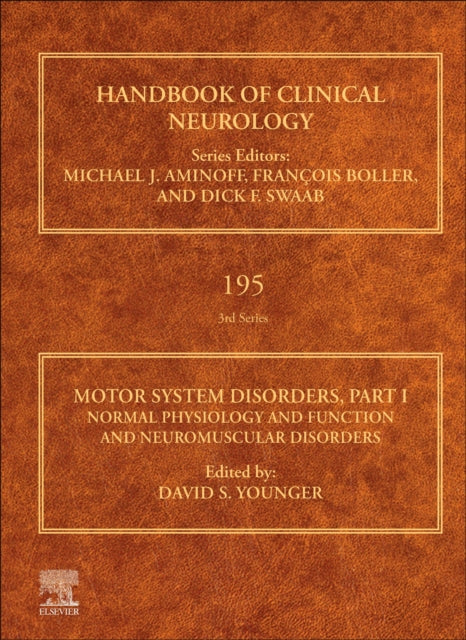
Motor System Disorders, Part I: Normal Physiology and Function and Neuromuscular Disorders
Motor System Disorders, Part I: Normal Physiology and Function and Neuromuscular Disorders
💎 Earn 1010 Points (£10.10) on this item.
YOU SAVE £42.88
- Condition: Brand new
- UK Delivery times: Usually arrives within 2 - 3 working days
- UK Shipping: Fee starts at £2.39. Subject to product weight & dimension
Bulk ordering. Want 15 or more copies? Get a personalised quote and bigger discounts. Learn more about bulk orders.
Couldn't load pickup availability
- More about Motor System Disorders, Part I: Normal Physiology and Function and Neuromuscular Disorders
Motor System Disorders, Volume 195, Part One, Normal Physiology and Function and Neuromuscular Disorders summarizes recent advances and best practice for understanding normal physiology and function of the larger motor system, as well as the diagnosis, course, and treatment of neuromuscular disorders.
Format: Hardback
Length: 826 pages
Publication date: 05 September 2023
Publisher: Elsevier - Health Sciences Division
The motor system encompasses a vast network of nerves, muscles, and organs that collaborate to enable movement and control in our bodies. It is a complex system that is responsible for everything from simple reflexes to complex movements such as walking, running, and jumping. In this article, we will explore the normal physiology and function of the motor system, as well as the diagnosis, course, and treatment of neuromuscular disorders.
Neuroanatomy is a fundamental aspect of understanding the motor system. It involves the study of the brain and its structures, including the cerebrum, cerebellum, brainstem, and spinal cord. The brain is divided into several regions, each responsible for different functions. For example, the frontal lobe is responsible for executive functions such as planning, decision-making, and language. The parietal lobe is responsible for sensory processing and spatial awareness. The temporal lobe is responsible for memory and emotion.
Circuits and synapses are the building blocks of the motor system. A circuit is a pathway that allows information to travel from one part of the brain to another. A synapse is a junction where two neurons communicate with each other. The brain uses a combination of electrical and chemical signals to transmit information from one neuron to another.
The motor system is controlled by a complex network of nerves and muscles. The brain sends signals to the muscles through nerves, which in turn activate the muscles. The muscles then produce movement by contracting and relaxing. The motor system is also controlled by the body's reflexes, which are involuntary responses to external stimuli.
Neuromuscular disorders can affect the motor system in a variety of ways. These disorders can be inherited, acquired, or caused by injury or disease. Some common neuromuscular disorders include stroke, spinal cord injury, Parkinson's disease, and muscular dystrophy.
Diagnosing neuromuscular disorders can be challenging, as there are many different types of tests that can be used. Genetic evaluation, electrodiagnosis, pathology, and brain imaging are all common diagnostic methods. Genetic evaluation involves testing for genetic mutations that may be responsible for a neuromuscular disorder. Electrodiagnosis involves testing the electrical activity of the muscles and nerves. Pathology involves examining tissue samples to determine the cause of a neuromuscular disorder. Brain imaging involves using imaging techniques such as MRI or CT scan to visualize the brain and its structures.
Treatment for neuromuscular disorders varies depending on the type and severity of the disorder. Physical therapy, medication, and surgery are all common treatment options. Physical therapy involves exercises and stretches that can help improve muscle strength and coordination. Medication can be used to reduce symptoms such as pain, muscle spasms, and weakness. Surgery may be necessary in some cases to repair damaged nerves or muscles.
In conclusion, the motor system is a complex and fascinating system that is responsible for enabling movement and control in our bodies. Neuromuscular disorders can affect the motor system in a variety of ways, but with proper diagnosis and treatment, many people can live fulfilling lives. Understanding the normal physiology and function of the motor system, as well as the diagnosis, course, and treatment of neuromuscular disorders, is essential for promoting optimal health and well-being.
Dimension: 265 x 191 (mm)
ISBN-13: 9780323988186
This item can be found in:
UK and International shipping information
UK and International shipping information
UK Delivery and returns information:
- Delivery within 2 - 3 days when ordering in the UK.
- Shipping fee for UK customers from £2.39. Fully tracked shipping service available.
- Returns policy: Return within 30 days of receipt for full refund.
International deliveries:
Shulph Ink now ships to Australia, Belgium, Canada, France, Germany, Ireland, Italy, India, Luxembourg Saudi Arabia, Singapore, Spain, Netherlands, New Zealand, United Arab Emirates, United States of America.
- Delivery times: within 5 - 10 days for international orders.
- Shipping fee: charges vary for overseas orders. Only tracked services are available for most international orders. Some countries have untracked shipping options.
- Customs charges: If ordering to addresses outside the United Kingdom, you may or may not incur additional customs and duties fees during local delivery.