Shulph Ink
Music and Memory in the Ancient Greek and Roman Worlds
Music and Memory in the Ancient Greek and Roman Worlds
💎 Earn 387 Points (£3.87) on this item.
YOU SAVE £4.59
- Condition: Brand new
- UK Delivery times: Usually arrives within 2 - 3 working days
- UK Shipping: Fee starts at £2.39. Subject to product weight & dimension
Bulk ordering. Want 15 or more copies? Get a personalised quote and bigger discounts. Learn more about bulk orders.
Couldn't load pickup availability
- More about Music and Memory in the Ancient Greek and Roman Worlds
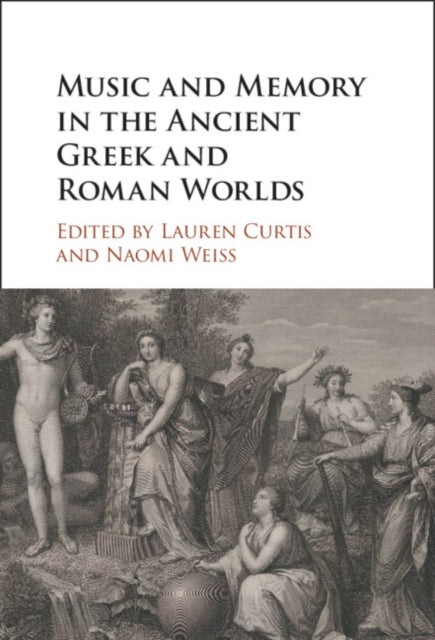
The Muses are Memory's daughters in Greek mythology, and this volume explores how music was remembered and memorialized in ancient Greek and Roman societies. It reveals the many and varied ways in which musical memory formed a fundamental part of social, cultural, ritual, and political life, from classical Athens to Ptolemaic Alexandria and ancient Rome.
\n Format: Hardback
\n Length: 320 pages
\n Publication date: 28 October 2021
\n Publisher: Cambridge University Press
\n
In the rich tapestry of Greek mythology, the Muses emerge as the cherished daughters of Memory. Their lineage hints at a profound intertwinement between music and memory within the Graeco-Roman culture, a connection that has left an indelible mark on the artistic and intellectual landscape. Yet, the question remains: how did ancient authors, artists, performers, and audiences perceive and navigate this intricate relationship? How did music shape the memory and how did it commemorate events in a world predating the advent of recording technology, where the accumulation of sound took a distinctively different course?
To delve into these profound inquiries, this volume embarks on a captivating exploration of music's role in the discourses of cultural memory, communication, and commemoration within ancient Greek and Roman societies. It unveils the myriad and diverse ways in which musical memory became an integral component of social, cultural, ritual, and political life, spanning from the classical Athens of yore to the Ptolemaic Alexandria and the ancient Roman empire. Drawing upon the collective expertise of the contributors, who hail from diverse fields such as art history, philology, performance studies, history, and ethnomusicology, this volume presents eleven original chapters and the editors' Introduction, which offer fresh perspectives for studying Graeco-Roman music and musical culture.
In the opening chapter, "The Muses and Memory in Greek Mythology," the authors delve into the origins and significance of the Muses in Greek mythology. They explore how the Muses, as the guardians of memory and knowledge, played a pivotal role in shaping the narratives and traditions of ancient Greece. Through their association with music and poetry, the Muses became the embodiment of creativity, inspiration, and the preservation of cultural heritage.
Chapter 2, titled "Musical Memory in Classical Athens," takes us on a journey to the cradle of Western civilization. Here, the authors examine the role of music in the Athenian polis, from its use in political assemblies and religious ceremonies to its role in education and entertainment. They explore how musical memory was cultivated, transmitted, and celebrated in classical Athens, highlighting the importance of music in shaping the identity and values of the Athenian society.
Chapter 3, "Musical Memory in Roman Society," shifts our focus to the Roman empire. Here, the authors explore how music was used in various contexts, including public performances, private gatherings, and religious rituals. They examine how musical memory was shaped by Roman cultural norms, traditions, and political ideologies, and how it contributed to the construction of Roman identity and the preservation of imperial power.
Chapter 4, "The Role of Music in Communicating Memory in Graeco-Roman Society," delves into the mechanisms through which musical memory was communicated and preserved. The authors discuss the use of oral traditions, poetry, and musical notation, as well as the role of performance and improvisation in the transmission and interpretation of musical memory. They explore how musical memory was intertwined with other forms of cultural memory, such as oral history, myth, and folklore.
Chapter 5, "Musical Memory and Commemoration in Ancient Greek and Roman Art," examines the visual representation of musical memory in ancient Greek and Roman art. The authors explore how artists depicted musical instruments, musicians, and musical performances in their works, and how these representations contributed to the preservation and interpretation of musical memory. They also discuss the role of music in commemorating historical events and individuals in ancient Greek and Roman society.
Chapter 6, "Musical Memory and Performance in Graeco-Roman Society," explores the relationship between musical memory and performance in ancient Greek and Roman society. The authors examine how musicians trained and performed, and how they navigated the challenges of memorizing and performing complex musical compositions. They discuss the role of performance in shaping musical memory, as well as the ways in which musical performances were used to commemorate and celebrate important events.
Chapter 7, "Musical Memory and Identity in Graeco-Roman Society," examines how musical memory shaped and reflected individual and collective identities in ancient Greek and Roman society. The authors explore how musical taste and preferences were used to define social and cultural groups, and how musical memory was used to preserve and celebrate cultural heritage. They also discuss the ways in which musical memory was contested and manipulated by different groups and individuals.
Chapter 8, "Musical Memory and the Modern Study of Graeco-Roman Music," explores the challenges and opportunities presented by the modern study of Graeco-Roman music. The authors discuss the use of digital technologies, such as digital archives and computational analysis, in the study of musical notation and performance. They also discuss the ethical considerations and challenges associated with the study of ancient music, such as the preservation of cultural heritage and the representation of marginalized voices.
Chapter 9, "Conclusion," offers a summary of the key findings and insights presented throughout the volume. The authors reflect on the enduring significance of musical memory in Graeco-Roman culture and its relevance to contemporary society. They suggest future directions for research and exploration in the field of Graeco-Roman music and musical culture, emphasizing the importance of interdisciplinary collaboration and the preservation of cultural heritage.
In conclusion, this volume offers a comprehensive and interdisciplinary exploration of music's role in the discourses of cultural memory, communication, and commemoration in ancient Greek and Roman societies. Through its rich tapestry of original chapters and the editors' Introduction, it provides new avenues for studying Graeco-Roman music and musical culture. By delving into the intricate relationship between music and memory, this volume sheds light on the many ways in which music shaped the social, cultural, ritual, and political life of ancient Greek- and Latin-speaking communities. It serves as a valuable resource for scholars, students, and enthusiasts alike, offering a deeper understanding of the rich musical heritage of the ancient world.
\n Weight: 680g\n
Dimension: 158 x 234 x 30 (mm)\n
ISBN-13: 9781108831666\n \n
This item can be found in:
UK and International shipping information
UK and International shipping information
UK Delivery and returns information:
- Delivery within 2 - 3 days when ordering in the UK.
- Shipping fee for UK customers from £2.39. Fully tracked shipping service available.
- Returns policy: Return within 30 days of receipt for full refund.
International deliveries:
Shulph Ink now ships to Australia, Belgium, Canada, France, Germany, Ireland, Italy, India, Luxembourg Saudi Arabia, Singapore, Spain, Netherlands, New Zealand, United Arab Emirates, United States of America.
- Delivery times: within 5 - 10 days for international orders.
- Shipping fee: charges vary for overseas orders. Only tracked services are available for most international orders. Some countries have untracked shipping options.
- Customs charges: If ordering to addresses outside the United Kingdom, you may or may not incur additional customs and duties fees during local delivery.