AndrewMcGraw
Music as Ethics: Stories from Virginia
Music as Ethics: Stories from Virginia
💎 Earn 318 Points (£3.18) on this item.
We can order this item for you. Delivery usually takes about 4 to 6 weeks.
This item is not held in our immediate stock. We will order it for you after checkout.
Estimated delivery: About 4 to 6 weeks
- Condition: Brand new
- UK Delivery times: Usually arrives within 2 - 3 working days
- UK Shipping: Fee starts at £2.39. Subject to product weight & dimension
Bulk ordering. Want 15 or more copies? Get a personalised quote and bigger discounts. Learn more about bulk orders.
Couldn't load pickup availability
- More about Music as Ethics: Stories from Virginia
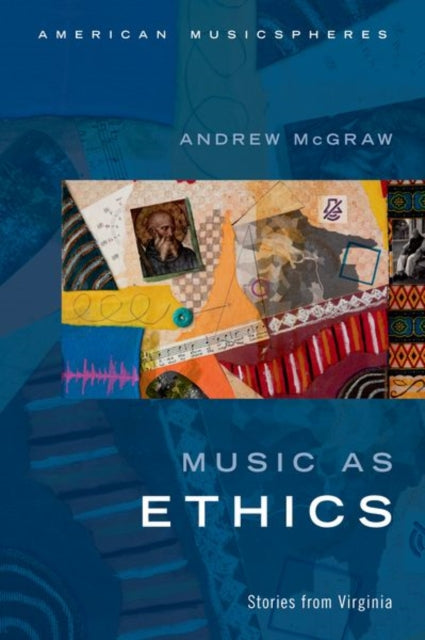
Music as Ethics explores the relationship of music to ethics in four Virginia communities, highlighting the ethical potential of music to promote individual and community growth. However, a more explicit and culturally informed experience of music as ethics is necessary to fully realize its ethical benefits and avoid manipulation.
Format: Hardback
Length: 224 pages
Publication date: 29 August 2023
Publisher: Oxford University Press Inc
Music as Ethics is a captivating comparative ethnography that delves into the intricate relationship between music and ethics across four diverse communities in Virginia. Spanning a wide range of demographic contexts and musical repertoires, this study offers a profound exploration of the ethical dimensions of music in various cultural settings.
The first community featured in the book is the Holy Cross Monastery in Berryville, a small community of fifteen Trappist monks who adhere to the rule of St. Benedict, written in the early sixth century. The monks live a simple and contemplative life, dedicated to prayer, work, and community living. Their monastic routine is deeply rooted in the values of humility, obedience, and charity, and their music reflects the spiritual and contemplative nature of their existence.
The second community is Twin Oaks in Louisa, a ninety-member intentional community founded in 1967. Dedicated to egalitarianism, Twin Oaks fosters a sense of community and shared responsibility among its members. The community emphasizes equality, social justice, and environmental sustainability, and their music reflects the values and aspirations of the community.
The third community is The Sanctuary in the Richmond city jail, a community of approximately forty residents drawn from two of the facility's dorms. Richmond, the state capital, has a fraught history of racial inequality, and The Sanctuary serves as a platform for healing, reconciliation, and social transformation. The residents of The Sanctuary come from diverse backgrounds and experiences, and their music reflects the resilience, hope, and resilience of the human spirit.
The fourth community is the Richmond Symphony Orchestra, a professional symphony orchestra that serves the city of Richmond. The orchestra is known for its commitment to artistic excellence, community engagement, and social responsibility. Through its performances, educational programs, and outreach initiatives, the Richmond Symphony Orchestra strives to promote cultural diversity, social justice, and the appreciation of music as a universal language.
Throughout the book, Music as Ethics employs a comparative ethnographic approach to explore the ethical dimensions of music in each of these communities. The author examines the ways in which music is used to express and communicate ethical values, to facilitate moral decision-making, and to promote social cohesion and harmony. The study also explores the challenges and complexities that arise when music is used for unethical purposes, such as manipulation, propaganda, or the exploitation of vulnerable communities.
One of the key insights of Music as Ethics is that the relationship between music and ethics is culturally contextual and multifaceted. While music has the potential to promote ethical behavior and values, it can also be used to reinforce existing power structures, perpetuate social inequalities, and undermine democratic processes. The author argues that we need to be more aware of the ethical implications of our musical choices and engage in a more critical and reflexive approach to music consumption.
Another important theme of the book is the role of music in promoting individual and community growth. The author suggests that music has the power to inspire, uplift, and transform individuals, and that it can also be used to build and strengthen communities. By paying close attention to the ethical potential of music, we can cultivate a sense of empathy, compassion, and social responsibility, and work towards promoting a more just and equitable society.
However, as long as our experience of music as ethics remains implicit and vague, we miss an opportunity to fully realize its ethical affordances. More than that, we also expose ourselves to manipulation by those who would wield music (and other affective means) for their own social agenda. The author warns against the dangers of complacency and superficiality in our approach to music, and encourages us to engage with music in a more profound and meaningful way.
In conclusion, Music as Ethics is a thought-provoking and insightful book that offers a valuable contribution to the field of music studies and ethics. Through its comparative ethnographic approach, the book provides a rich and nuanced understanding of the relationship between music and ethics in four diverse communities in Virginia. The author's insights and arguments are grounded in a deep appreciation of the cultural and social contexts in which music is produced and consumed, and they offer a valuable framework for thinking about the ethical dimensions of music in our own lives and communities. As we continue to navigate the complex and rapidly changing world of music, it is more important than ever to engage with music in a more ethical and responsible way, and to recognize the power of music to promote social justice, equality, and human flourishing.
Weight: 450g
Dimension: 242 x 161 x 19 (mm)
ISBN-13: 9780197654880
This item can be found in:
UK and International shipping information
UK and International shipping information
UK Delivery and returns information:
- Delivery within 2 - 3 days when ordering in the UK.
- Shipping fee for UK customers from £2.39. Fully tracked shipping service available.
- Returns policy: Return within 30 days of receipt for full refund.
International deliveries:
Shulph Ink now ships to Australia, Belgium, Canada, France, Germany, Ireland, Italy, India, Luxembourg Saudi Arabia, Singapore, Spain, Netherlands, New Zealand, United Arab Emirates, United States of America.
- Delivery times: within 5 - 10 days for international orders.
- Shipping fee: charges vary for overseas orders. Only tracked services are available for most international orders. Some countries have untracked shipping options.
- Customs charges: If ordering to addresses outside the United Kingdom, you may or may not incur additional customs and duties fees during local delivery.