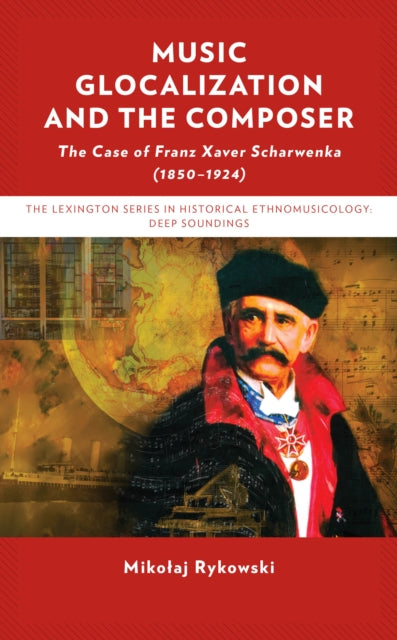
Mikolaj Rykowski
Music Glocalization and the Composer: The Case of Franz Xaver Scharwenka (1850-1924)
Music Glocalization and the Composer: The Case of Franz Xaver Scharwenka (1850-1924)
💎 Earn 398 Points (£3.98) on this item.
We can order this item for you. Delivery usually takes about 4 to 6 weeks.
This item is not held in our immediate stock. We will order it for you after checkout.
Estimated delivery: About 4 to 6 weeks
- Condition: Brand new
- UK Delivery times: Usually arrives within 2 - 3 working days
- UK Shipping: Fee starts at £2.39. Subject to product weight & dimension
Bulk ordering. Want 15 or more copies? Get a personalised quote and bigger discounts. Learn more about bulk orders.
Couldn't load pickup availability
- More about Music Glocalization and the Composer: The Case of Franz Xaver Scharwenka (1850-1924)
Music Glocalization and the Composer: Franz Xaver Scharwenka (1850–1924) explores his life, milieu, and music, highlighting his global impact through conservatories, audio technology, and opera. Rykowski employs music glocalization to examine his Polish cultural roots and the nineteenth-century global sense of nationality's influence on his music.
Format: Hardback
Length: 160 pages
Publication date: 27 February 2024
Publisher: Lexington Books
Music Glocalization and the Composer: The Case of Franz Xaver Scharwenka (1850–1924) explores the life, milieu, and music of composer Franz Xaver Scharwenka. Mikolaj Rykowski argues that Scharwenka held the ability to function on a global scale relatively early in music history, founding conservatories in Berlin and New York, becoming one of the first artists to record music using cutting-edge audio technology of his time, namely the Welte-Mignon rolls, and by staging his own opera at The Met. Using a relatively new methodological perspective called music glocalization, Rykowski enables us to explore the composer's cultural roots in Poland and observe how the nineteenth century global sense of nationality influenced his musical output.
Scharwenka's early life and education were shaped by his Polish heritage. He was born in Warsaw in 1850 and received his musical education at the Warsaw Conservatory. However, his musical career took him to various parts of the world, including Berlin, New York, and Paris. In Berlin, he founded the Scharwenka Conservatory, which became one of the most prestigious music schools in Europe. In New York, he founded the Scharwenka Conservatory of Music, which was the first conservatory in the United States to offer a degree in music composition.
Scharwenka's music was characterized by a blend of classical and Romantic styles. He was known for his intricate melodies, rich harmonies, and dramatic orchestration. His compositions included operas, symphonies, chamber music, and piano works. Some of his most famous works include the opera "The Magic Flute" (1856), the symphony "The New World Symphony" (1893), and the piano work "The Autumn Sonata" (1905).
Scharwenka's global success was due in part to his ability to adapt his music to different cultural contexts. He was able to incorporate elements of Polish folk music into his compositions, which gave them a unique and authentic flavor. He also traveled extensively, performing his music in various countries and gaining a wide audience.
One of the most significant aspects of Scharwenka's music glocalization was his use of cutting-edge audio technology. He was one of the first artists to record music using the Welte-Mignon rolls, which were a revolutionary technology that allowed for the recording of music in a high-quality format. These rolls were used to record Scharwenka's operas and symphonies, and they helped to establish his reputation as a composer of high quality.
Scharwenka's opera "The Magic Flute" was particularly successful in the United States. It was performed at the Met in 1893 and was praised for its beautiful music and innovative staging. The opera was based on a German fairy tale and featured a cast of talented singers and musicians. Scharwenka's use of the Welte-Mignon rolls helped to create a realistic and immersive sound environment that enhanced the audience's experience.
Scharwenka's music glocalization also had a significant impact on the development of music education in the United States. He was a strong advocate for music education and worked to establish music schools in various cities. He also published several books on music theory and composition, which helped to educate musicians and music lovers alike.
However, Scharwenka's life was not without its challenges. He faced financial difficulties throughout his career, and his health declined in his later years. He died in 1924 in Berlin. Despite his challenges, Scharwenka's music continues to be celebrated and performed today. His operas and symphonies are still considered to be some of the most important works of the nineteenth century, and his music glocalization has helped to establish him as a significant figure in the history of music.
In conclusion, Music Glocalization and the Composer: The Case of Franz Xaver Scharwenka (1850–1924) explores the life, milieu, and music of composer Franz Xaver Scharwenka. Mikolaj Rykowski argues that Scharwenka held the ability to function on a global scale relatively early in music history, founding conservatories in Berlin and New York, becoming one of the first artists to record music using cutting-edge audio technology of his time, and by staging his own opera at The Met. Using a relatively new methodological perspective called music glocalization, Rykowski enables us to explore the composer's cultural roots in Poland and observe how the nineteenth century global sense of nationality influenced his musical output. Scharwenka's music was characterized by a blend of classical and Romantic styles, and his global success was due in part to his ability to adapt his music to different cultural contexts. His use of cutting-edge audio technology helped to establish his reputation as a composer of high quality, and his opera "The Magic Flute" was particularly successful in the United States. Despite his challenges, Scharwenka's music continues to be celebrated and performed today, and his music glocalization has helped to establish him as a significant figure in the history of music.
Weight: 426g
Dimension: 236 x 158 x 19 (mm)
ISBN-13: 9781666936834
This item can be found in:
UK and International shipping information
UK and International shipping information
UK Delivery and returns information:
- Delivery within 2 - 3 days when ordering in the UK.
- Shipping fee for UK customers from £2.39. Fully tracked shipping service available.
- Returns policy: Return within 30 days of receipt for full refund.
International deliveries:
Shulph Ink now ships to Australia, Belgium, Canada, France, Germany, Ireland, Italy, India, Luxembourg Saudi Arabia, Singapore, Spain, Netherlands, New Zealand, United Arab Emirates, United States of America.
- Delivery times: within 5 - 10 days for international orders.
- Shipping fee: charges vary for overseas orders. Only tracked services are available for most international orders. Some countries have untracked shipping options.
- Customs charges: If ordering to addresses outside the United Kingdom, you may or may not incur additional customs and duties fees during local delivery.