Shulph Ink
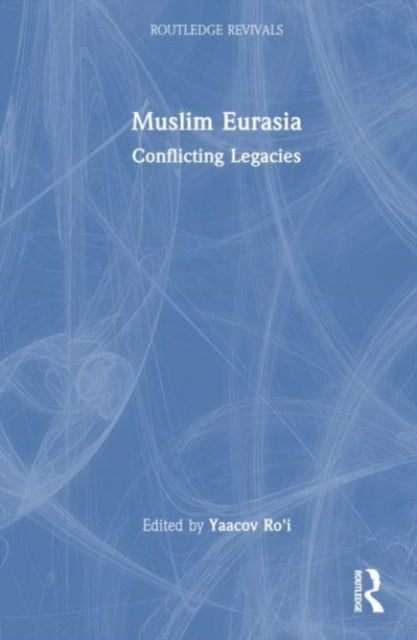
Muslim Eurasia: Conflicting Legacies
Muslim Eurasia: Conflicting Legacies
💎 Earn 775 Points (£7.75) on this item.
We can order this item for you. Delivery usually takes about 4 to 6 weeks.
This item is not held in our immediate stock. We will order it for you after checkout.
Estimated delivery: About 4 to 6 weeks
- Condition: Brand new
- UK Delivery times: Usually arrives within 2 - 3 working days
- UK Shipping: Fee starts at £2.39. Subject to product weight & dimension
Bulk ordering. Want 15 or more copies? Get a personalised quote and bigger discounts. Learn more about bulk orders.
Couldn't load pickup availability
- More about Muslim Eurasia: Conflicting Legacies
The book Muslim Eurasia (1995) explores the complex legacies of Russian colonialism, Russification, de-islamicization, centralization, and communism in the Muslim states that emerged from the ruins of the Soviet Union, highlighting the struggle to formulate new identities through the interaction and contradictions within each category and between them.
Format: Hardback
Length: 344 pages
Publication date: 31 March 2023
Publisher: Taylor & Francis Ltd
The book Muslim Eurasia (1995) delves into the intricate tapestry of Muslim states that emerged from the remnants of the Soviet Union, exploring their profound legacies of Russian colonialism, Russification, de-Islamization, centralization, and communism. These legacies are intertwined with localism, tribalism, and Islam, creating a complex web of interactions and contradictions. Within each category and between them, the struggle to forge new identities unfolds, shaping the very essence of this dynamic region.
Russian colonialism left a lasting imprint on the Muslim states of Eurasia, shaping their political, social, and cultural landscapes. The imposition of Russian language, culture, and religion had a profound impact on the local populations, leading to the erosion of indigenous identities and the emergence of a new Russian-speaking elite. Russification, a process of cultural assimilation, aimed to erase the traces of Islam and promote a secularized version of Russian culture. This policy resulted in the marginalization of Muslims and the suppression of their religious practices and traditions.
De-Islamization, another facet of Russian colonialism, aimed to secularize the Muslim-majority regions and promote a state-controlled version of Islam. This policy led to the closure of mosques, the confiscation of religious literature, and the marginalization of Muslims in public life. The suppression of Islamic identity and the promotion of a secularized version of Islam had a devastating impact on the religious and cultural heritage of the Muslim communities.
Centralization and communism, two pillars of the Soviet regime, also had a profound impact on the Muslim states of Eurasia. The implementation of centralized economic policies led to the erosion of local economies and the dominance of state-owned enterprises. This policy also resulted in the marginalization of rural communities and the concentration of power in the hands of the central government. Communism, in its idealized form, promised equality and social justice, but in practice, it led to the suppression of individual freedoms and the concentration of power in the hands of the state.
Despite the challenges posed by Russian colonialism, Russification, de-Islamization, centralization, and communism, the Muslim states of Eurasia have managed to forge their own unique identities. Localism, tribalism, and Islam have played a significant role in shaping these identities, providing a sense of belonging and cultural heritage. The struggle to preserve and promote these identities is ongoing, as the Muslim states of Eurasia navigate the complex web of historical legacies and contemporary challenges.
In conclusion, Muslim Eurasia (1995) provides a valuable insight into the complex legacies of Russian colonialism, Russification, de-Islamization, centralization, and communism on the Muslim states of Eurasia. The book highlights the struggle to forge new identities and the resilience of the Muslim communities in the face of historical oppression. It serves as a reminder of the importance of preserving and promoting the diverse cultural and religious heritage of this region.
Weight: 793g
Dimension: 234 x 156 (mm)
ISBN-13: 9781032501338
UK and International shipping information
UK and International shipping information
UK Delivery and returns information:
- Delivery within 2 - 3 days when ordering in the UK.
- Shipping fee for UK customers from £2.39. Fully tracked shipping service available.
- Returns policy: Return within 30 days of receipt for full refund.
International deliveries:
Shulph Ink now ships to Australia, Belgium, Canada, France, Germany, Ireland, Italy, India, Luxembourg Saudi Arabia, Singapore, Spain, Netherlands, New Zealand, United Arab Emirates, United States of America.
- Delivery times: within 5 - 10 days for international orders.
- Shipping fee: charges vary for overseas orders. Only tracked services are available for most international orders. Some countries have untracked shipping options.
- Customs charges: If ordering to addresses outside the United Kingdom, you may or may not incur additional customs and duties fees during local delivery.