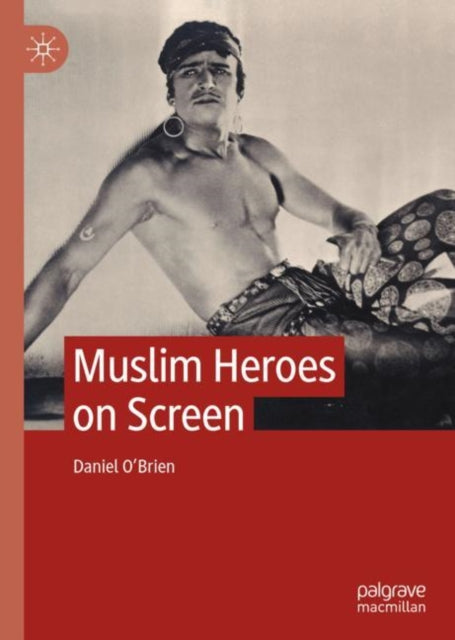
Daniel O'Brien
Muslim Heroes on Screen
Muslim Heroes on Screen
We can order this item for you. Delivery usually takes about 4 to 6 weeks.
This item is not held in our immediate stock. We will order it for you after checkout.
Estimated delivery: About 4 to 6 weeks
YOU SAVE £22.22
- Condition: Brand new
- UK Delivery times: Usually arrives within 2 - 3 working days
- UK Shipping: Fee starts at £3.89. Subject to product weight & dimension
Bulk ordering. Want 15 or more copies? Get a personalised quote and bigger discounts. Learn more about bulk orders.
Couldn't load pickup availability
- More about Muslim Heroes on Screen
Films that draw on Middle Eastern tropes often portray white Westerners, but figures such as Sinbad and the Thief of Bagdad embody a counter-tradition of protagonists derived from Islamic folklore and history. Daniel OBrien explores the depiction of these characters in Euro-American cinema from the silent era to the present day, showing that they are more complex and nuanced than is generally allowed. These figures possess a cultural significance that cannot be fully appreciated by Euro-American audiences without reference to their distinction as Muslim heroes and the implications and resonances of an Islamicized protagonist.
Format: Hardback
Length: 251 pages
Publication date: 17 November 2021
Publisher: Springer Nature Switzerland AG
Films that draw on Middle Eastern tropes often showcase white Westerners, while figures such as Sinbad and the Thief of Bagdad represent a counter-tradition of protagonists derived from Islamic folklore and history. In Muslim Heroes on Screen, Daniel O'Brien examines the depiction of these characters in Euro-American cinema from the silent era to the present day. Far from being mere racial masquerade, these screen portrayals are more complex and nuanced than is generally allowed, particularly in terms of the shifting concepts and assumptions that inform their Muslim identity. O'Brien explores how the representational strategies of Western filmmakers may transcend such Muslim stereotypes as fanatic antagonists or passive victims. These figures possess a cultural significance that cannot be fully appreciated by Euro-American audiences without reference to their distinction as Muslim heroes and the implications and resonances of an Islamicized protagonist.
The representation of Muslims in film has been a complex and often controversial topic throughout the history of cinema. While some films have portrayed Muslims as violent and aggressive, others have presented them as peaceful and tolerant. In recent years, there has been a growing trend towards more nuanced and accurate portrayals of Muslims in film, reflecting the diversity of the Muslim community and its rich cultural heritage.
One of the most notable examples of this trend is the film "The Message," directed by Moustapha Akkad. The film tells the story of a young Muslim man who travels to America to find his father, who has been kidnapped by extremists. The film explores the themes of religious tolerance, cultural assimilation, and the challenges faced by Muslims in modern society.
Another film that has received critical acclaim for its portrayal of Muslims is "The Intouchables," directed by Olivier Nakache and Éric Toledano. The film tells the story of a wealthy Frenchman who hires a disabled Muslim man as his caregiver, and the two develop a deep bond that transcends their differences. The film explores the themes of friendship, compassion, and the power of human connection.
In addition to these films, there have been a number of other notable examples of Muslims in film, including "The Help," "The Darjeeling Limited," and "The Reluctant Fundamentalist." These films have presented Muslims as complex and multifaceted characters, with their own unique experiences and perspectives.
However, despite these positive developments, there still remains a significant amount of work to be done in terms of promoting accurate and respectful portrayals of Muslims in film. Many films continue to perpetuate stereotypes and negative perceptions of Muslims, which can have a detrimental impact on the public's understanding of the Muslim community.
One of the most common stereotypes in film is the portrayal of Muslims as violent and aggressive. This stereotype is often based on the false notion that all Muslims are followers of Islamist extremism, which is a small minority of the Muslim population. In reality, most Muslims are peaceful and tolerant individuals who live their lives according to the teachings of the Quran.
Another stereotype that is often perpetuated in film is the idea that Muslims are unable to integrate into Western society. This stereotype is often based on the false notion that Muslims are not willing to adapt to Western culture and values. In reality, many Muslims have successfully integrated into Western society, and have contributed to the diversity and richness of the culture.
In addition to these stereotypes, there are a number of other negative portrayals of Muslims in film that can be harmful to the Muslim community. For example, some films have portrayed Muslims as backward and primitive, which can contribute to the marginalization and discrimination of Muslims in society.
To address these issues, it is important for filmmakers to be more mindful of the representations of Muslims in their films. Filmmakers should strive to present Muslims as complex and multifaceted characters, with their own unique experiences and perspectives. They should also avoid perpetuating stereotypes and negative perceptions of Muslims, which can have a detrimental impact on the public's understanding of the Muslim community.
In conclusion, the representation of Muslims in film has been a complex and often controversial topic throughout the history of cinema. While there have been some positive developments in recent years towards more nuanced and accurate portrayals of Muslims, there still remains a significant amount of work to be done in terms of promoting accurate and respectful portrayals of Muslims in film. Filmmakers should be mindful of the representations of Muslims in their films, and should strive to present them as complex and multifaceted characters, with their own unique experiences and perspectives.
Weight: 500g
Dimension: 210 x 148 (mm)
ISBN-13: 9783030741419
Edition number: 1st ed. 2021
UK and International shipping information
UK and International shipping information
We deliver throughout the United Kingdom and to 128 countries and territories worldwide, including the United States, Australia, Canada, Germany, Spain and France.