Patricia J. Wynne,Donald Silver
My First Book About Genetics
My First Book About Genetics
YOU SAVE £1.58
- Condition: Brand new
- UK Delivery times: Usually arrives within 2 - 3 working days
- UK Shipping: Fee starts at £3.89. Subject to product weight & dimension
Bulk ordering. Want 15 or more copies? Get a personalised quote and bigger discounts. Learn more about bulk orders.
Couldn't load pickup availability
- More about My First Book About Genetics
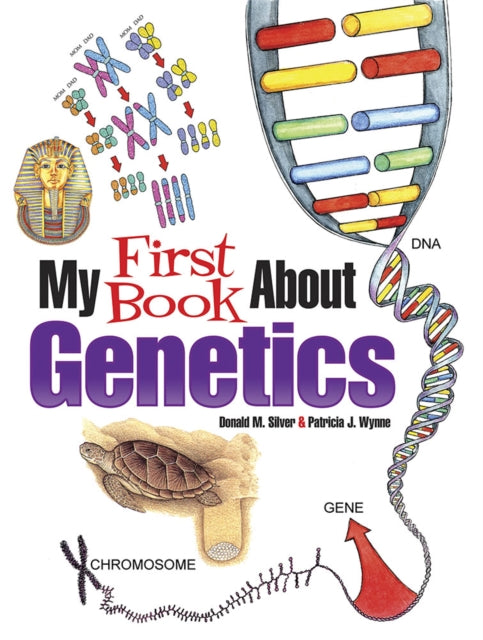
Genes are chemical instructions that living things need to stay alive and reproduce, and this book explains how they work, what they control, and how they are passed along from one generation to the next. It is perfect for ages 8 and up and will spark children's curiosity and interest in science.
Format: Paperback / softback
Length: 48 pages
Publication date: 30 September 2020
Publisher: Dover Publications Inc.
Genes are the building blocks of life, carrying the instructions that living things need to survive and reproduce. This book provides a comprehensive introduction to genes and DNA, explaining how genes control various aspects of our bodies and how they are passed down from generation to generation. With 46 illustrations and easy-to-read captions, it is perfect for children ages 8 and up, sparking their curiosity and fostering their interest in science.
Genes: The Building Blocks of Life
Genes are the fundamental units of heredity that determine an individual's physical characteristics, traits, and behaviors. They are chemical instructions that living things need in order to stay alive and reproduce. Genes are passed down from parents to offspring through DNA, a molecule that contains the genetic information of an organism. DNA is a double-stranded molecule that contains four bases: adenine, thymine, cytosine, and guanine. The sequence of these bases determines the genetic makeup of an organism.
What Genes Control?
Genes control a wide range of biological processes, including growth, development, metabolism, and reproduction. They are responsible for the development of our physical features, such as our height, weight, and eye color. Genes also control our behavior, including our mood, personality, and susceptibility to diseases. Some genes are dominant, meaning that they are expressed in all cells of an organism, while others are recessive, meaning that they are only expressed in certain cells.
How Genes Are Passed Along from One Generation to the Next?
Genes are passed along from parents to offspring through DNA. DNA is passed down from parents to offspring through the process of fertilization. During fertilization, the sperm and egg cells combine to form a zygote, which contains the genetic information of both parents. The zygote then divides into two cells, which then divide into four cells, and so on. This process continues until the zygote develops into a fully formed embryo.
Genes and DNA
Genes and DNA are closely related. DNA is a molecule that contains the genetic information of an organism. Genes are the instructions that DNA uses to create proteins. Proteins are the building blocks of all living things. DNA is a double-stranded molecule that contains four bases: adenine, thymine, cytosine, and guanine. The sequence of these bases determines the genetic makeup of an organism.
Genes and Disease
Genes can also be responsible for disease. Some genes are associated with genetic disorders, such as cancer, heart disease, and diabetes. These disorders are caused by mutations in the genes that control these processes. Mutations can occur randomly or can be inherited from parents. If a mutation occurs in a gene that controls a critical process, it can result in a disease.
Genes and Evolution
Genes have played a critical role in the evolution of life on Earth. Genes are responsible for the development of new species and the adaptation of existing species to changing environmental conditions. Genes can also be responsible for the development of new diseases. However, the development of new diseases can also be a result of human activities, such as pollution and deforestation.
Genes and Science2>
Genes are a fundamental part of science. Scientists use genes to study the genetic makeup of organisms and to develop new treatments and therapies for diseases. Genes are also used to develop new crops and to improve the quality of food. Genes are also used to study the evolution of life on Earth.
Genes and Education2>
Genes are an important part of education. Genes are used to teach students about the genetic makeup of organisms and to develop their critical thinking skills. Genes are also used to develop new educational programs and to improve the quality of education. Genes are also used to study the impact of genetic disorders on individuals and families.
Conclusion
Genes are the fundamental units of heredity that determine an individual's physical characteristics, traits, and behaviors. They are chemical instructions that living things need in order to stay alive and reproduce. Genes are passed down from parents to offspring through DNA, a molecule that contains the genetic information of an organism. DNA is a double-stranded molecule that contains four bases: adenine, thymine, cytosine, and guanine. The sequence of these bases determines the genetic makeup of an organism. Genes control a wide range of biological processes, including growth, development, metabolism, and reproduction. They are responsible for the development of our physical features, such as our height, weight, and eye color. Genes also control our behavior, including our mood, personality, and susceptibility to diseases. Some genes are dominant, meaning that they are expressed in all cells of an organism, while others are recessive, meaning that they are only expressed in certain cells. Genes are passed along from parents to offspring through DNA, a process that continues until the zygote develops into a fully formed embryo. Genes and DNA are closely related, and genes are the instructions that DNA uses to create proteins. Proteins are the building blocks of all living things. Genes can also be responsible for disease, and mutations in the genes that control these processes can result in a disease. Genes have played a critical role in the evolution of life on Earth, and they are used to study the genetic makeup of organisms and to develop new treatments and therapies for diseases. Genes are also used to develop new crops and to improve the quality of food. Genes are also used to study the evolution of life on Earth, and they are used to teach students about the genetic makeup of organisms and to develop their critical thinking skills. In conclusion, genes are the fundamental units of heredity that determine an individual's physical characteristics, traits, and behaviors. They are chemical instructions that living things need in order to stay alive and reproduce. Genes are passed down from parents to offspring through DNA, a molecule that contains the genetic information of an organism. DNA is a double-stranded molecule that contains four bases: adenine, thymine, cytosine, and guanine. The sequence of these bases determines the genetic makeup of an organism. Genes control a wide range of biological processes, including growth, development, metabolism, and reproduction. They are responsible for the development of our physical features, such as our height, weight, and eye color. Genes also control our behavior, including our mood, personality, and susceptibility to diseases. Some genes are dominant, meaning that they are expressed in all cells of an organism, while others are recessive, meaning that they are only expressed in certain cells. Genes are passed along from parents to offspring through DNA, a process that continues until the zygote develops into a fully formed embryo. Genes and DNA are closely related, and genes are the instructions that DNA uses to create proteins. Proteins are the building blocks of all living things. Genes can also be responsible for disease, and mutations in the genes that control these processes can result in a disease. Genes have played a critical role in the evolution of life on Earth, and they are used to study the genetic makeup of organisms and to develop new treatments and therapies for diseases. Genes are also used to develop new crops and to improve the quality of food. Genes are also used to study the evolution of life on Earth, and they are used to teach students about the genetic makeup of organisms and to develop their critical thinking skills.
Weight: 176g
Dimension: 211 x 276 x 8 (mm)
ISBN-13: 9780486840475
UK and International shipping information
UK and International shipping information
We deliver throughout the United Kingdom and to 128 countries and territories worldwide, including the United States, Australia, Canada, Germany, Spain and France.