Ellen Labrecque
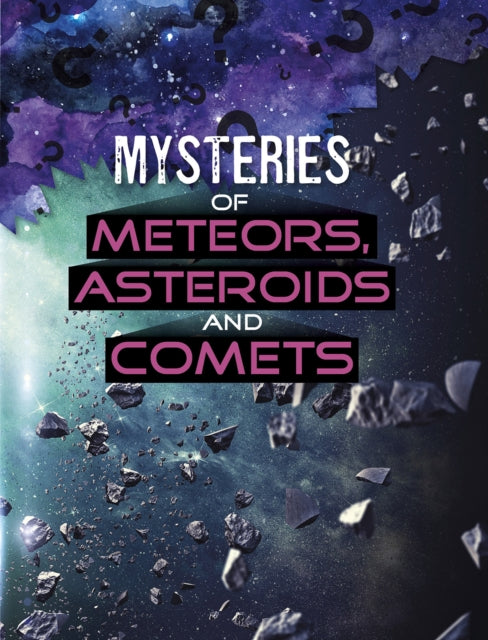
Mysteries of Meteors, Asteroids and Comets
Mysteries of Meteors, Asteroids and Comets
💎 Earn 42 Points (£0.42) on this item.
YOU SAVE £0.45
- Condition: Brand new
- UK Delivery times: Usually arrives within 2 - 3 working days
- UK Shipping: Fee starts at £2.39. Subject to product weight & dimension
Bulk ordering. Want 15 or more copies? Get a personalised quote and bigger discounts. Learn more about bulk orders.
Couldn't load pickup availability
- More about Mysteries of Meteors, Asteroids and Comets
Asteroids, comets, and meteors are made of various materials, such as rock, metal, and ice. Scientists can track asteroids and predict their path to Earth, allowing for potential mitigation measures such as spacecraft redirects. Astronomers use telescopes to observe and study space objects, preparing for potential impacts.
Format: Paperback / softback
Length: 32 pages
Publication date: 05 August 2021
Publisher: Capstone Global Library Ltd
Astronomers have long been fascinated by the mysterious objects that populate our solar system, from the tiny dust particles that make up comets to the massive asteroids that orbit the sun. While we have a good understanding of the composition of these objects, there is still much to be learned about their formation and evolution.
One of the most important questions astronomers are trying to answer is what are asteroids, comets, and meteors made of? Scientists have conducted a wide range of experiments to determine the composition of these objects, including analyzing their chemical makeup, mineral content, and physical properties.
One of the most common materials found in asteroids, comets, and meteors is rock and metal. Asteroids are mostly made up of silicates, such as silicon and oxygen, while comets are made up of ice, dust, and rock. Meteors, on the other hand, are made up of a mixture of rock, metal, and ice.
In addition to rock and metal, asteroids, comets, and meteors can also contain other materials, such as organic compounds and minerals. For example, some asteroids contain carbon-based compounds, while others contain minerals such as iron and nickel. Comets, on the other hand, can contain organic compounds such as methane and carbon dioxide, as well as minerals such as carbon monoxide and nitrogen.
Another important question astronomers are trying to answer is what can scientists do if an asteroid is heading towards Earth? One of the most effective ways to prevent a catastrophic impact is to track the asteroid's path and predict its trajectory. Astronomers use a wide range of instruments, such as telescopes, spacecraft, and radar, to monitor the movement of asteroids and comets.
If an asteroid is detected that is on a collision course with Earth, scientists can use a variety of techniques to deflect it away from our planet. One of the most common techniques is to use a spacecraft to gently push the asteroid off its course. This can be done by changing the asteroid's velocity or by using a gravitational slingshot to redirect it towards another planet.
In addition to deflecting an asteroid, scientists can also use other techniques to mitigate the impact of a collision. For example, they can deploy airbags or other protective measures to reduce the impact of the asteroid on Earth's surface. They can also use explosive charges to break up the asteroid into smaller pieces, which will reduce the amount of energy released during the collision.
Another important question astronomers are trying to answer is how can astronomers prepare for space objects hitting Earth? One of the most important steps is to build asteroid-hunting telescopes. Astronomers use a wide range of telescopes to monitor the movement of asteroids and comets, including ground-based telescopes, space-based telescopes, and telescopes in orbit around the sun.
In addition to building telescopes, astronomers can also use other techniques to prepare for space objects hitting Earth. For example, they can develop emergency response plans and procedures to ensure that people are safe and protected in the event of a collision. They can also work with governments and other organizations to develop policies and regulations to prevent the development of asteroids that could pose a threat to Earth.
In conclusion, astronomers have made significant progress in understanding the composition of asteroids, comets, and meteors. While we still have a lot to learn about their formation and evolution, we have a good understanding of the materials that make up these objects. In the event of a collision with Earth, astronomers can use a variety of techniques to deflect an asteroid or mitigate the impact of a collision. By building asteroid-hunting telescopes and developing emergency response plans, astronomers can help ensure that people are safe and protected in the event of a space object hitting Earth.
Astronomers have long been fascinated by the mysterious objects that populate our solar system, from the tiny dust particles that make up comets to the massive asteroids that orbit the sun. While we have a good understanding of the composition of these objects, there is still much to be learned about their formation and evolution.
One of the most important questions astronomers are trying to answer is what are asteroids, comets, and meteors made of? Scientists have conducted a wide range of experiments to determine the composition of these objects, including analyzing their chemical makeup, mineral content, and physical properties.
One of the most common materials found in asteroids, comets, and meteors is rock and metal. Asteroids are mostly made up of silicates, such as silicon and oxygen, while comets are made up of ice, dust, and rock. Meteors, on the other hand, are made up of a mixture of rock, metal, and ice.
In addition to rock and metal, asteroids, comets, and meteors can also contain other materials, such as organic compounds and minerals. For example, some asteroids contain carbon-based compounds, while others contain minerals such as iron and nickel. Comets, on the other hand, can contain organic compounds such as methane and carbon dioxide, as well as minerals such as carbon monoxide and nitrogen.
Another important question astronomers are trying to answer is what can scientists do if an asteroid is heading towards Earth? One of the most effective ways to prevent a catastrophic impact is to track the asteroid's path and predict its trajectory. Astronomers use a wide range of instruments, such as telescopes, spacecraft, and radar, to monitor the movement of asteroids and comets.
If an asteroid is detected that is on a collision course with Earth, scientists can use a variety of techniques to deflect it away from our planet. One of the most common techniques is to use a spacecraft to gently push the asteroid off its course. This can be done by changing the asteroid's velocity or by using a gravitational slingshot to redirect it towards another planet.
In addition to deflecting an asteroid, scientists can also use other techniques to mitigate the impact of a collision. For example, they can deploy airbags or other protective measures to reduce the impact of the asteroid on Earth's surface. They can also use explosive charges to break up the asteroid into smaller pieces, which will reduce the amount of energy released during the collision.
Another important question astronomers are trying to answer is how can astronomers prepare for space objects hitting Earth? One of the most important steps is to build asteroid-hunting telescopes. Astronomers use a wide range of telescopes to monitor the movement of asteroids and comets, including ground-based telescopes, space-based telescopes, and telescopes in orbit around the sun.
In addition to building telescopes, astronomers can also use other techniques to prepare for space objects hitting Earth. For example, they can develop emergency response plans and procedures to ensure that people are safe and protected in the event of a collision. They can also work with governments and other organizations to develop policies and regulations to prevent the development of asteroids that could pose a threat to Earth.
In conclusion, astronomers have made significant progress in understanding the composition of asteroids, comets, and meteors. While we still have a lot to learn about their formation and evolution, we have a good understanding of the materials that make up these objects. In the event of a collision with Earth, astronomers can use a variety of techniques to deflect an asteroid or mitigate the impact of a collision. By building asteroid-hunting telescopes and developing emergency response plans, astronomers can help ensure that people are safe and protected in the event of a space object hitting Earth.
Weight: 100g
Dimension: 227 x 174 x 7 (mm)
ISBN-13: 9781398204706
This item can be found in:
UK and International shipping information
UK and International shipping information
UK Delivery and returns information:
- Delivery within 2 - 3 days when ordering in the UK.
- Shipping fee for UK customers from £2.39. Fully tracked shipping service available.
- Returns policy: Return within 30 days of receipt for full refund.
International deliveries:
Shulph Ink now ships to Australia, Belgium, Canada, France, Germany, Ireland, Italy, India, Luxembourg Saudi Arabia, Singapore, Spain, Netherlands, New Zealand, United Arab Emirates, United States of America.
- Delivery times: within 5 - 10 days for international orders.
- Shipping fee: charges vary for overseas orders. Only tracked services are available for most international orders. Some countries have untracked shipping options.
- Customs charges: If ordering to addresses outside the United Kingdom, you may or may not incur additional customs and duties fees during local delivery.