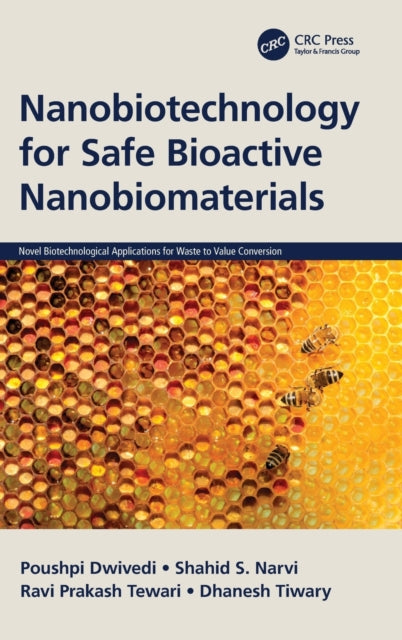
PoushpiDwivedi,Shahid S.Narvi,Ravi PrakashTewari,Dhanesh, UP, India.) Tiwary
Nanobiotechnology for Safe Bioactive Nanobiomaterials
Nanobiotechnology for Safe Bioactive Nanobiomaterials
💎 Earn 689 Points (£6.89) on this item.
We can order this item for you. Delivery usually takes about 4 to 6 weeks.
This item is not held in our immediate stock. We will order it for you after checkout.
Estimated delivery: About 4 to 6 weeks
YOU SAVE £8.18
- Condition: Brand new
- UK Delivery times: Usually arrives within 2 - 3 working days
- UK Shipping: Fee starts at £3.89. Subject to product weight & dimension
Bulk ordering. Want 15 or more copies? Get a personalised quote and bigger discounts. Learn more about bulk orders.
Couldn't load pickup availability
- More about Nanobiotechnology for Safe Bioactive Nanobiomaterials
Nanomaterials have potential applications in various fields, such as medicine, agriculture, and energy. Synthesized nanomaterials can be cost-effective, eco-friendly, and safe. Phytochemicals and nano-Ag antimicrobial agents can have synergistic effects against viruses. Surface coating systems and super absorbent materials can be used in biomedical applications. Nanobiotechnological applications can generate nanoalloys with synchronized nanostructural arrangements. Life cycle assessments of synthesized nanomaterials are necessary to evaluate their environmental impact.
Format: Hardback
Length: 177 pages
Publication date: 02 September 2022
Publisher: Taylor & Francis Ltd
Nanomaterials have gained significant attention in recent years due to their potential applications in various fields, including medicine, electronics, and energy. These tiny particles, which are typically less than 100 nanometers in size, possess unique properties that make them highly useful in various applications.
One of the most promising applications of nanomaterials is in medicine. Nanoparticles can be used to deliver drugs directly to the target cells, increasing their effectiveness and reducing side effects. For example, nanosized drug delivery systems can be used to target cancer cells while sparing healthy cells.
In addition to drug delivery, nanomaterials can also be used in medical imaging, such as magnetic resonance imaging (MRI) and positron emission tomography (PET). Nanoparticles can be used as contrast agents, which enhance the visibility of tissues and organs, making it easier for doctors to diagnose and treat diseases.
Another area where nanomaterials are being used is in electronics. Nanoparticles can be used to improve the performance of electronic devices, such as transistors, batteries, and displays. For example, nanocrystals can be used to enhance the efficiency of solar cells, while nanowires can be used to create high-speed electronic circuits.
In the energy sector, nanomaterials can be used to improve the efficiency of energy storage devices, such as batteries and fuel cells. For example, nanostructured materials can be used to increase the surface area of electrodes, which allows for more efficient energy storage and conversion.
Despite the many potential benefits of nanomaterials, there are also concerns about their safety and environmental impact. Some nanomaterials have been shown to be toxic to human cells and animals, and there is concern that they may accumulate in the environment and cause harm to ecosystems.
To address these concerns, researchers are working to develop safer and more environmentally friendly nanomaterials. One approach is to synthesize nanomaterials through a facile path, which involves using simple and inexpensive materials and processes. This can help reduce the cost of production and make nanomaterials more accessible to a wider range of applications.
Another approach is to incorporate phytochemicals and nano-Ag antimicrobial agents into nanomaterials. Phytochemicals are natural compounds found in plants that have antimicrobial properties, and nano-Ag antimicrobial agents are small particles of silver or gold that have been coated with antimicrobial agents. These agents can be used to enhance the antimicrobial properties of nanomaterials, making them more effective in killing bacteria and viruses.
In addition to antimicrobial properties, nanomaterials can also be used for surface coating systems and super absorbent materials for biomedical purposes. For example, nanomaterials can be used to create coatings that are resistant to bacteria and viruses, making them useful in medical devices such as implants and surgical instruments. Nanomaterials can also be used to create super absorbent materials that can absorb large amounts of water and other fluids, making them useful in wound dressing and other medical applications.
Nanobiotechnological applications for generating nanoalloys with synchronized nanostructural arrangement of alkaline earth metals and nanoscale dots of transition metal are also being explored. These nanoalloys have potential applications in various fields, such as electronics, energy, and materials science. For example, nanoalloys can be used to create high-performance electronic devices, such as transistors and batteries, while also having potential applications in energy storage and conversion.
Finally, life cycle assessment of the synthesized nanomaterials is being conducted to evaluate their environmental impact and potential risks. This assessment involves analyzing the entire life cycle of a nanomaterial, from its production to its disposal, and identifying potential environmental impacts and risks. By conducting life cycle assessments, researchers can identify ways to reduce the environmental impact of nanomaterials and ensure their safe and sustainable use.
In conclusion, nanomaterials have gained significant attention in recent years due to their potential applications in various fields, including medicine, electronics, and energy. These tiny particles possess unique properties that make them highly useful in various applications, such as drug delivery, medical imaging, electronics, energy storage, and materials science. However, there are also concerns about their safety and environmental impact. To address these concerns, researchers are working to develop safer and more environmentally friendly nanomaterials, such as those synthesized through a facile path and incorporating phytochemicals and nano-Ag antimicrobial agents. In addition, nanobiotechnological applications for generating nanoalloys with synchronized nanostructural arrangement of alkaline earth metals and nanoscale dots of transition metal are being explored. Finally, life cycle assessment of the synthesized nanomaterials is being conducted to evaluate their environmental impact and potential risks. By continuing to research and develop nanomaterials, we can unlock their full potential and ensure their safe and sustainable use for the benefit of society.
Weight: 530g
Dimension: 229 x 152 (mm)
ISBN-13: 9781032108452
UK and International shipping information
UK and International shipping information
We deliver throughout the United Kingdom and to 128 countries and territories worldwide, including the United States, Australia, Canada, Germany, Spain and France.