Shulph Ink
Nanopharmaceuticals in Regenerative Medicine
Nanopharmaceuticals in Regenerative Medicine
💎 Earn 589 Points (£5.89) on this item.
We can order this item for you. Delivery usually takes about 4 to 6 weeks.
This item is not held in our immediate stock. We will order it for you after checkout.
Estimated delivery: About 4 to 6 weeks
YOU SAVE £7.00
- Condition: Brand new
- UK Delivery times: Usually arrives within 2 - 3 working days
- UK Shipping: Fee starts at £2.39. Subject to product weight & dimension
Bulk ordering. Want 15 or more copies? Get a personalised quote and bigger discounts. Learn more about bulk orders.
Couldn't load pickup availability
- More about Nanopharmaceuticals in Regenerative Medicine
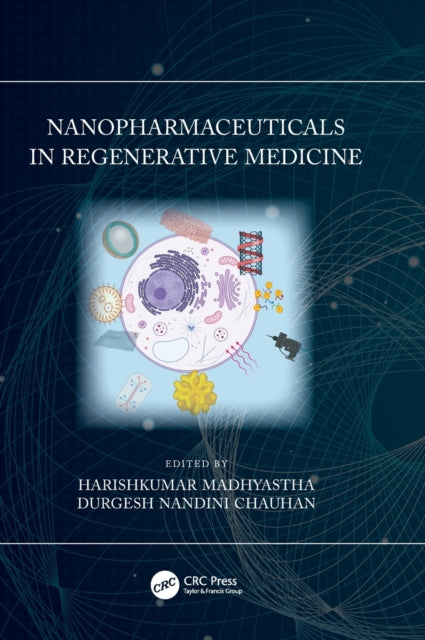
Nanotechnology in Therapeutic Medicine provides comprehensive coverage of nanomaterials' applications in therapeutic medicine, including regenerative diseases, dental, orthopedics, cardiology, and cancer. It also discusses nutritional nanotechnology in combating pathogenesis and the advantages of nanomaterials in biomedical applications.
Format: Hardback
Length: 346 pages
Publication date: 07 April 2022
Publisher: Taylor & Francis Ltd
Nanotechnology in therapeutic medicine is a rapidly evolving field that encompasses the utilization of nanomaterials to enhance drug delivery, improve therapeutic outcomes, and address various medical challenges. With its multidisciplinary approach, nanotechnology integrates various scientific disciplines, including chemistry, physics, biology, and engineering, to develop innovative solutions for healthcare.
One of the key features of nanotechnology in therapeutic medicine is its focus on the development of pharmaceutical-aided nanotechnology. This involves the use of nanomaterials to improve the effectiveness and safety of drugs, as well as to target specific cells or tissues for treatment. Nanomaterials can be designed to enhance drug absorption, stability, and potency, while also reducing side effects and improving patient compliance.
Another important area of application of nanomaterials in therapeutic medicine is regenerative diseases. Nanomaterials can be used to stimulate the growth of damaged tissues, promote wound healing, and repair damaged organs. For example, nanomaterials can be used to deliver drugs or genes to cells in the body, which can help to repair damaged tissue and restore function.
In addition to regenerative diseases, nanomaterials have also shown promising results in the treatment of dental, orthopedic, cardiology, and cancer segments. Nanomaterials can be used to improve the effectiveness of dental treatments, such as fillings and crowns, by enhancing their durability and strength. They can also be used to deliver drugs directly to the site of injury, reducing pain and inflammation and promoting faster healing.
Nutritional nanotechnology is another area of interest in therapeutic medicine. Nanomaterials can be used to deliver nutrients to cells in the body, which can help to improve their health and function. For example, nanomaterials can be used to deliver vitamins and minerals to cells in the body, which can help to improve immune function, reduce inflammation, and promote healthy growth.
One of the advantages of nanomaterials in biomedical applications is their ability to target specific cells or tissues. Nanomaterials can be designed to have specific properties that make them attractive to certain cells or tissues, allowing for more precise and effective treatment. This can lead to improved therapeutic outcomes and reduced side effects for patients.
Another advantage of nanomaterials in biomedical applications is their ability to enhance drug delivery. Nanomaterials can be used to deliver drugs to specific cells or tissues in the body, allowing for more efficient and effective treatment. This can lead to improved patient outcomes and reduced healthcare costs.
Despite the many advantages of nanotechnology in therapeutic medicine, there are also challenges that need to be addressed. One of the challenges is the safety of nanomaterials, as they can have potential toxic effects on the body. Researchers need to continue to evaluate the safety of nanomaterials and develop safe and effective manufacturing processes to ensure the safety of patients.
Another challenge is the scalability of nanotechnology in therapeutic medicine. The development and production of nanomaterials can be expensive and time-consuming, making it difficult to scale up production to meet the needs of patients. Researchers need to develop cost-effective and scalable manufacturing processes to make nanotechnology more accessible and affordable.
In conclusion, nanotechnology in therapeutic medicine is a rapidly evolving field that has the potential to revolutionize healthcare. With its focus on pharmaceutical-aided nanotechnology, regenerative diseases, dental, orthopedic, cardiology, and cancer segments, nutritional nanotechnology, and biomedical applications, nanotechnology has the potential to improve patient outcomes and reduce healthcare costs. However, there are also challenges that need to be addressed to ensure the safety and scalability of nanotechnology in therapeutic medicine.
Weight: 830g
Dimension: 254 x 178 (mm)
ISBN-13: 9780367721138
This item can be found in:
UK and International shipping information
UK and International shipping information
UK Delivery and returns information:
- Delivery within 2 - 3 days when ordering in the UK.
- Shipping fee for UK customers from £2.39. Fully tracked shipping service available.
- Returns policy: Return within 30 days of receipt for full refund.
International deliveries:
Shulph Ink now ships to Australia, Belgium, Canada, France, Germany, Ireland, Italy, India, Luxembourg Saudi Arabia, Singapore, Spain, Netherlands, New Zealand, United Arab Emirates, United States of America.
- Delivery times: within 5 - 10 days for international orders.
- Shipping fee: charges vary for overseas orders. Only tracked services are available for most international orders. Some countries have untracked shipping options.
- Customs charges: If ordering to addresses outside the United Kingdom, you may or may not incur additional customs and duties fees during local delivery.