Shulph Ink
Nanosensors for Futuristic Smart and Intelligent Healthcare Systems
Nanosensors for Futuristic Smart and Intelligent Healthcare Systems
💎 Earn 991 Points (£9.91) on this item.
We can order this item for you. Delivery usually takes about 4 to 6 weeks.
This item is not held in our immediate stock. We will order it for you after checkout.
Estimated delivery: About 4 to 6 weeks
YOU SAVE £11.76
- Condition: Brand new
- UK Delivery times: Usually arrives within 2 - 3 working days
- UK Shipping: Fee starts at £3.89. Subject to product weight & dimension
Bulk ordering. Want 15 or more copies? Get a personalised quote and bigger discounts. Learn more about bulk orders.
Couldn't load pickup availability
- More about Nanosensors for Futuristic Smart and Intelligent Healthcare Systems
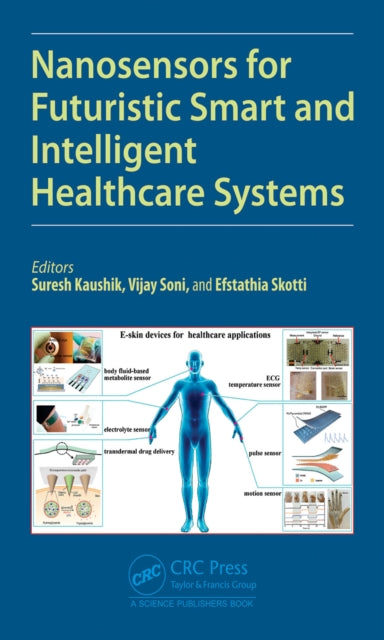
Nanobiosensors are used to monitor real-time human health, diagnose medical diseases, and detect biomarkers of cancer and other diseases. They are wearable sensors used for remote healthcare monitoring systems and can detect symptoms early.
Format: Hardback
Length: 404 pages
Publication date: 18 August 2022
Publisher: Taylor & Francis Ltd
Nanotechnology has revolutionized the field of medicine by enabling the development of highly sensitive and specific sensors that can monitor real-time human health. These nanobiosensors, which are tiny devices capable of detecting and analyzing biological molecules, have the potential to revolutionize the diagnosis and treatment of medical diseases.
One of the most promising applications of nanobiosensors is in the field of cancer diagnosis. By analyzing the specific biomarkers that are associated with cancer, nanobiosensors can detect the disease at an early stage, before symptoms appear. This can lead to more effective treatment and better patient outcomes.
Another area where nanobiosensors are making significant strides is in the remote healthcare monitoring system. Wearable sensors, such as smartwatches and fitness trackers, can be used to monitor patients in real-time and collect vital health data. This information can be transmitted to healthcare providers remotely, allowing for early intervention and personalized treatment plans.
In addition to cancer diagnosis and remote healthcare monitoring, nanobiosensors are also being used to detect other diseases, such as heart disease and diabetes. By analyzing the biomarkers associated with these diseases, nanobiosensors can provide early warning signs and help prevent the development of more severe complications.
Despite the many benefits of nanobiosensors, there are also challenges that need to be addressed. One of the biggest challenges is the development of reliable and affordable nanobiosensors that can be mass-produced. Additionally, there are concerns about the safety and efficacy of using nanobiosensors in humans, particularly in terms of their long-term effects on health.
To address these challenges, researchers are continuing to develop new and innovative technologies that can improve the sensitivity and specificity of nanobiosensors. They are also working to develop regulatory frameworks and guidelines that will ensure the safe and effective use of nanobiosensors in medical applications.
In conclusion, nanotechnology has the potential to revolutionize the field of medicine by enabling the development of highly sensitive and specific sensors that can monitor real-time human health. Nanobiosensors have the potential to revolutionize the diagnosis and treatment of medical diseases, such as cancer, heart disease, and diabetes. However, there are also challenges that need to be addressed to ensure the safe and effective use of these devices. By continuing to invest in research and development, we can hope to see the many benefits of nanobiosensors become a reality in the years to come.
Nanotechnology has revolutionized the field of medicine by enabling the development of highly sensitive and specific sensors that can monitor real-time human health.
These nanobiosensors, which are tiny devices capable of detecting and analyzing biological molecules, have the potential to revolutionize the diagnosis and treatment of medical diseases.
One of the most promising applications of nanobiosensors is in the field of cancer diagnosis.
By analyzing the specific biomarkers that are associated with cancer, nanobiosensors can detect the disease at an early stage, before symptoms appear.
This can lead to more effective treatment and better patient outcomes.
Another area where nanobiosensors are making significant strides is in the remote healthcare monitoring system.
Wearable sensors, such as smartwatches and fitness trackers, can be used to monitor patients in real-time and collect vital health data.
This information can be transmitted to healthcare providers remotely, allowing for early intervention and personalized treatment plans.
In addition to cancer diagnosis and remote healthcare monitoring, nanobiosensors are also being used to detect other diseases, such as heart disease and diabetes.
By analyzing the biomarkers associated with these diseases, nanobiosensors can provide early warning signs and help prevent the development of more severe complications.
Despite the many benefits of nanobiosensors, there are also challenges that need to be addressed.
One of the biggest challenges is the development of reliable and affordable nanobiosensors that can be mass-produced.
Additionally, there are concerns about the safety and efficacy of using nanobiosensors in humans, particularly in terms of their long-term effects on health.
To address these challenges, researchers are continuing to develop new and innovative technologies that can improve the sensitivity and specificity of nanobiosensors.
They are also working to develop regulatory frameworks and guidelines that will ensure the safe and effective use of nanobiosensors in medical applications.
In conclusion, nanotechnology has the potential to revolutionize the field of medicine by enabling the development of highly sensitive and specific sensors that can monitor real-time human health.
Nanobiosensors have the potential to revolutionize the diagnosis and treatment of medical diseases, such as cancer, heart disease, and diabetes.
However, there are also challenges that need to be addressed to ensure the safe and effective use of these devices.
By continuing to invest in research and development, we can hope to see the many benefits of nanobiosensors become a reality in the years to come.
Weight: 930g
Dimension: 234 x 156 (mm)
ISBN-13: 9780367554347
UK and International shipping information
UK and International shipping information
We deliver throughout the United Kingdom and to 128 countries and territories worldwide, including the United States, Australia, Canada, Germany, Spain and France.